When homeschooling your child, selecting a comprehensive and engaging science curriculum isn’t just a “nice to have.” It’s one of the most important decisions you’ll make. A strong science program not only builds knowledge of facts but cultivates scientific thinking, wonder, resilience, and a lifelong curiosity about how the world works.
Below, we’ll walk through why this matters so much, what to look for, and how science kits can play a key role in making your program truly effective.
Why a Strong Science Curriculum Matters
Science isn’t just memorisation
Too often, science is treated as a checklist of facts: “cells = basic unit of life,” “acceleration = change in velocity over time,” etc. But the real goal is far richer: helping children learn how to ask questions, how to test ideas, how to interpret data, and how to reason with evidence.
A curriculum that is comprehensive and engaging gives children the chance to do more than read about science; it gives them the chance to do science, to play with concepts, see them in action, fail, try again, and thus internalise the scientific mindset.
Building confidence and independence
In a homeschool setting, especially, you want your child to feel confident in approaching science, even if you (as the parent) are not a trained scientist.
A well-designed curriculum provides structure, clarity, progressive difficulty, and supportive materials so that both you and your child can navigate the subject with less friction. When the materials spark interest and offer hands-on experiences, the child becomes more of a co-investigator than a passive student. This helps in developing independence, critical thinking, and a positive attitude toward science.
Developing a deeper understanding
With an engaging curriculum, you move beyond surface-level coverage to a deeper understanding: why things happen, how phenomena relate, and how different branches of science connect. The richer the curriculum, the more likely your child is to integrate ideas and apply them rather than simply recite isolated facts. This richness is especially important because many future careers increasingly expect analytical thinking, understanding of data, and comfort with scientific concepts.
Preventing boredom and disengagement
Science has incredible potential to delight, but if the curriculum is dry, overly theoretical, or repetitive, children will check out. Homeschoolers often have the advantage of flexibility: you can tailor experiences, choose high-quality materials, slow down when necessary, and lean into curiosity.
A great curriculum takes advantage of that. If the learning is engaging, experiment-based, and interactive, the child stays invested, and this engagement fuels not just knowledge but a love of inquiry that lasts.
What to Look for
When you’re evaluating options, consider these key features:
- Hands-on experiments: Children learn best when they are doing, tinkering, observing, and manipulating variables. A top curriculum includes regular lab-style activities or kits so the theoretical becomes tangible.
- Clear progression: It should scaffold learning, starting with core foundational concepts, moving to increasingly complex ideas, and helping the child build depth and confidence rather than bouncing around loosely.
- Good teacher/parent support: Since you’ll be facilitating the learning, it helps to have teacher guides, answer keys, lab instructions, and resources to support you in helping your child.
- Material quality: The supplies, equipment, and experiments should be safe, durable, well-designed, and appropriate for the age/grade level. If you’re buying separate materials, inconsistency or low quality can undermine the experience.
- Encouragement of critical thinking and inquiry: Rather than simply “do this experiment, record the results,” the curriculum should prompt the child to ask “why,” “what if,” “what happens if we change this variable,” “what does this mean,” etc.
Find Engaging Science Kits Online
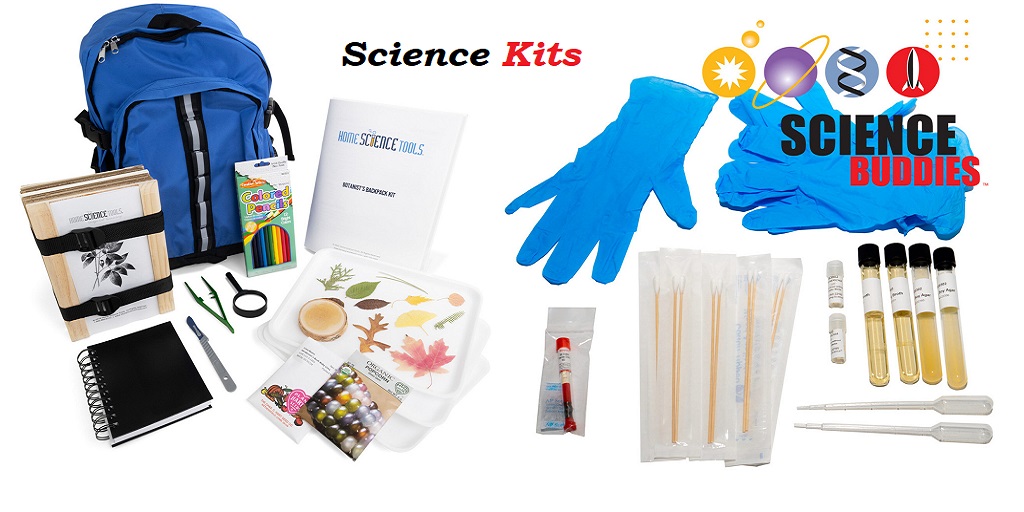
Choosing a comprehensive, engaging science curriculum is one of the most impactful choices you’ll make in your homeschool journey. When backed by high-quality science kits such as those offered by Home Science Tools, you’re giving your child the tools, experiences, and inspiration to understand the world deeply, not just superficially. You’re inviting them to think like a scientist, explore boldly, and develop a curiosity that lasts a lifetime.
For more information about Rock Tumbler and Earth Science Curriculum Please visit: Home Science Tools.