
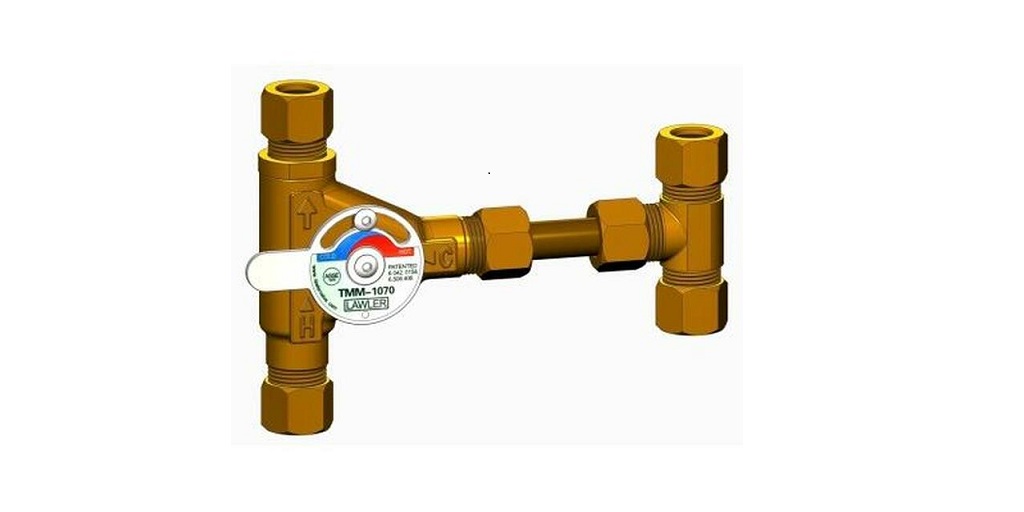
Water temperature control is extremely important, especially in hospitality, commercial and institutional buildings. The most common type of water temperature control is the mixing valve. Valves are necessary because hot and cold pipes are generally located in different places, so having a zone valve near each fixture would be very expensive to run all those pipes.
Hot water tanks are ubiquitous nowadays, allowing most Americans to enjoy satisfying morning showers. However, water must be stored at a temperature that is hot enough to keep harmful bacteria at bay. Allowing that temperature to flow freely inside your plumbing can cause serious harm. That’s why tempering valves and thermostatic mixing valves exist.
These ingenious devices help regulate the temperature of the water served from faucets and showers by combining hot water and cold water. However, the way they do it is slightly different and they work better in certain settings.
Today we are going to learn the difference between these valves, where they are more likely to be found, and what kind of maintenance they require.
Thermostatic Mixing Valves
Thermostatic mixing valves help regulate the temperature of the water that comes out from the shower or sink faucets. However, they do not measure water temperature but water pressure. When they are installed, a licensed plumber sets how much pressure should come from each pipe (hot and cold water). Whenever the valve senses a pressure change from either side, the internal diaphragm adjusts itself to re-establish the balance. This is useful in large facilities where many fixtures drain water at the same time, producing drastic pressure variation. For example, whenever a toilet is flushed there is a change in pressure in the cold water pipe that could conversely increase the pressure from the hot water line. Without a thermostatic mixing valve, users might get harmed by being exposed to scalding water.
Tempering Valves
Tempering valves have a similar function, but instead of being activated by pressure, their mixing valve is activated by temperature. It ensures that the temperature that comes out is safe for use, however, the control it has over the temperature is not as granular as thermostatic mixers.
They basically mix hot water with cold water to lower the average temperature of the outgoing flow.
They are more often found in less demanding environments because they are cheaper to install and provide less control over the output temperature, but they are popular in the hospitality industry. Since they don’t require that plumbing technicians adjust them to balance pressure from both sides, they become a low cost option.
When to Use Tempering Valves and Thermostatic Mixing Valves?
Due to their different ways of controlling the flow of water, these devices have different preferred applications. Some models, such as Lawler thermostatic mixers are used both for convenience and safety in locations such as hospitals, schools, nursing homes, hotels, gyms, and others. They not only help keep the water comfortably warm for users but also maintain a stable temperature even if other fixtures are producing drastic pressure changes. They also prevent children and vulnerable populations safe from scalding in these settings, as they have a faster reaction time.
Tempering valves are mostly used in hotels, resorts, and other settings in the hospitality industry. They offer a low-cost solution that can be easily replaced. Lawler tempering valves are particularly reliable and can outlast many older valves and brands. While tempering valves can be installed easily, it is always better to let a qualified plumber do this job. It is the best way to prevent future problems like water pressure loss, drips, temperature fluctuations, and more.
If you are not sure which system will work best for your project, visit Quality Plumbing Supply. They specialize in top-of-the-line plumbing systems, pieces, and repair kits for all kinds of valves, including Lawler tempering valves and thermostatic mixing valves.
