
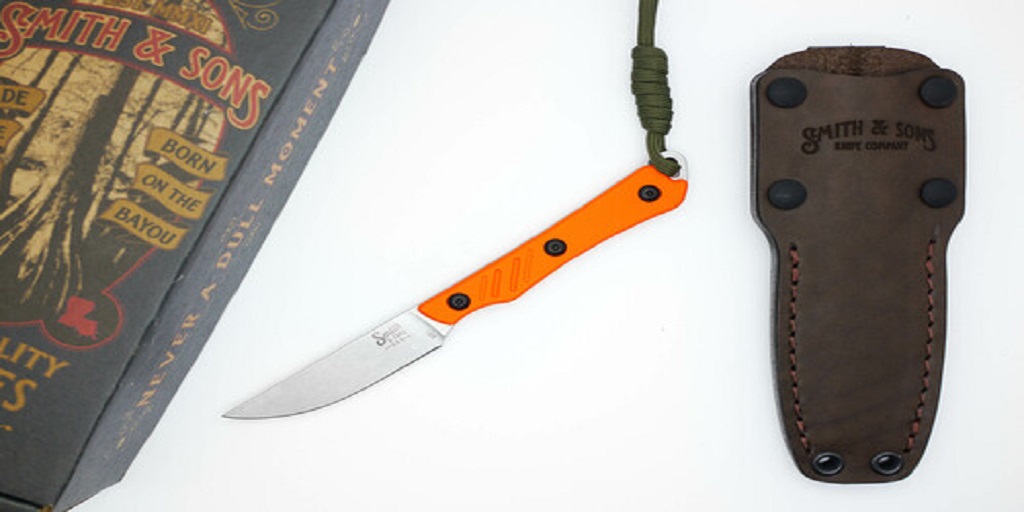
When going on a trip into the great outdoors, you can usually just pack what you can fit into your rucksack.
You can forget your flashlights, your tent, and sleeping bags, but you should never be without your trusty survival knife.
With so many various types of knives and sizes, which knife should you get? This post will help you pick the best knife for you.
What Makes a Good Survival Knife
Choose a knife that doesn’t forego more useful characteristics in favor of something that sounds “cool” but actually isn’t. Choose something that combat soldiers may choose and something you’ll need when you’re stranded in the wilderness and you have to build a fire with nothing more than a knife, for example.
The Right Size
Survival knives come in a variety of shapes and sizes, and opinions differ on what shape and size are best. Knives that are either too large or too small do not perform well in terms of usability.
Going with a medium-sized knife may be better for survival purposes. Generally, knives fall into the following size category:
Large: 5.5 – 7 inches
Medium: 3.5 – 5.5 inches
Small: Under 3.5 inches
Few people carry a large knife with them. Larger blades may be better choppers, but a medium-sized knife can process wood with little extra work.
Larger bushcraft knives would be good to have as well, so if possible, don’t limit yourself to one only.
The Right Weight
The weight of a knife, including its size, will have an impact on whether you’ll choose to bring it with you all the time. If it’s too heavy, you’ll probably choose a different knife when going on a long walk or camping trip to save weight, defeating the purpose of having a knife for survival at all times.
It’s nice to have a lighter knife for survival, though having a sturdy knife for chopping wood, preparing meat, and digging holes is always advantageous.
The thickness and width of the blade and tang determine the weight of a knife. The handle only rarely affects weight. So if weight is a dealbreaker for you, check out the blades and tangs of the knife, and whether they’re stainless steel or carbon steel blade. Stainless steel knives are typically heavier.
Fixed or Folding
Consider getting a fixed blade instead of a folding one. Fixed-blade knives are often more durable, easy to sharpen, and less prone to snap off during more strenuous jobs since they have no moving parts and have a full tang.
They are large and powerful and can be any size you need. From a little, handy blade to a huge one, the blade’s strength is a feature that cuts across all sizes.
They also have superior tactical use. There’s no need to be concerned about the hinges like you would be with a folding knife. They can be brought into play faster than folding knives in tactical scenarios and survival situations.
Fixed blades are perfect for applications such as cutting, digging, food preparation, hunting weapon, first aid tool, and more.
Pointed Tip
There are plenty of reasons why you should opt for a knife with a sharp-pointed tip, but the most important is self-defense. Anything other than a sharp spear point tip may limit your ability to thrust or stab your knife efficiently as a weapon, especially through thick fur or layered clothes.
Check out the huge inventory of survival knives from The Knife Connection if you can’t decide what survival knife to get. They have cutting-edge survival knives as well as survival kits for all types of preppers. Drop by their site today.
