
Any workplace can potentially be improved through better branding, and one of the first things that will impact the brand experience (and the customer experience overall) is how your employees look.
A large part of this experience is influenced by the sorts of employee uniforms you use. A well-designed, polished uniform will reduce confusion and imbue your operation with a finish of legitimacy. Inconsistent uniforming will have the opposite effect, giving your company the impression of a slipshod, fly-by-night venture.
So how can you create more professional employee uniforms? These suggestions are a good start.
Start with Quality Fabrics and Materials
First and foremost, the quality of the materials you start with will have the greatest impact on the end result. Using light, cheap materials will result in uniforms that, while they might cost less and look alright when new, will not last as long or hold up through repeated washings.
There is a place for performance synthetics, but while natural materials like cotton and wool might be more expensive, they are more durable and will last longer.
Have Your Uniforms Tailored
If you’ve ever heard the expression, “the clothes make the man,” then you know that the same figure dressed in two different uniforms can look surprisingly different.
A poorly tailored suit or uniform looks unprofessional and slovenly, whereas a professionally tailored uniform looks neat, tidy, and confident.
If you’re truly concerned about the experience your employee uniforms will have on branding, don’t just offer standard sizes; offer to cover tailoring or have tailoring performed before issuing employee uniforms.
Issue Accessories with the Uniform
The bells and whistles make a uniform as much as the material and cut do. Consider issuing cufflinks, hats, belts, shoes, or other accessories with your employee uniforms to ensure a cohesive look across the ranks.
This will cost substantially more than just issuing the uniform and letting your employees decide on belts, hats, and shoes themselves, but it will create a much more uniform look – and “uniform” is what you’re going for here, no pun intended.
Use Business Metal Badges (Instead of Plastic)
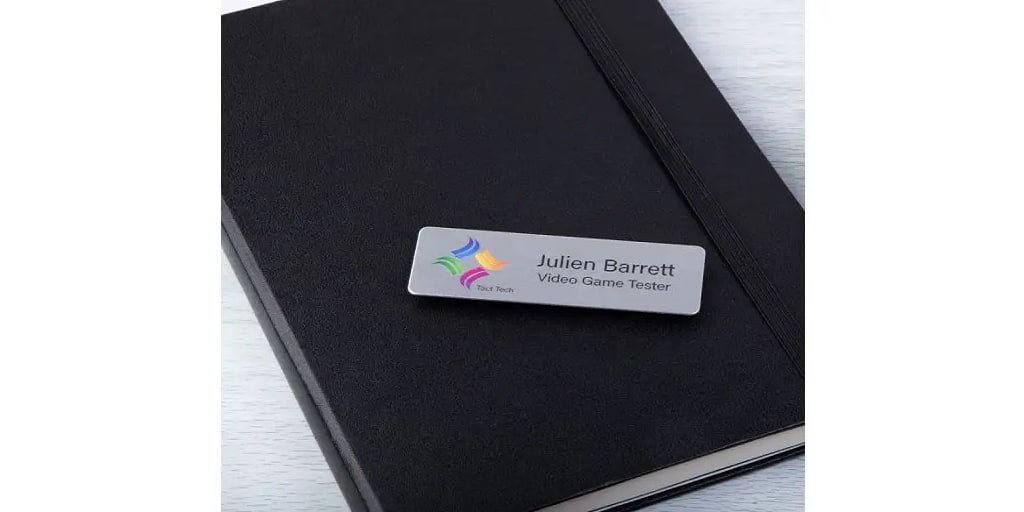
If you issue employee name badges with your uniforms, higher quality materials will give the uniforms a more polished look. We recommend using business metal badges instead of plastic.
Business metal badges are often made from aluminum or steel, both are which are considerably stronger and more durable than plastic, not to mention the fact that they are long-lasting and reusable.
Plus, if you’re concerned about environmental impact, the reusability of metal badges and business name tags is superior – not to mention that both steel and aluminum can be recycled.
(Also, many providers of metal name tags allow them to be customized in full color with unique finishes, custom shapes, company logos, and even laser engraved with names and titles. See the link above for more information on custom metal name tags).
Issue More Than One Uniform to Each Employee
Finally, we recommend issuing more than one uniform to each employee – opt for two or even three instead. Again, this is more expensive, but it will allow your employees to create a rotation that they can cycle through whenever one of their uniforms is in the wash or dry cleaner.
This helps ensure your employees will always look their finest, prim and polished, no matter what – and that’s good for both the customer and the brand experience
