
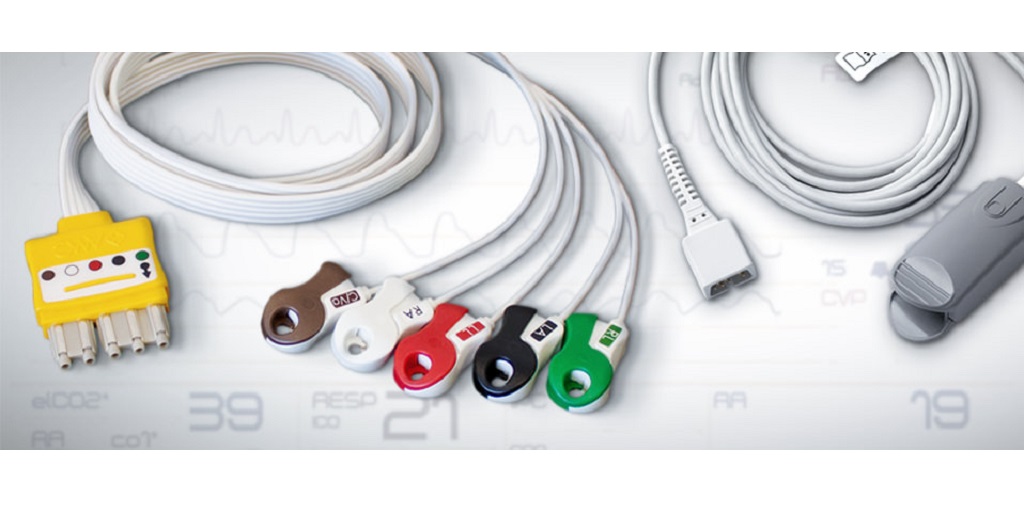
A 12-lead ECG remains one of the most vital procedures to record the electrical activity of the heart and, when administered properly, can accurately detect prognostic markers for electrical disturbances that cause arrhythmia and other cardiac conditions.
This is provided the test is administered properly by skilled professionals.
Remove All Electronic Devices from the Patient
Before the procedure, remove all electronic devices, like smartphones, from the patient. These devices can interfere with the recording of an ECG and produce artifacts that compromise the biosignal recording.
Preparing the Patient
Have the patient lie down (supine) or place them in the Semi-Fowler’s position. If not possible, the ECG can be recorded with the patient in a more elevated position.
The patient’s skin where the leads are placed should be dry, hairless, and free of oil or residue. Clean the patient’s skin with rubbing alcohol before placing the ECG lead wires’ electrodes.
It is also important to help keep the patient calm, and if possible, comfortable, as sweating and stress can both cause aberrations in the recording.
Find and Mark the Lead Placements; Apply the Electrodes
Despite the name, a 12-lead ECG utilizes 10 lead ECG wires and electrodes.
The 10 lead positions of a 12-lead ECG are as follows:
● V1: Fourth intercostal space on the right of the sternum.
● V2: Fourth intercostal space on the left of the sternum.
● V3: Directly between V2 and V4.
● V4: Fifth intercostal space at the midclavicular line.
● V5: Level with V4 at left anterior axillary line.
● V6: Directly under the midpoint of the left armpit, level with V5.
● RA: Upper right arm.
● LA: Upper left arm.
● RL: Lower right leg.
● LL: Lower left leg.
Dry electrodes will not provide the same level of accuracy in a recording. Make sure each electrode is adequately treated with gel prior to application. (Storing your electrodes properly and not removing them from the manufacturer’s packaging will help ensure pre-gelled versions remain viable for longer).
If using color-coded electrodes, be aware that the color codes for the leads are different according to the AHA (American Heart Association) and IEC (International Electrotechnical Commission). For more information on the differences in color coding according to these different conventional disciplines, please refer to the previous link.
Also ensure you are using only one manufacturer’s electrodes, and of the same brand. Different brands may use different materials that will make it difficult to produce accurate biosignal recordings.
Reducing Artifacts
While minor ECG artifacts are not particularly uncommon, doing all you can do to reduce them will help ensure high-quality, accurate ECG recordings.
● Ensure the patient is lying still, is calm, and quiet. If possible, ensure the patient is not overheated as sweat and stress will affect the recording.
● Turn off any non-essential electrical equipment in the vicinity that can interfere with the ECG’s signal.
● Inspect your 10 lead ECG wires for wear or cracks; replace if necessary. Avoid running ECG lead wires adjacent to metal objects that can interfere with the signal. Prevent the ECG lead wires from forming loops and undo any loops that form.
● Ensure there is a proper, adequate connection between the lead wires/ECG cables and the ECG device.
Quality 10 Lead ECG Wires
Quality 10 lead ECG wires are also tantamount to successful biosignal recordings. For that, trust LifeSync, which has over 50 years of experience producing electromedical supplies, including ECG cables and leadwires.
They offer 10 lead ECG wires that are made in the United States, available in several different lengths (and radiolucent configurations), and compatible with DIN, GE, CMS, Twin-Pin, ConMed D-Series, and other systems.
For more information, visit their website via the link above or get in touch with them at 1-800-358-2468.
