
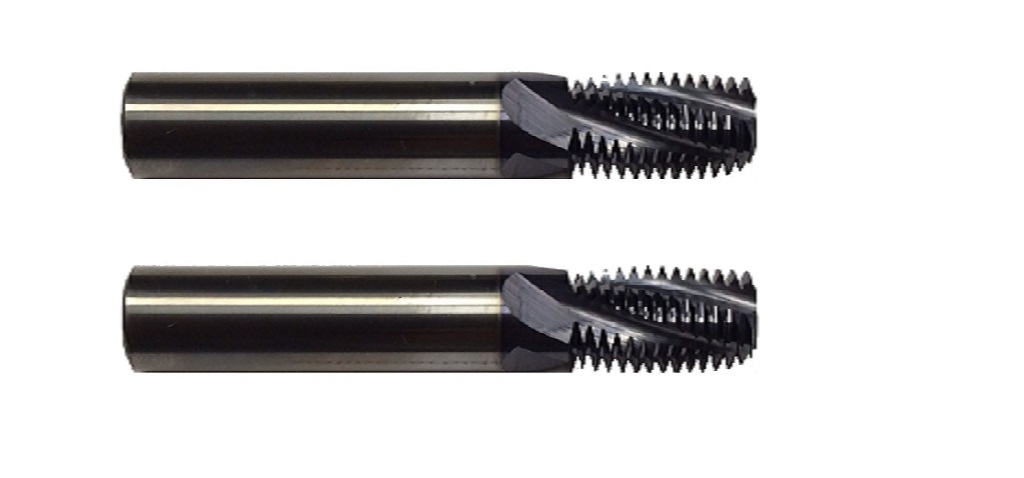
For contemporary machining, the process of making threaded connections is critical. Threading pieces enables for a solid bolted connection between components. Threading components required the use of specialist tap and die cutting instruments for decades. Thread milling with solid carbide tools may now accomplish the same outcomes as these older tools in a fraction of the time, thanks to advancements in milling technology.
Thread milling cutters are divided into two categories. The single pitch thread mill is the first and most versatile option. The cutting head on these instruments is fashioned like a tiny disc and is designed to cut the entire length of the thread. Because the cutter must pass through the entire threaded surface, this operation takes longer. These tools are particularly ideal for delicate work because they have a smaller cutting surface that creates less friction while in use.
Full form thread mills are available in addition to single pitch end mills. These tools resemble thread cutting taps, but instead of being placed helically, the teeth along the cutter are arranged in parallel rows. In order to make a thread, the tool is shifted one thread pitch while cutting. This results in a helical pattern in which each row of teeth finishes the cut that the row below them started. As a result, full form thread mills are the quickest way to complete any thread milling work. Although a single tool is limited to cutting threads with a uniform pitch, these cutters can be quite versatile.
Thread milling with solid carbide thread mills are the best choice for getting the most out of your milling machine. End mills are made from a variety of materials, including alloys like high-speed steel. Unfortunately, these tools can’t compete with carbide’s edge retention, density, or hardness. Carbide tools are manufactured by mixing powdered carbide ceramics with a binding metal like cobalt. This results in a material that is far more than the sum of its components. The strength and endurance of a metal tool are combined with the hardness and edge retention of a ceramic in a carbide thread mill.
Many manufacturers coat their end mills with protective coatings like titanium aluminum nitride to make them live even longer. This coating aids in the formation of a protective layer that deflects heat away from the cutter, extending the tool’s lifespan. TiAlN coatings have the unusual ability of increasing their thermal insulating effect as the end mill gets hotter.
So if you are looking to start thread milling with solid carbide thread mills, visit www.Onlinecarbide.com. Online Carbide is an American manufacturer of high quality milling cutters and drill bits. Their single pitch and full form thread mills are made using high quality carbide stock and they are treated with TiAlN to offer the maximum lifespan. If you have any questions about the tools they offer, you can contact a member of the Online Carbide team by calling 630-238-1424 or sending an email to sales@onlinecarbide.com.
