
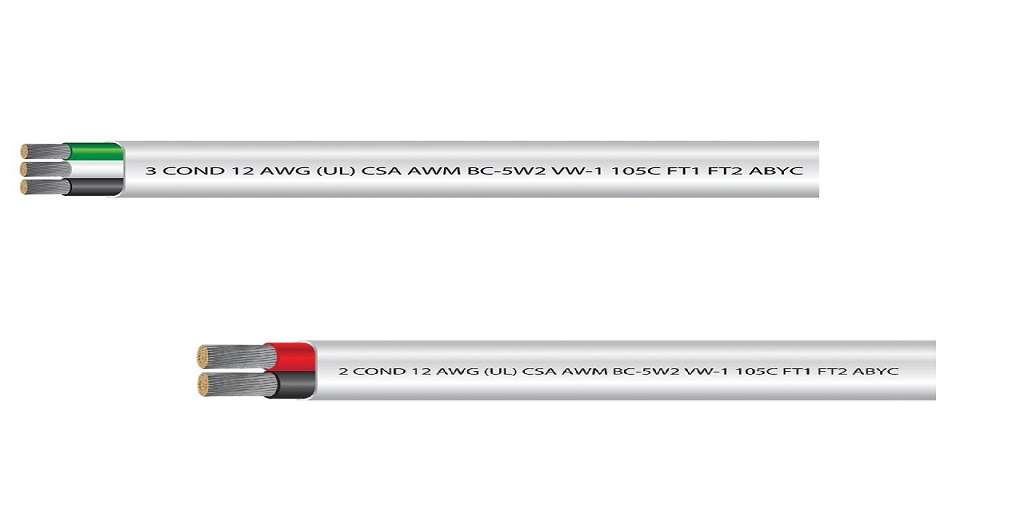
AWG marine battery cable is more expensive than automotive battery cable and more expensive than general AWG building wire. You might be thinking you can substitute one for the other and save some money.
Don’t do this, especially on board a boat, and even more so if the boat is a maritime vessel. The conditions experienced on inland waterways are bad enough. Saltwater changes the game entirely.
So, with no further ado, here are the top reasons you should never use anything other than AWG marine battery cable on board vessels, even though it’s more expensive.
The Big One: Corrosion Resistance
The main difference between AWG marine battery cable and standard battery cable is that marine battery wire’s conductors are individually tinned. If you look at them they look silver.
This process does add considerable expense to the wire, but it also provides an additional degree of insulation to the wire, underneath the insulation.
But it is well worth it. It’s impossible to use battery wire, and by extension, any wire, without making connections and exposing the wire.
You can be good about protecting it with dielectric grease or shrink tubing or other protective measures, but corrosive influences, especially on the water, will find a way in.
This is why the individual tinning is so valuable. What the outer jacket can’t protect, the tinning does protect. It is your last defense against corrosion and it is a good one.
Un-tinned, standard battery wire would quickly corrode at exposed connections, but the problem is not the lost connection (although that is a problem). It is that the corrosion would travel underneath the insulation.
Once that happens there’s nothing you can do but to replace the entire wire. Worse, if you don’t you’ll be lucky if the worst problem you experience is a failed circuit. Oftentimes, wires will overheat and they can cause fires on boats, which can be deadly.
So the bottom line is this: be careful when stripping wire and establishing connections, but be more assiduous about only using AWG marine battery cable when doing so in the first place.
Flexibility
One other note about AWG marine battery cable is that it is made with very finely stranded conductors. The effect of this is to keep the cable more flexible, which it does.
This is also a bonus because a more flexible battery cable is easier to work with and establishes connections more readily, with less torque and twisting, and less stress on the connection.
The more flexible a wire is, the better it will be to work with in the tight confines of a battery compartment. So while flexibility isn’t as important to safety as the corrosion protection is, it is still something to consider.
For More Information on AWG Marine Battery Cable
Interested in learning more about marine battery cable? You can learn more (and shop high-quality selections) online at EWCS Wire. Visit their website or contact their customer service for more information.
For More Information About Aluminum Wire and Boat Battery Cables Please Visit: Electrical Wire & Cable Specialists.
