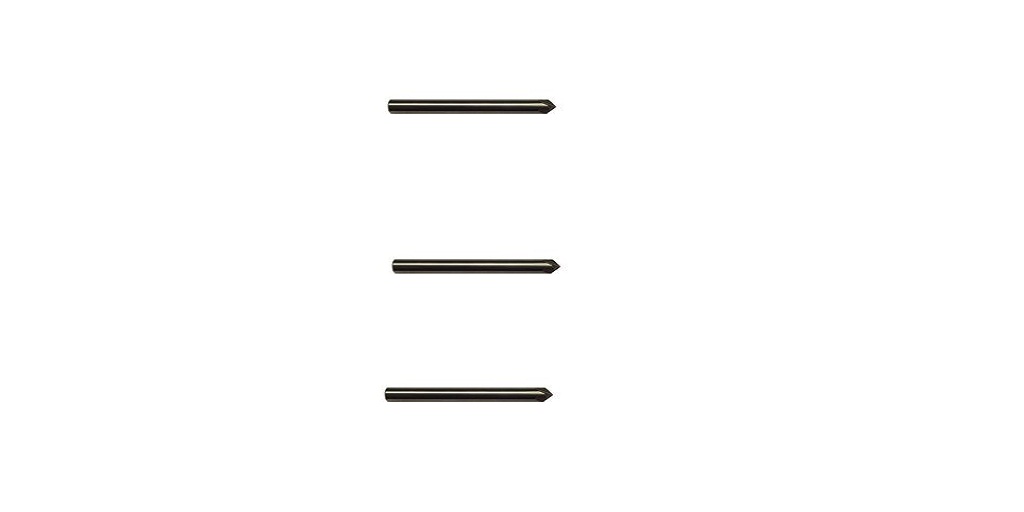
A lot of people have moved into the machining industry lately. Especially with the appearance of more affordable CNC machines that allow anyone to craft custom parts right from their garage. However, many still render crudely finished products with sharp edges that make them quite dangerous depending on the intended use. That’s where chamfer mills come into play.
It is common courtesy to chamfer any sharp edges off your parts or finished products to prevent accidents. Having a piece of furniture or piece that catches on clothes or causes some slashing damage can be grounds for serious problems.
Of course, you can create smooth surfaces by just filing your edges at a 45 degrees angle, or use a grinding disk. But when you´re machining, precision and accuracy are essential.
Chamfer mills provide both precision and speed. They not only take care of rough edges but also leave a much better finish. Additionally, they easily reach difficult angles without a problem and do a great job at smoothing out punched holes and prepping them up for threading.
Now, imagine we not only have to smooth out the surface, but we also need to modify the angle at which two surfaces meet. Carbide chamfer mills help you remove all those nasty 90 degrees edges and corners, creating a better-looking beveled slope while removing burrs along the piece.
This is also useful when preparing a piece for welding as chamfering provides a smooth surface to allow for a much stronger weld, and reduces the need for clearing excess material when finished.
A chamfer mill can also be used for finishing purposes. Carbide cutting tools have very sharp edges that easily remove material, leaving a perfectly polished surface that saves you time by eliminating the need of buffing out imperfections. I have found that machining and chamfering with carbide cutting tools make it easier to get parts that are ready for service right off the bat. Just make sure your bit engages the material correctly when machining tough alloys. A sharp edge can eat through your carbide and chip the tool easily if you´re not careful enough.
You can also use chamfer mills for engraving or creating channels along the surface without having to go through the finishing process. Carbide chamfer mills keep heat under control, allowing the drill to go through a lot of material without the risk of warp or chatter, leaving perfectly polished floors and walls.
So, even when your CNC or machining operations require minimum finishing, smoothing out edges and offering a polished surface is always a plus when delivering metal parts. We recommend having a few carbide chamfer mill bits in your arsenal. However, make sure they´re made here in the US from a manufacturer with great reviews. Our favorite is www-onlinecarbide.com as they offer incredible wear resistance and a great variety of tools for machining both soft and hard alloys. Their sales representatives are top of the line and provide advice on the right bits or angles for your machining projects.