
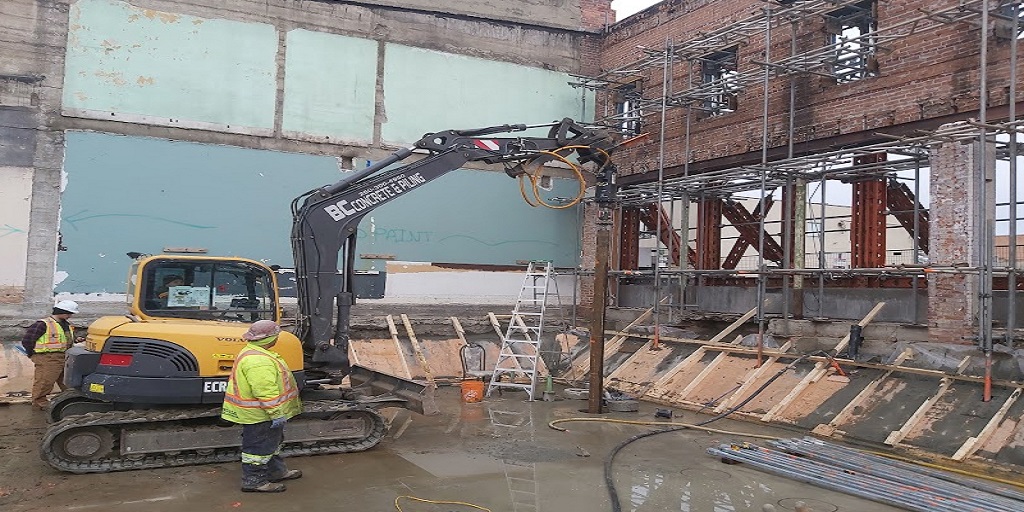
Sites with consistently high groundwater levels or seasonal flooding present serious challenges for construction. Saturated soil loses strength, excavation becomes unstable, and concrete placement is often delayed or compromised by water intrusion. In these environments, foundations that rely heavily on open excavation or curing time are more vulnerable to settlement, washout, and long-term movement.
Projects in low-lying areas, near rivers, or on land with poor drainage demand foundation solutions that can perform reliably without being affected by waterlogged soil. This is where installation methods and load transfer behavior become critical factors.
Installation Without Dewatering or Soil Disruption
Flood-prone sites often require costly dewatering just to prepare the ground for construction. Pumping water out of excavations can add time, expense, and environmental concerns to a project. By contrast, foundations installed using a helical pile driver can be advanced into the ground without the need for open excavation or water removal.
Because the installation process displaces very little soil, surrounding ground conditions remain largely undisturbed. This is especially valuable in saturated environments where disturbing the soil can reduce its already limited bearing capacity. The ability to install piles in wet conditions allows projects to stay on schedule, even when groundwater levels fluctuate.
Immediate Capacity in Saturated Soils
Flooded soil conditions often delay construction because concrete foundations require dry conditions and curing time before they can support loads. Helical pile systems behave differently. Once installed to the required depth and torque, they can support structural loads immediately.
This immediate load capacity is a major advantage in areas where weather windows are short or flooding is unpredictable. Builders can proceed with framing or structural work without waiting days or weeks for foundations to gain strength, reducing downtime caused by rain or rising groundwater.
Resistance to Uplift and Scour Forces
Flood-prone areas are not only wet; they are dynamic. Moving water can cause soil erosion, known as scour, which weakens foundations over time. Uplift forces from buoyant soil conditions also place stress on shallow foundations during floods.
Properly installed helical piles resist both uplift and downward forces by anchoring deeper into stable soil layers. A helical pile driver applies controlled torque during installation, helping ensure the pile reaches competent soil below the most affected groundwater zone. This deeper anchorage reduces the risk of movement caused by erosion or seasonal water level changes.
Performance in Freeze-Thaw Cycles
In colder regions, high groundwater combined with freeze-thaw cycles can amplify foundation problems. Saturated soils expand when frozen and contract as they thaw, leading to heaving and settlement. Traditional shallow foundations are especially vulnerable to this repeated movement.
Helical piles extend below the active frost zone, allowing them to remain stable regardless of surface soil movement. Their performance remains consistent even as groundwater levels rise and fall throughout the year, making them well-suited for areas with harsh seasonal conditions.
Reduced Environmental Impact in Sensitive Areas
Floodplains and wet sites are often environmentally sensitive. Excessive excavation, soil removal, and concrete use can disturb natural drainage patterns and surrounding ecosystems. Installing foundations with a helical pile driver minimizes surface disruption and reduces the need for heavy earthworks.
High groundwater and flooding no longer have to be obstacles that compromise foundation performance. With minimal soil disturbance, immediate load capacity, and strong resistance to uplift and erosion, helical pile systems offer dependable support in conditions where traditional foundations struggle.
For More Information About Best Drilling Company and Commercial Piling Services Bc Please Visit: ATLAS PILING.
