
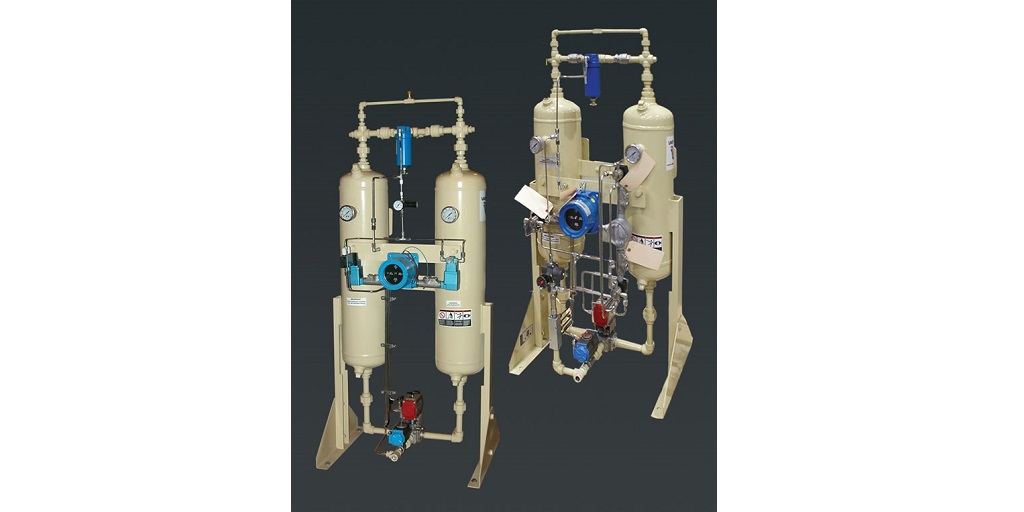
At the point of extraction, natural gas will be combined with a multitude of other hydrocarbons, as well as water vapor. High pressure separators will eliminate the majority of the water vapor and liquid that is trapped in the natural gas.
Though most separators are made to distinguish between liquid and gas, three-phase separators can also remove water from liquid hydrocarbons. However, even after a separator, the natural gas may still be relatively wet.
In order to send this gas through the pipeline, the vapors must be removed, including the water vapor and the distillate vapor.
For what reason is natural gas dehydration important?
To eliminate the presence of water vapor, dehydration of natural gas is required. Because of the high concentration of water vapor in the air, hydrates form, natural gas becomes supersaturated, and machinery corrodes.
Hydrocarbons and water can crystallize to form compounds called hydrates, which have the consistency of solid ice. The formation of hydrates takes place in cold, high-pressure well streams.
Saturation is boosted by the elevated pressure, leading to an increase in the amount of water vapor produced. Pipes, valves, and other machinery are rendered inoperable when exposed to hydrates because they freeze and become blocked.
As a result of being oversaturated, gas must be removed from the pipeline before it can be sold.
How Does a Natural Gas Dehydrator Work?
A dehydrator is typically used in order to make natural gas marketable. While the gas’s dewpoint may not be completely eliminated, the conditioning process can reduce its vapor content.
Dehydration equipment comes in many forms, and the term “pipeline dryer” is used to describe a subset of them. A hygroscopic chemical is added to the vessel, meaning that it will soak up any moisture that may be present.
Finally, the dry gas is weighed before being either stored or sold. The chemical in question is most often tri-ethylene glycol but can also be ethylene glycol.
The dehydration unit and the separator are typically installed in front of the tank battery. A desiccant solution is coated on the inside of multiple vessels in a natural gas dehydrator.
This is where we get rid of the mist and droplets that are too tiny for our machines to catch. Drying also begins with the application of a hygroscopic desiccant solution to the prebed’s exposed surface.
The remaining water vapor in the gas is drawn into the desiccant bed, where it is removed. The desiccant tablets situated on the top of the bed are there as a safety net.
Upon exit, the gas will no longer contain any traces of liquid water. In addition to drastically decreasing the amount of moisture vapor in the air, moisture formation is also completely eradicated.
Advantages of Single-Tower Deliquescent Pipeline Dryers
Compressed air can be easily and affordably dried with the help of Van Air single tower dryers. There are no moving parts and no need for electricity in these multipurpose dryers, making them ideal for use in potentially harmful or dirty settings.
Drying natural gas with a PDL dryer from Van Air is a simple and long-lasting option. These dryers have a multi-stage process that allows for optimal performance.
In addition to having no moving parts, they also do not require any sort of power source.
There are a variety of models of natural gas dehydrators available to meet your needs. If you need assistance deciding which natural gas dryer model is best for you, contact Air & Vacuum Process, Inc. Get in touch with the AVP customer support team so that they can provide you with information regarding the most effective methods for drying your compressed air or natural gas.
