
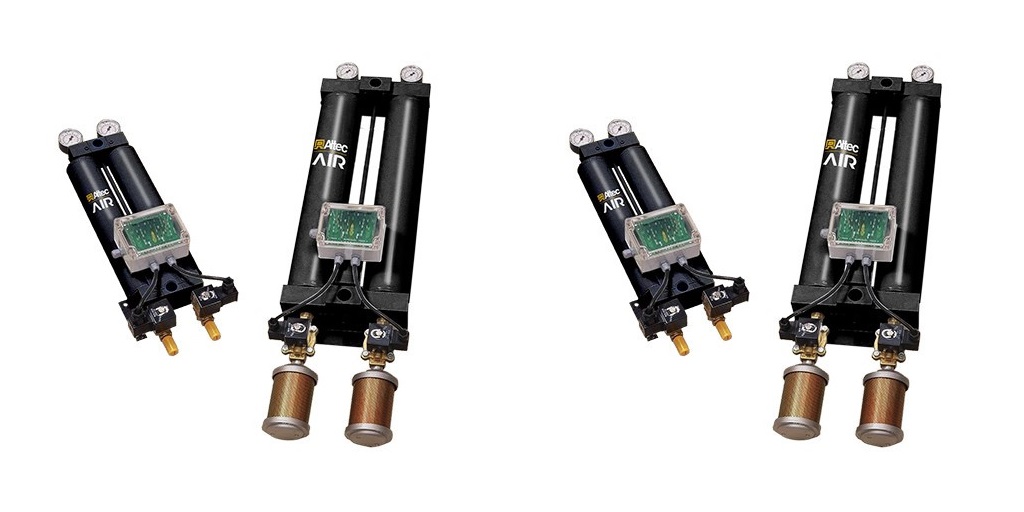
A regenerative desiccant air dryer plays a quiet but critical role in gas chromatograph (GC) systems, especially in laboratories and industrial facilities where analytical consistency is non-negotiable. When you’re doing Gas Chromatography (GC), you really have to watch out for moisture. Even tiny bits of water vapor can mess up your detector, damage your column, and hurt the long-term reliability of your instrument.
Many GC installations rely on regenerative drying for core gas preparation.
The Role of Dry Gas in GC Operation
Gas chromatographs depend on clean, dry gases for several functions. Carrier gases transport analytes through the column. Detector gases—such as air and hydrogen for flame ionization detectors—support stable detection conditions. Instrument air also drives pneumatic valves and pressure controllers. Moisture in any of these streams introduces risk.
Water vapor can shorten column life, destabilize baselines, and contribute to corrosion inside regulators and valves. Over time, these effects translate into drift, repeat analyses, and unplanned maintenance. A regenerative desiccant air dryer addresses this problem upstream, before moisture ever reaches sensitive GC components.
How a Regenerative Desiccant Air Dryer Supports GC Applications
Unlike disposable drying cartridges, a regenerative desiccant air dryer uses twin desiccant beds that alternate between drying and regeneration. One bed actively removes moisture while the other purges accumulated water and prepares for the next cycle. This continuous process allows the system to deliver a stable, low-dew-point gas supply for extended operation.
In GC environments, this stability is essential. Analytical runs may last hours, and laboratories often operate instruments overnight or unattended. Regenerative drying maintains consistent moisture control throughout these periods, supporting repeatable retention times and detector response.
Regenerative Desiccant Air Dryer Placement in GC Gas Purification Train
In a full GC gas purification train, the regenerative desiccant air dryer is typically positioned early in the system. Its primary job is bulk moisture removal, protecting downstream components from water loading.
A common purification sequence looks like this:
- Gas source or compressor – Cylinder supply or on-site generation
- Coalescing and particulate filtration – Removes liquids and solids
- Regenerative desiccant air dryer – Lowers dew point and stabilizes moisture levels
- Final point-of-use purifiers – Remove trace oxygen, hydrocarbons, or residual moisture
- GC instrument inlet – Delivers conditioned gas to the chromatograph
Regenerative desiccant air dryers are standard in analytical labs to reduce moisture. Less moisture allows polishing filters to operate more efficiently and last longer. This crucial step improves gas quality, directly ensuring high-quality data.
Advantages Over Non-Regenerative Drying Methods
Skip single-use desiccants. A regenerative desiccant air dryer provides consistent, reliable drying, which is crucial for Gas Chromatography (GC). This leads to less downtime, greater certainty, and improved control over critical analysis.
The ability to monitor dew point and integrate alarms further supports quality control programs common in regulated laboratories and industrial testing facilities.
A Practical Infrastructure Choice for GC Facilities
In GC applications, gas drying is not a convenience feature. It is part of the analytical foundation. Facilities that invest in regenerative drying often do so to protect instruments, support validated methods, and reduce long-term operating risk.
Companies often source gas preparation equipment, including regenerative desiccant air dryers, from suppliers like Air Vacuum & Process Inc. for their chromatography systems.

