
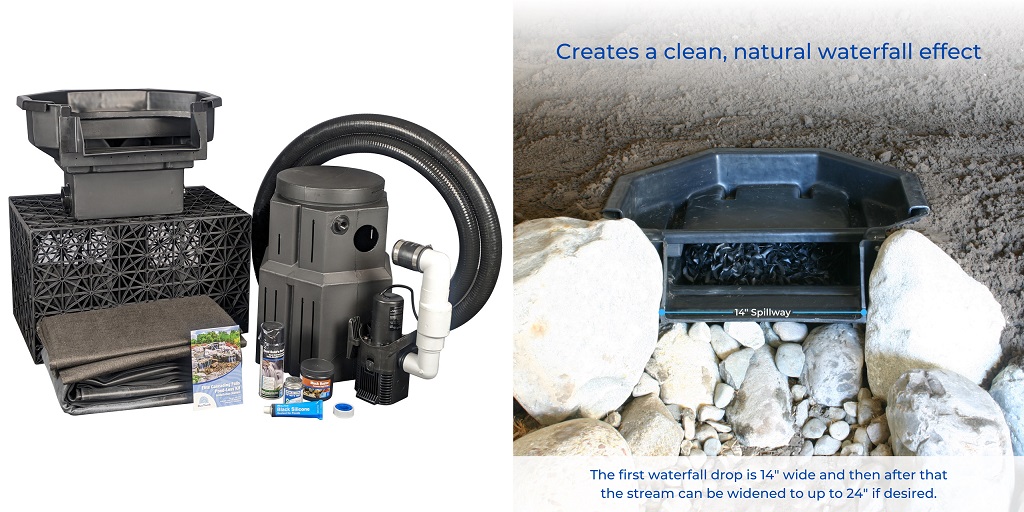
A pondless waterfall kit often becomes the quieter solution when shared water features start causing more stress than value.
People responsible for retention basins, shared ponds, and decorative water features rarely set out to become water managers. It usually comes with the role. Complaints show up first. Then safety questions. Then the ongoing maintenance that never quite fits the budget or schedule. At some point, the original idea of a calm water feature starts working against the space it was meant to support.
That is where a different approach begins to make sense.
When a Pondless Waterfall Kit Fits Shared Spaces Better
A pondless waterfall kit removes the biggest issue most shared water features struggle with. Standing water.
In community settings, standing water raises concerns fast. Slips. Mosquitoes. Liability. It also invites organic debris to settle, break down, and turn into maintenance calls. Leaves fall. Sediment collects. Algae follows. Even a well designed pond becomes a point of friction when it is shared by many people and managed by a few.
A pondless system keeps water moving without holding it in an exposed basin. Water disappears into a gravel reservoir below grade and recirculates back to the top of the feature. From the surface, it looks complete. From a management standpoint, it stays contained.
Safety improves immediately. Pondless waterfalls are a huge plus for safety in facilities and associations. Since there’s no open pond, safety concerns about children or pets falling in are eliminated, making it safer than relying on signs or fences.
Why Maintenance Matters More than Aesthetics Over Time
While decorative ponds initially look great, they quickly become a maintenance nightmare. Accumulated sediment, runoff, pollen, clippings, and duckweed turn a simple feature into a demanding chore, not an enjoyment.
For shared ponds and retention basins, where function often outweighs aesthetics, the problem is compounded. The buildup of organic material rapidly leads to murky, foul-smelling water. This accumulating pond muck is not only a major functional issue but also a significant, visible eyesore for anyone nearby.
Getting rid of the basin in a pondless waterfall makes maintenance way easier because there’s no basin to catch all that gunk. Less organic stuff breaks down, so your big seasonal cleanouts are much quicker. The pumps are easier to get to, and your team can spend less time scooping things out and more time making sure the water is flowing perfectly.
Over time, the reduction in labor often matters more than the original installation decision.
Visual Impact Without the Usual Concerns
Water movement changes how people experience a space. The sound softens traffic noise. The motion draws the eye. It signals care without demanding attention.
A pondless waterfall kit delivers that visual and sensory benefit without creating another feature that needs explaining or defending. There is no need to justify water depth. No concern about water quality complaints. No worry about children leaning too far in.
In shared environments, that balance matters. People want features that feel intentional and calming. They also want them to fade into the background when everything is working as it should.
For property managers and boards, this approach often feels like a reset. Not a removal of beauty, but a refinement of it.
Those evaluating future upgrades or replacements often find it helpful to look at options available through Blue Thumb when weighing long term maintenance against appearance.
In many shared spaces, the shift toward a pondless waterfall kit is less about trends and more about practicality, which is why so many teams ultimately choose to shop at Blue Thumb.
For More Information About Basalt Column Fountain and Pond Cleaner please Visit: Blue Thumb.
