
Interested in getting a unicycle and learning how to ride?
Perhaps you already have a unicycle and you’re interested in outfitting it with new crank arms or pedals?
Hopefully, this guide will answer a few of your questions.
Square Taper Cranks vs. Splined Cranks (Like ISIS Cranks)
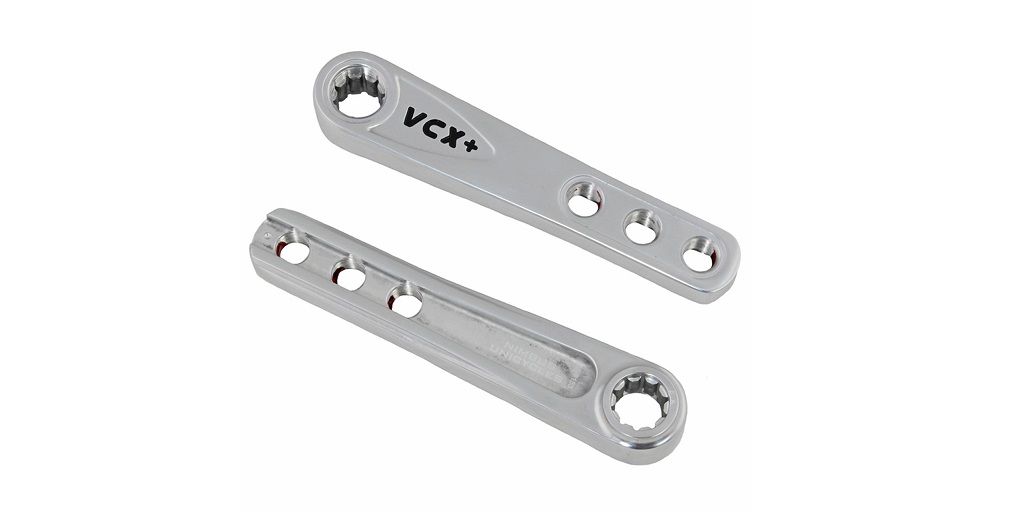
The two most common types of crank-hub axle interfaces that most unicycle cranksets have are called square taper cranks or splined cranks, like ISIS cranks.
Square taper cranks have a hub axle interface that is square in cross-section and which fits into a correspondingly square-shaped hub axle. They are affordable to produce and are serviceable, but should never be ridden loose or improperly installed or the corners can deform, ruining the crankset and possibly the hub axle.
There are also splined cranks that have teeth that correspond to a similar hub axle interface. They are more expensive than square taper cranks, but they are much stronger and better for hard-use unicycles, like mountain unicycles.
Wheel and Crank Size Compatibility
Since, in a unicycle, the crank arms will be affixed directly to the hub axle, the length of the cranks will determine how much leverage you have over the wheel.
At the same time, the shorter the cranks, the faster you will be able to ride.
However, not all sizes are compatible, and the wheel size is the direct determinant of suitability.
Here’s what you need to know, by size:
● 16” unicycles: These are among the smallest unicyles and can only accept crank arms that are 100mm or smaller or else the cranks will hit the ground when riding.
● 20” unicycles: The longer the crank arm, the more control you will have; most beginner riders are successful with crank arms between 114mm to 125mm. If you have a 20” freestyle unicycle then 75mm and 89mm are suitable for advanced and intermediate riders, with 100mm and 114mm options better for speed.
● 24” beginner unicycles: Both 140mm and 150mm cranks are good for all-around riding. On the flipside, 125mm cranks offer a decent balance of speed and control. Opt for 114mm cranks if speed is a priority.
● 24” to 29” road unicycles: 125mm crank arms are good for most applications; go with 114mm for speed, and 150mm if you need greater control over speed.
● 24” to 29” mountain unicycles: Control is more important than speed here. Crank arms of 150mm are great for standard muni riding. 165mm and 170mm are better for control on hilly terrain or for technical climbing. However, if you have a 24” muni unicycle, 165mm is as large as you can go.
● 32” and 36” unicycles: If you have a unicycle with 36” or 32-inch tires, 150mm is ideal for beginners. However, 125mm is a general all-purpose size for intermediate and advanced riders. Smaller crank arms – 75mm, 89mm, 102mm, and 114mm models – will give you excellent top speeds but will severely hinder control.
Need New Cranks or Pedals?
Whether you’re looking for a new unicycle or just new crank arms or pedals, visit Unicycle.com. They have a huge collection of parts and tools and their staff is super helpful. Get in touch with them via the above link today!
