
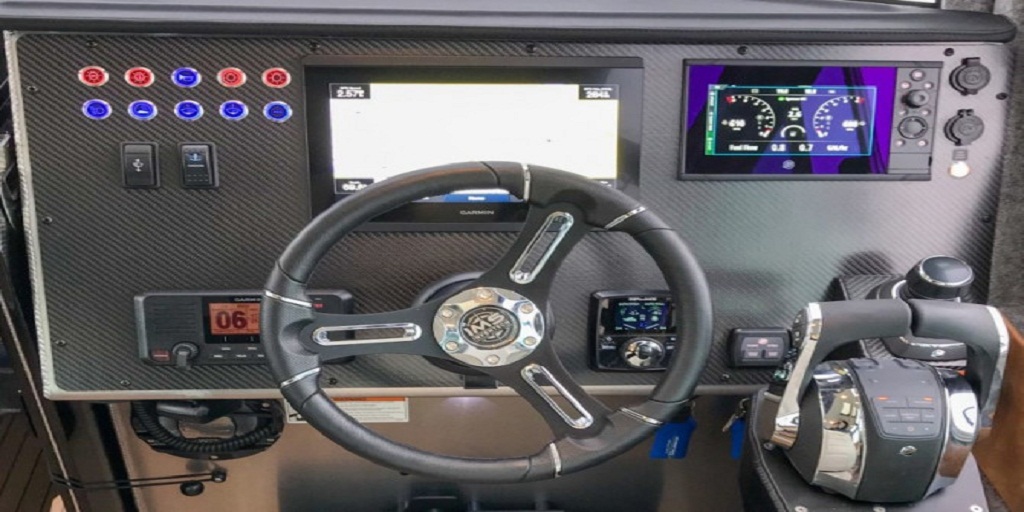
Carbon fiber is well-known for its impressively numerous remarkable features. This polymer is not only ten times stronger than steel but also five times lighter than it– and is even 1.5 times lighter than aluminum.
Another key feature of carbon fiber is that it has an astounding specific strength (the strength to weight ratio). Carbon fiber is at a whopping 2457 while aluminum alloy, for example, is at a measly 254. This ultimately means that carbon fiber is the optimal amount of both strong and lightweight.
These reasons (among many others, like its rigidity, weather-resistance, and longevity) are why so many industries utilize this unique and versatile material in their products, from spacecraft and drones to toys and electronics.
When deciding on investing in custom carbon fiber parts for your business, you are indeed starting off on the right foot– but you also need to figure out key specs to best fit your needs.
Specific Application
This should undoubtedly be your first consideration above all else: what do you need carbon fiber to do for you? For example, if you are looking to create carbon fiber knife scales, you’ll not shockingly require different dimensions and capabilities than someone looking for a panel for an airplane!
Tow and Thickness
The process of creating carbon fiber is indeed a rigorous one that manufacturers need to follow to a T. Carbon fibers are often weaved into fabrics, which are created first by creating bundles of these fibers called tows.
Tows are rated on their number of carbon filaments in each tow. For example, you will often see tows of 3K, 6K, 12K, and 15K. The “K” stands for one thousand, meaning a 3K tow, for example, is made of 3,000 carbon filaments. One strand of carbon fiber is 5 or 10 microns thick, so a 6K tow would be 0.25” thick.
Carbon fiber can come in a variety of thicknesses depending on your (and your product’s) requirements. Carbon fiber plates, in particular, come in a range of thickness options: 0.010” (0.25mm) to 1.00” (25.4mm).
Weave Type
Carbon fiber fabric is woven in different ways to best adhere to a variety of applications. The top three are plain weaves, twill weaves, and harness satin waves (although there are others available, too).
A plain weave is essentially what its title implies: a standard weave pattern of “over, under,” leading to a checkered pattern. A twill weave is the most commonly recognized pattern, which also has the “over, under” pattern, but typically in either a 2×2 or 4×4 option. Harness satin weaves are easiest to wrap around more complex contours.
Finish
Carbon fiber also has different finishes for you to choose from. Carbon fiber sheets come in several common types of finishes, such as satin, high gloss, semi-gloss, textured, and matte.
Dimensions
The overall dimensions of your custom carbon fiber parts are yet another important consideration. Carbon fiber sheets come in a variety of sizes to meet your specific needs (which also depend on the manufacturer you choose).
The Carbon Fiber Manufacturer
That leads us to our last point: your chosen manufacturer. You should opt for one that is communicative, knowledgeable, agreeable in pricing, has a variety of high-quality offerings, and ultimately meet your needs (and any that may come down the line!).
One of the best carbon fiber manufacturers on the market today is Protech Composites. They take every carbon fiber creation they muster seriously– so much so that they guarantee no porosity, no voids, and no pinholes. Start your custom carbon fiber parts order today by calling Protech Composites’ dedicated customer service team at 360-573-7800.
