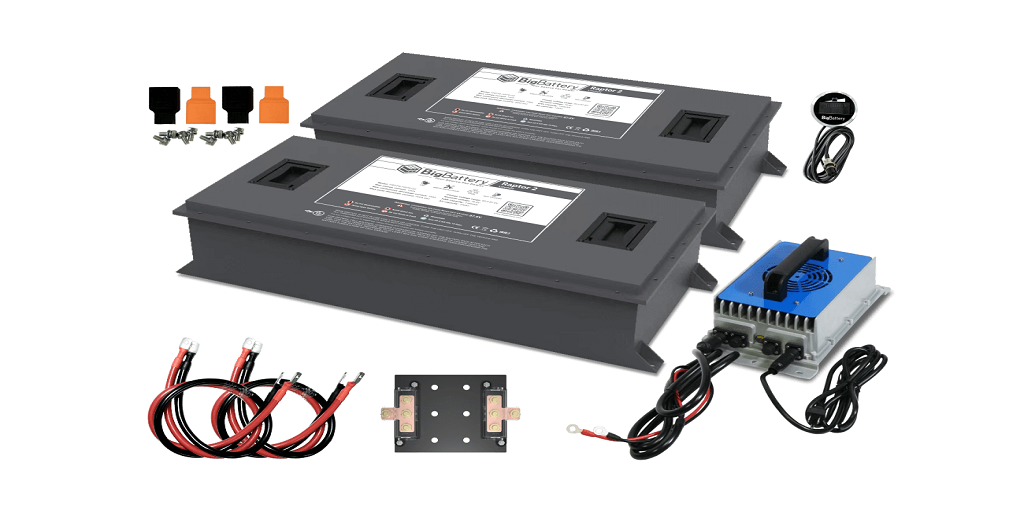
In your search for better, more powerful, longer lasting, and safer batteries, you have likely come across lithium batteries such as LFP, or lithium iron-phosphate batteries, that promise all of these attributes and then some.
Critically, however, they are often equipped with a system known as a battery management system, or BMS, which significantly increases their safety compared to other lithium batteries, especially when charging.
This short post will elaborate on the nature of a battery management system, what it does, and why it is an important element of lithium battery infrastructure.
Battery Management Systems Explained from a High Level
A battery management system, AKA a BMS, is a system that monitors the health of the batteries managed, as well as protects them.
It is important to note that there is no fixed “battery management system” and that the system itself will vary in size and scope depending on the type and number of batteries used, as well as their voltage, capacity, and other factors.
However, regardless of this consideration, a battery management system will:
- Monitor the battery
- Estimate the battery’s life/state/charge level
- Optimize battery performance
- Protect the battery (for instance, against overcharging or overheating)
- And report on captured data
One of the big ways in which a BMS will monitor battery performance and protect the battery is through electrical management protection with respect to current. Lithium batteries, for instance, have different current limits for charging and discharging; a BMS will keep the current within the acceptable range during both states.
Lithium-ion cells must also remain within a specified voltage range when both charging and discharging. A BMS will monitor the electrical potential during both states and ensure that the voltage neither dips too far nor spikes excessively, both of which can potentially damage the battery’s cells.
A BMS will also, critically, monitor the temperature of the battery, not just when the battery is in use, but when it is being charged. Therefore, a BMS is a vital system that helps prevent batteries from overheating during charging, providing a level of active thermal management.
This is one of the main concerns that some consumers have with lithium batteries, as some types can experience “thermal runaway” during charging, in which they get hotter and hotter until they eventually rupture and ignite. A battery management system can very effectively help prevent this.
It is also important to note that a BMS will not just protect lithium batteries from overheating, but from becoming too cold (which can also damage the battery chemistry and thereby its power and capacity) as well. By protecting batteries against both extreme high and low temperatures, a BMS can extend the life of the battery.
It is also the case that when more than one lithium-ion battery is connected in a series or stack, the batteries themselves will experience leakage as well as different self-discharge rates. There is no way to prevent leakage or self-discharge, but allowing it to go on unchecked and unmanaged will eventually have a significant impact on the overall health and longevity of the system.
A battery management system will monitor leakage as well as self-discharge, charging and maintaining the individual cells as needed to protect them from untoward damage and maintaining an optimal state of health.
In summary, while there is more than one “type” of battery management system, a BMS can:
- Protect your batteries
- Ensure they last longer
- Ensure that the battery pack offers optimized, peak performance
- Minimize leakage and self-discharge
- And help prevent safety concerns, like fires
This is only a snapshot of the value offered by a battery management system, but suffice it to say that they are so valuable that all quality lithium batteries are equipped with a BMS to protect and sustain them.
If you’re interested in probing further and learning more about what a BMS does, visit BigBattery or contact their customer service team today. They can speak with you more at length on the nature of what a battery management system is and can accomplish.
For More Information About Solar Battery and Battery Lithium Ion 48v Please Visit: BigBattery.