Have you ever seen an image of a production floor or a semi-automated facility that had a tall, multicolored light that vaguely resembled a traffic light?
If you did, you’re not crazy – but no, they’re not directing traffic.
These are called tower signal lights, and they are critically important pieces of the electrical infrastructure involved in process control and automation.
This is what you need to know.
What Are They Used for?
Tower signal lights are used to communicate information about automated processes to the operators and supervisors overseeing them.
These lighting configurations are typically controlled by PLCs (programmable logic controllers), but they can also be controlled by timers or sensors, which can activate them in the event of a disruption or failure.
In essence, they are designed to communicate “at a glance” information about the status of a process – whether it is progressing smoothly as planned, halted, or otherwise (see “What Do the Different Colors Mean, below).
Stack lights can be used for productivity monitoring, to monitor CNC machining and other precise, automated processes, for lean manufacturing, and more. In addition, these lights can also be used to call attention to a process that has been interrupted or as warning lights.
Do Tower Signal Lights Have Other Names?
Tower signal lights actually have a wide range of different naming conventions. They’re known by many different names including but not limited to the following: tower lights, signal tower lights, indicator lights, warning lights, industrial signal lights, and others.
However, in addition to being called signal tower lights, some of their most common names are Andon lights and stack lights (because of their vertical orientation).
What Do the Different Colors Mean?
Stack lights commonly consist of a series of colored “stacked” lights, hence the name. The number and color of lights in the “stack” will depend on the circumstances and unique needs of the situation, but these are some of the common colors and their meanings:
Red: Indicates that a process has been interrupted, is not proceeding, or that an emergency stop has been activated. Some simple tower lights have only one color, and it is often red. Some systems also contain an audible alarm to alert operators and supervisors of system error or disruption.
Yellow: Yellow lights convey some warning to the operator or supervisor, such as a machine overheating, operating under excess pressure ratings, or experiencing some other type of extreme condition.
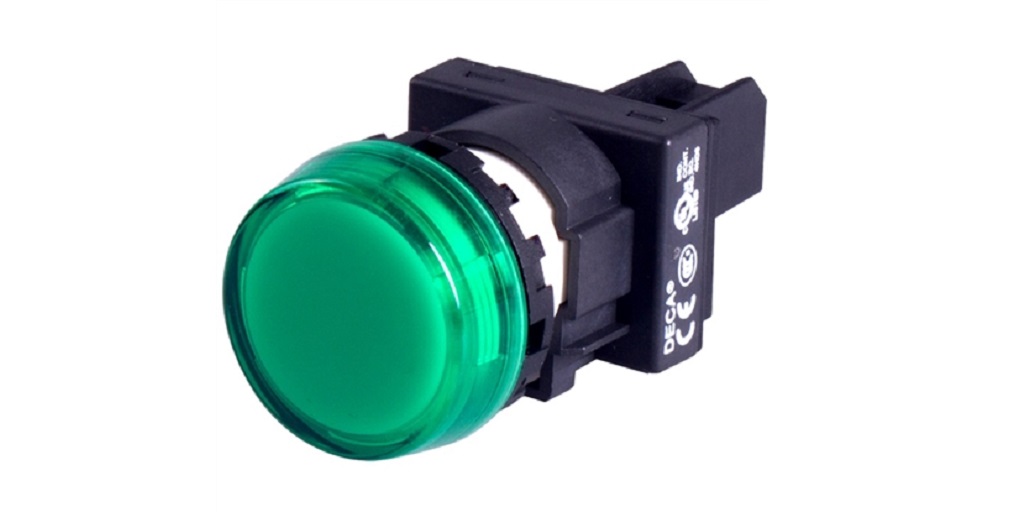
Green: Green typically indicates normal machine operation.
Blue: Blue represents some sort of help request from the machine, or, if an operator is present, from the operator. It indicates that the machine needs either some maintenance or attention or additional raw materials in order to resume normal operation.
Some machines also have white lights in their stack light configuration – however, what white signifies is subjective to the specific scenario.
Why LED Is Better?
In the past, many stack lights were made with incandescent lights. However, as you may know, incandescent lights consume massive quantities of electrical energy in order to achieve their luminous output. In addition, they produce a lot of heat as a byproduct and have short operational lifespans.
As a result, some producers have created LED tower signal lights as replacements, which offer significant benefits over incandescents.
LED lights have a much longer lifespan, are much more energy-efficient, start up and reach full brightness immediately, even in extreme conditions, contain no harmful chemicals, and produce less heat. All of these items result in cost savings for operators.
Where Can I Get Tower Signal Lights?
Visit ProductsforAutomation.com at the previous link if you are looking for tower signal lights to upgrade, update or replace your current infrastructure. They carry a wide range of tower lights from Menics and Qronz, along with a wide variety of other quality LED lighting products and fixtures.