
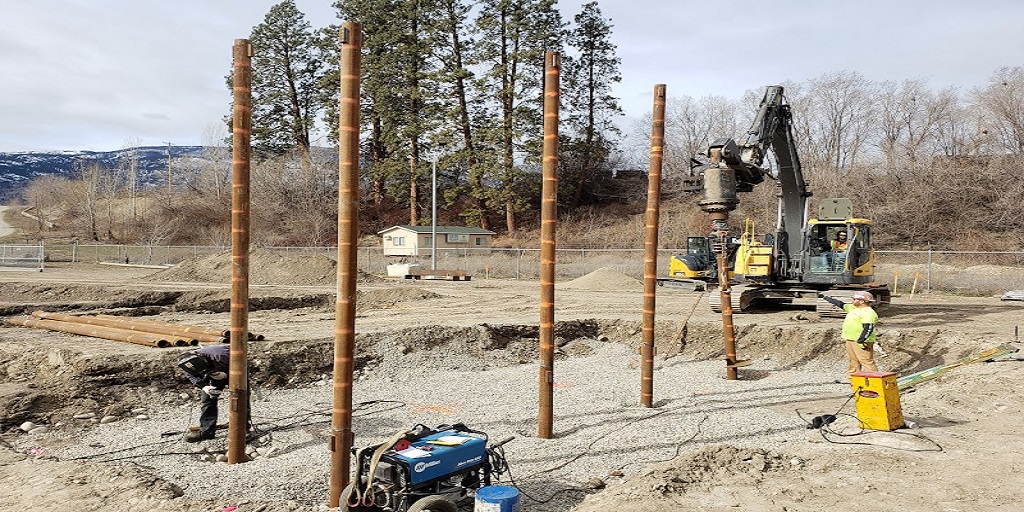
When planning any construction project, one of the most critical decisions involves the type of foundation to be used. Among the various options, helical pile installation has become increasingly popular due to its versatility and effectiveness. However, the decision to implement foundation piling, particularly helical piles, is heavily influenced by the type of soil present at the construction site. Let’s explore how different soil types affect the choice of foundation piling and why helical piles are often a preferred solution.
Soil Types and Their Impact on Foundation Stability
The type of soil at a construction site plays a crucial role in determining the stability and longevity of a structure. Soils vary widely in terms of composition, density, moisture content, and load-bearing capacity. The most common soil types encountered in construction include clay, silt, sand, gravel, and rock, each with unique characteristics that influence foundation decisions.
- Known for its expansive properties, clay can pose significant challenges in construction. It tends to swell when wet and shrink when dry, leading to shifting and instability in foundations. In such conditions, helical pile installation is often recommended. Helical piles can penetrate through the clay layers and reach more stable soil or bedrock beneath, ensuring a solid and reliable foundation.
- Silt soils are prone to water retention and can become unstable under load. This type of soil requires careful consideration when selecting a foundation. Helical piles are advantageous in silt because they can be driven deep into the ground, bypassing the unstable layers and anchoring securely in more stable material.
- Sand:. Sandy soils are generally well-draining but can lack cohesion, especially when dry. This can lead to issues with traditional foundations, which may not distribute loads evenly. Helical pile installation is often ideal for sandy soils, as the piles can be screwed deep into the ground, providing stability and preventing foundation settlement.
- Gravel and Rock. Gravel and rock soils offer excellent load-bearing capacity and are generally stable. However, the installation of traditional foundation systems can be challenging in such dense materials. Helical piles are often preferred in these conditions because they can be installed with minimal disruption to the surrounding environment and provide a robust foundation.
Why Helical Pile Installation Is a Preferred Choice
Helical piles offer several advantages over traditional foundation systems, particularly in challenging soil conditions. They are versatile, can be installed quickly with minimal excavation, and provide excellent load-bearing capacity. This makes them an ideal choice for projects where soil conditions are less than ideal.
One of the key benefits of helical pile installation is its ability to adapt to various soil types. Whether dealing with expansive clay, unstable silt, loose sand, or dense gravel, helical piles can be tailored to meet the specific needs of the project. The ability to reach deeper, more stable layers of soil ensures that the foundation remains secure, regardless of the challenges posed by the surface soil.
Moreover, helical piles can be installed in all weather conditions, making them a reliable option for projects with tight timelines. The installation process is also less invasive compared to traditional methods, reducing the impact on the surrounding environment and minimizing the risk of damage to nearby structures.
The type of soil at a construction site is a critical factor in determining the best foundation system. Helical pile installation offers a versatile and effective solution, particularly in challenging soil conditions. By understanding the unique properties of different soil types, engineers and contractors can make informed decisions that ensure the stability and longevity of the structure. Whether dealing with clay, silt, sand, or rock, helical piles provide a reliable foundation that adapts to the specific demands of the site.
