
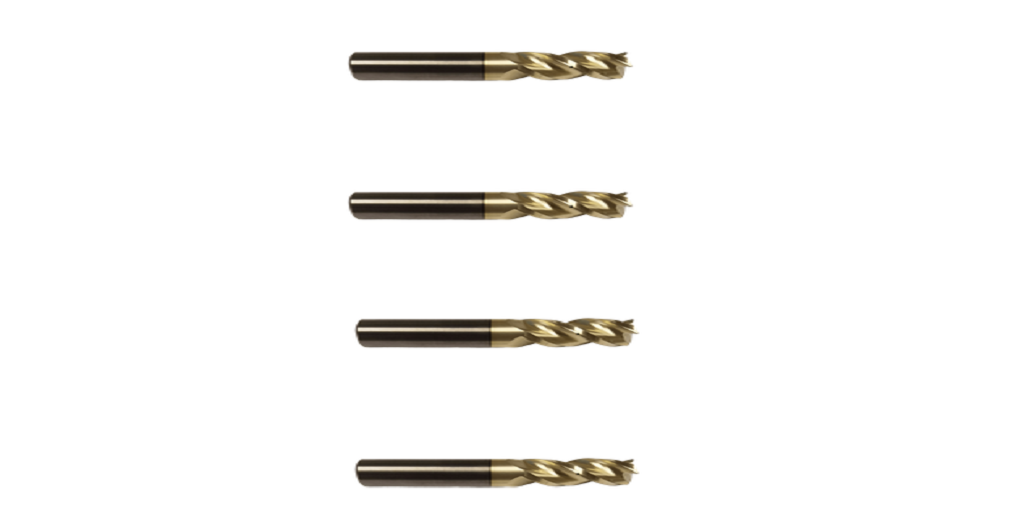
When it comes to choosing an end mill for a certain milling task, it is important to consider both the type of milling task that you are performing as well as the materials that you are going to be machining. One of the biggest material differences as far as cutting tool design is steel and aluminum. End mills for performing identical tasks in these tool materials will look extremely different. Today we will be looking at the design considerations that go into both end mills for aluminum and steel.
While both of these materials are metallic, and therefore share certain characteristics, they have plenty of properties that make them very different to work with. Steel is an extremely strong and dense material that, while flexible, will break into smaller chips when cut at high speeds. Aluminum is a comparatively soft metal that is more flexible and therefore prone to produce larger chips that bend instead of breaking. In order to work with these materials, milling machine operators need tools that are designed to compliment the characteristics of both of these alloys.
End Mills for Aluminum
Aluminum is an extremely common material in many manufacturing environments because of the fact that aluminum alloys are designed to be strong while also being lightweight compared to other alloys such as steel. Because aluminum is so soft, speed is the name of the game when it comes to machining. End mills for aluminum have to be strong enough to handle high speed machining while also allowing quickly evacuating the large chips from the aluminum.
End mills for aluminum should have relatively low flute counts that leave enough room between flutes for the large chips to be evacuated. They also tend to have higher helix angles that help to put more upward force on the chips, pushing them away from the cutting points. Because aluminum chips are soft and easily stick to tool surfaces, most of these tools are treated with a gold colored ZrN coating material.
End Mills for Steel
If you need to make extremely strong components, then you need to start with strong materials. In that department, steel is hard to beat. Steel alloys combine iron, carbon, and various other metals to create an extremely strong material. Unlike aluminum, steel creates small chips and is very dense. This means that tools for cutting steel need to make a larger number of smaller cuts compared to tools for cutting aluminum.
For high carbon steels that produce very small chips, higher flute counts will help to make a clean cut. For most steel alloys, four flute tools are ideal for cutting into the workpiece easily. Many tools for cutting steel will also be coated with TiAlN or another material that will help to insulate the tool against the high temperatures generated by friction.
If you are interested in finding high quality end mills for your shop, you can find end mills for aluminum and steel when you visit Online Carbide. All of their high performance milling cutters are constructed from sturdy carbide tool stock and they are manufactured right here in the US. To see all of the tools that they have to offer, visit their online store at www.onlinecarbide.com!

