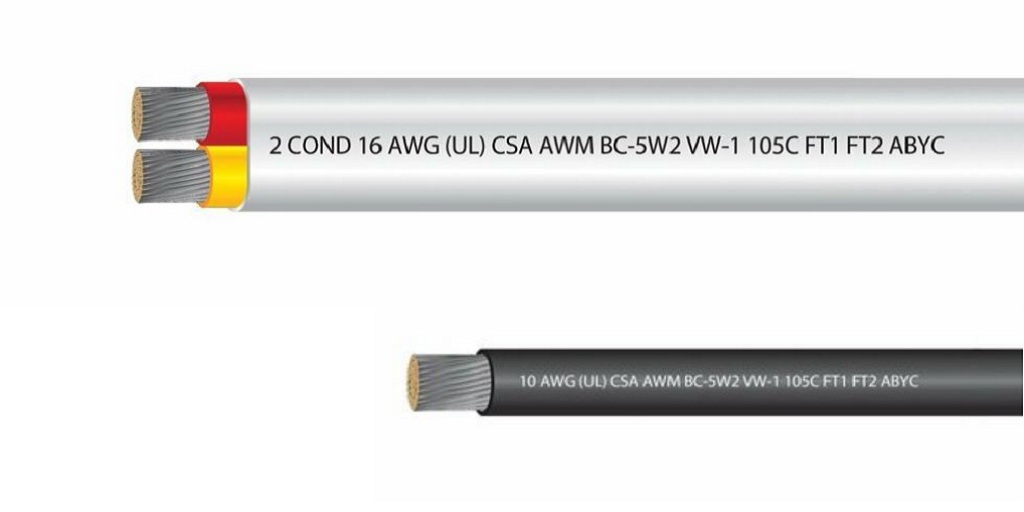
It’s not unusual for boat battery cables to be constructed of copper, but they have a special property that enables them to withstand the harsh conditions they work in. Nautical battery cables seem silver whether you’ve done your marine wiring or merely checked them out at an electrical supply store.
However, they are not silver. Despite their silver appearance, they aren’t even made of aluminum, which has high electrical conductivity, is lightweight, and is pliable enough to be utilized for electrical wire in certain places.
To verify that marine battery cables are acceptable for use as electrical leads in maritime conditions, there are two particular characteristics to look for in the cables. The first of these characteristics is a great degree of flexibility. Even if you aren’t confident in product labels, you can get the information you need by reading the specs just after “a marine battery cable.”
Individual copper conductors with a very high strand count are the ones you’re searching for. The battery cable’s flexibility and forgivingness increase with the number of strands. The actual number of conductors will vary depending on the wire gauge, however, it is not unusual for boat battery cables to have massive amounts of conductors in each cable.
There are two major benefits to having a degree of flexibility. When a boat is moored in a marina or dock, it will be constantly moving, even though it seems to be still. Cables that can’t bend will not hold up when everything is moving, and we all know what that means.
Second, the enclosed spaces of ships and boats, such as those found in battery compartments, are notoriously harsh. Marine battery cables must be bent to accommodate the surroundings since there is a limited amount of room to deal with them, to begin with. An inflexible wire is just as difficult to deal with as a stiff one in this instance. Using a pliable cable is preferable.
Additional to flexibility, you should search for a marine battery cable that has separately shielded conductors. PVC jackets or insulation are not sufficient to protect cable conductors in maritime environments from corrosion.
Since copper has such a low resistance, it makes for a great conductor, allowing huge currents and voltages to flow through it with minimal risk of burning up.
As a consequence of copper’s chemical and physical qualities, it is a highly reactive metal that is easily corroded by salt water and other corrosive substances found in it. Because of the large surface area and thin copper strands used in boat battery cables, corrosion from seawater would occur fast if the wires were not shielded properly.
At low temperatures and low oxygen concentrations in saltwater, copper easily oxidizes. An unusual blue-green “patina” forms on the metal as a consequence of this reaction with atmospheric copper. Copper’s electrical properties are essentially destroyed, which is why it is so important to used tinned wire that can resist corrosion.
Learn about high-quality battery cables and other specialized wires and cables at EWCSWire.com, a company that specializes in electrical wires and cables.
It isn’t only their extensive cable variety that sets them apart from the competition; their customer care staff is an invaluable source of information for anyone looking to learn more about the many types of specialty cables they provide. Visit their website or call them at 800-262-1598 or sales@ewcswire.com to get in contact.