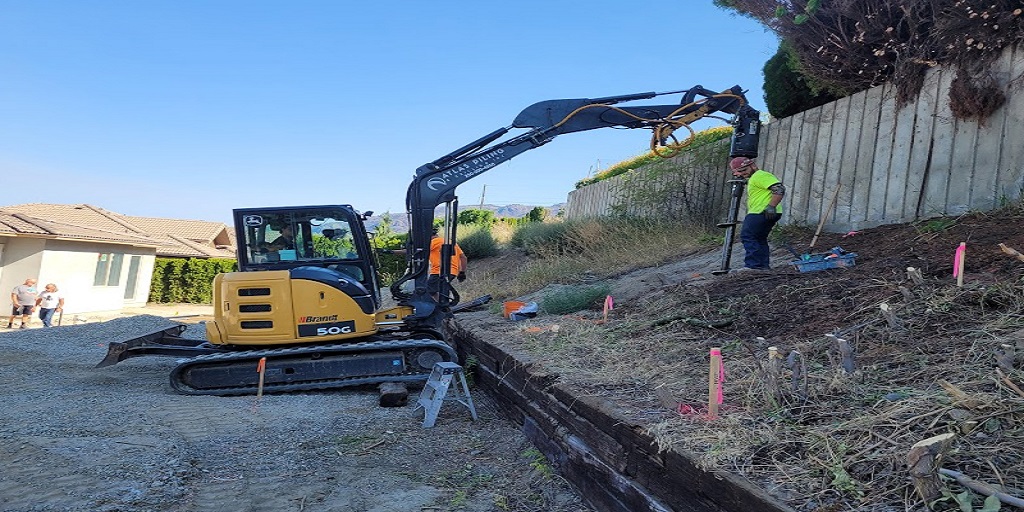
Designing reliable foundations requires a careful balance between engineering principles and real-world performance. Among the most important steps in ensuring long-term stability is load testing, particularly axial and lateral load testing. For projects that rely on helical piles, these tests are not just technical requirements—they are the benchmarks that confirm performance under varying ground and structural conditions.
Why Axial Load Testing Matters
Axial load testing evaluates how a pile behaves under vertical forces. This is essential because structures transfer their weight downward, creating compressive and tensile stresses in the foundation system. By performing an axial test, engineers can determine how well helical piles resist settlement under these vertical loads.
There are two main directions considered in axial testing:
- Compression: The downward force applied to simulate the building’s weight.
- Tension: The upward pulling force that may result from wind uplift, seismic events, or buoyant forces.
Accurate axial testing ensures that the pile capacity aligns with the expected service loads. It also provides critical safety factors, reducing the risk of premature settlement or costly structural repairs down the line. For contractors, this type of testing validates design assumptions and assures stakeholders that the foundation will perform as intended.
The Role of Lateral Load Testing
While axial testing focuses on vertical resistance, lateral load testing measures the pile’s ability to withstand horizontal forces. These are equally important because many structures are exposed to side loads from wind, seismic activity, or soil movement. Bridges, retaining walls, towers, and waterfront structures, for example, rely heavily on lateral resistance.
In helical pile systems, lateral load testing helps confirm that the piles can resist bending and deflection without compromising stability. Engineers use this data to refine pile spacing, embedment depth, and shaft diameter. By testing lateral response early, project teams can avoid excessive movements that might jeopardize both structural performance and serviceability.
Key Differences Between Axial and Lateral Testing
Although both methods assess load capacity, the conditions and performance metrics differ. Axial testing typically measures settlement under vertical forces, while lateral testing measures horizontal displacement under sideways forces.
- Failure Mode: Axial failure often results from insufficient soil bearing or pile depth, whereas lateral failure may involve soil shear or excessive pile deflection.
- Instrumentation: Axial testing generally relies on hydraulic jacks and dial gauges to monitor settlement. Lateral testing often involves load frames and deflection gauges placed perpendicular to the pile axis.
- Design Impact: Results from axial testing influence pile load capacity ratings, while lateral testing guides spacing, embedment, and bracing requirements.
Together, these complementary tests provide a holistic understanding of pile behavior, ensuring that helical piles can withstand both vertical and horizontal stresses throughout a structure’s lifecycle.
Why Load Testing Should Never Be Skipped
Skipping load testing might seem like a shortcut to save time and money, but the long-term consequences can be significant. Structural damage, unexpected settlement, or even partial failure can result in remediation costs far greater than the initial investment in testing. For projects that depend on helical piles, thorough load testing is the assurance that the foundation is ready for real-world conditions.
Axial and lateral load testing may approach pile performance from different directions, but together they provide the complete picture. They validate engineering models, fine-tune design parameters, and safeguard against unexpected outcomes. For engineers, contractors, and developers, investing in these tests is more than just due diligence—it’s the foundation of confidence in every project built on helical piles.
For More Information About Land Drilling Companies and Residential Piling Services please Visit: ATLAS PILING.