
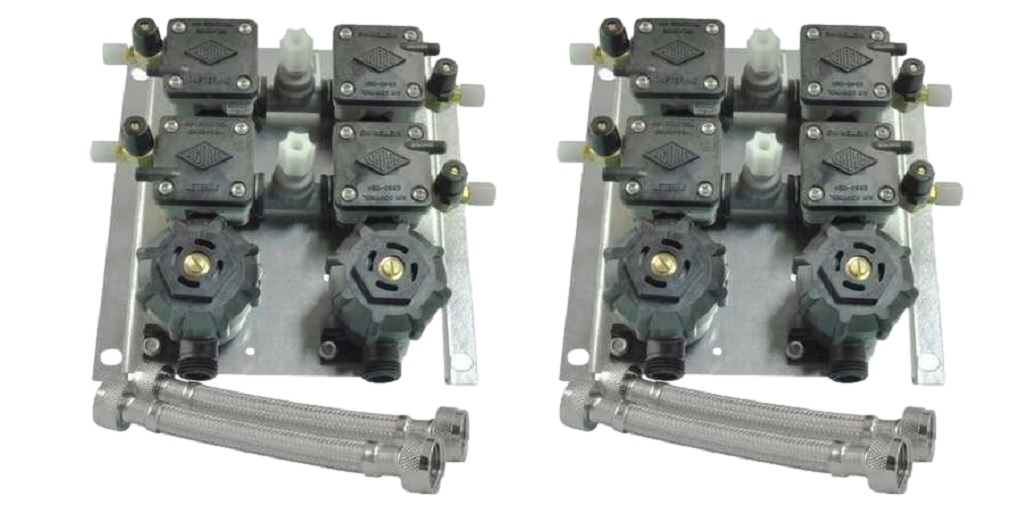
Non-metering, air-controlled Acorn control valves are built to uncompromisingly high standards and offer reliable performance even under adverse conditions, but like all commercial plumbing parts, they are not immune to wear and tear.
This short article will cover some basic troubleshooting for Acorn’s Hot & Cold Air-Control Pneumatic Valves.
Tools Necessary
For common service to these Acorn controls, you will need needle nose pliers, an adjustable wrench or channellocks, flat and phillips head screwdrivers, and a 5/16 nut driver, socket or wrench.
Common Problems and Potential Fixes
First, check that the water main supply is open, then inspect that the check stops are also open; if not, there’s no water supply to the valve.
If that’s not the issue, we’ll check for some common issues that will result in no water flow/failure to actuate. First, turn the brass pin in the center of the check stop strainer clockwise to shut off water to the valve so you can take a closer look without having to shut off the water further upstream of the fitting. (Just make sure you open the check stop after you’re done performing maintenance to restore flow to the Acorn control.)
The first thing you will want to make sure is that the check stops are not clogged with debris, which can impair the performance of the air control valve.
Next check the ⅛” OD tube for leaks. Repair and replace if necessary.
Next check the push button air diaphragm for holes. If the diaphragm leaks and does not produce a good seal, the push button control will not work.
Check the servomotor diaphragm’s center hole to make sure it is not blocked. Clean out or replace this part if necessary.
If all of this checks out, next we’ll look for problems that could be causing the valve to fail, resulting in dripping water or not shutting the water off.
First, look at the servomotor diaphragm offset hole. If there is debris, there might not be a good seal, preventing shutoff and allowing leaks.
Also, check the servomotor seat for debris accumulation or damage. If it does not seat properly, the same issue will arise. Be sure to also check the servomotor plate and diaphragm to make sure there are no other obstructions present that could result in valve failure.
Now let’s consider some issues that might result in premature water shutoff, resulting in a less than pleasant user experience:
Check the ⅛” OD diameter tubing and fittings. Are there any leaks? If so, repair or replace them and the issue may resolve itself.
Next, check the push button air diaphragm for holes. If there are, it won’t regulate pressure properly and the valve may shut off the water too quickly.
I’m Here Because I Need New Acorn Controls
Looking for a supplier of genuine Acorn controls and parts? Visit Quality Plumbing Supply. They carry thousands of fittings, tools, and commercial plumbing parts from the most respected brands in the industry, and Acorn Engineering is only one.
Visit their website for more details and sign up for an account with them today so you can start saving.
