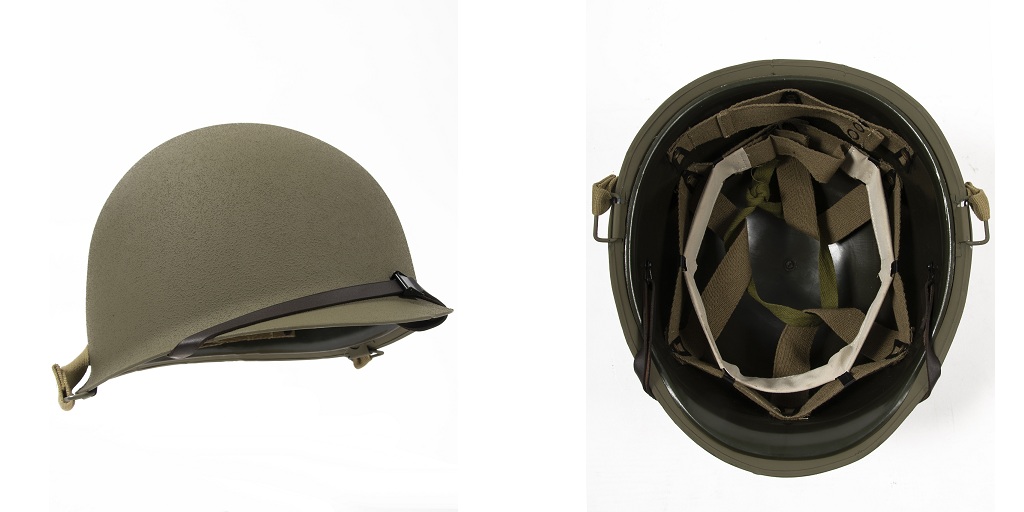
The M1 helmet is common and iconic enough you’d probably recognize it at a glance. The whole US military used them from 1941 all the way up to the 1980s. That means the M1 helmet saw a ton of action: it became one of the best known WW2 helmets, it went to Korea, Vietnam, and a ton of other conflicts. That also meant that it was ubiquitous in movies and series set in war times.
Not many people know that the steel pots, or the metal inside the helmets, were last manufactured in the US in 1967. So, even if you hold in your hand an M1 helmet issued in the 80s, the steel pot could be between sixty and eighty years old, served through 3 wars, and without anybody being able to tell.
The history of how these helmets came to be designed is incredibly interesting.
Steel helmets were widely used by armed forces in Europe as far back as 1916, way before the United States got involved in the first World War. While discussions about the best way to protect our soldiers’ heads happened, the army decided to adopt a British model called the Helmet, Steel, Mark I. That model was inaccurately called the Brodie helmet by some, but it was the one the Americans went for.
When the United States army started manufacturing these, they performed a few slight changes to the Mark I. For example, they discarded the magnesium-steel alloy in favor of a material called Hadfield Manganese that supposedly gave the helmets improved bullet resistance by 10%. The US also modified the helmet’s suspension by replacing the lining with a cotton twine mesh, and the traditional British cowhide chinstrap was also dropped in favor of a web strap and an innovative buckle arrangement that unfortunately didn’t stop the helmet to inconvenient the wearer with a tendency to slide around. This new helmet configuration was christened M1917, and 2.7 million of these were produced before the end of the war. However, there still was a concerted effort to create a distinctively American helmet.
The higher-ups didn´t want to be seen as favoring one nation over the other when choosing military gear, so designing our own helmet was in itself seen as a diplomatic, patriotic, and practical effort.
The first designs tried to address what was seen as a flaw the Brodie helmets had. The British headgear didn’t do enough to protect the sides of the wearer. According to many images available today that chronicle the successive proposals for the new helmet, the versions ranged from helmets that resembled the half-cut bells to models reminiscent of medieval pigface bassinets.
The most promising model was the “Number 5” model. However, it kept being rejected or sent back to the drawing board because it looked too much like the German Stahlhelm, and they were afraid it would draw friendly fire in combat.
The government reissued a new version of the old helmet called M1917a. However, it was soon noted that the raised rim designed to protect the wearer from overhead explosions and trench tactics would not work in a new war theater where more mobility was required and projectiles would come from all sides.
An exhibition at the Metropolitan Museum of Art describes the specific requirements for how a helmet should be made according to instructions given to industrialists at the time. It described the dome-shaped steel pot we know today and the iconic flanged rim that makes it so recognizable. That’s how the M1 design finally came to be.
As we stated before, production of the steel shells stopped back in 1967. However, there are incredible manufacturers today dedicated to providing authentic M1 helmets and replicas in the market. Visit At The Front, your online store for everything World War II, and find historic replicas of both Allied and Axis uniforms.