
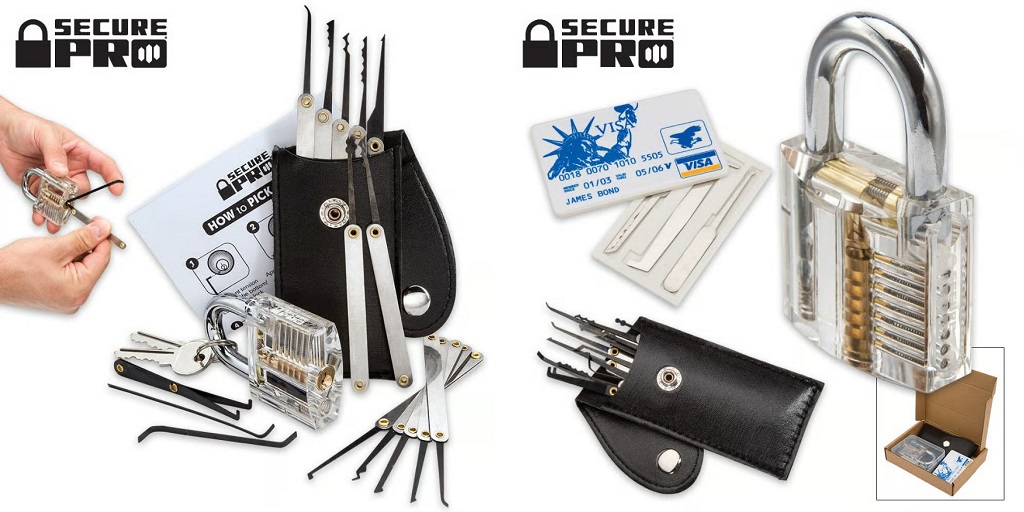
Locksport is one of those hobbies that looks mysterious from the outside but turns out to be very approachable once you understand what it is really about. At its core, locksport focuses on opening locks without damaging them.
The goal is not to break anything or bypass security through force, but to learn how locks work internally and how small mechanical parts interact. For people who love it, the appeal comes from the puzzle-like nature of the challenge rather than the result of opening the lock itself.
What You Need in Locksport
A lock pick set is the main tool used in locksport, and they are designed specifically for this kind of careful, non-destructive work. A typical set includes a variety of picks and tension tools. Picks are thin pieces of metal shaped in different ways, such as hooks, rakes, or diamonds.
These are used to lift pins inside the lock one at a time. Tension tools, sometimes called turning tools or wrenches, apply gentle rotational pressure to the lock cylinder. This pressure is what allows pins to stay set once they reach the correct height, and it also gives the picker feedback about what is happening inside the lock.
Locksport: A Legal Competition
Locksport is practiced openly and legally in many places. People take part for fun, education, or competition. Some enjoy casual practice at home, while others compete in timed events where speed and accuracy matter.
There are also professionals and security researchers who use locksport skills to better understand real-world lock designs and weaknesses. But once competition enters the picture, things get more intense.
Many beginners are surprised by how different it feels to pick a lock under pressure. Nerves kick in, hands tense up, and small mistakes start stacking up. And the following are what most beginners in the sport experience.
Tension Control
One of the biggest issues for new competitors is tension control. It is very common to apply too much force, especially when trying to rush. Heavy tension makes it harder to feel pin movement, causes pins to bind incorrectly, and can even damage picks. Good picking relies on light, adjustable pressure that responds to what the lock is doing.
Using Tension Tools That Do Not Fit
Another frequent mistake is using a tension tool that does not fit the lock properly. If the tool slips or shifts, control over the core is lost, and all progress can disappear in an instant. Beginners often focus on the pick itself and forget that stable tension is just as important, if not more so.
Wrong Pick Selection
Pick selection can also cause trouble. Many beginners grab one pick and stick with it no matter what lock they are working on. Different locks need different approaches. Pin spacing, keyway shape, and depth all affect which pick will work best. Using the wrong profile can make a simple lock feel impossible.
Lock Pick Disassembly
For competitions that involve gutting locks, disassembly introduces another layer of mistakes. Losing control of the core, dropping pins, or misplacing internal parts can quickly derail an otherwise successful run. Poor organization during reassembly can be just as damaging.
A Great Lock Pick Set Prepares You
This is where a good lock pick set really helps. Quality sets include multiple tension tools and pick profiles, which makes it easier to match the right tool to the lock. Better tools also offer more consistent feedback and durability.
When the tools help you to know how a lock will react predictably, it becomes easier to tell whether a mistake came from technique rather than equipment. Over time, that clarity helps beginners build confidence, improve their skills faster, and perform more smoothly when it counts, and that means in competition.
