
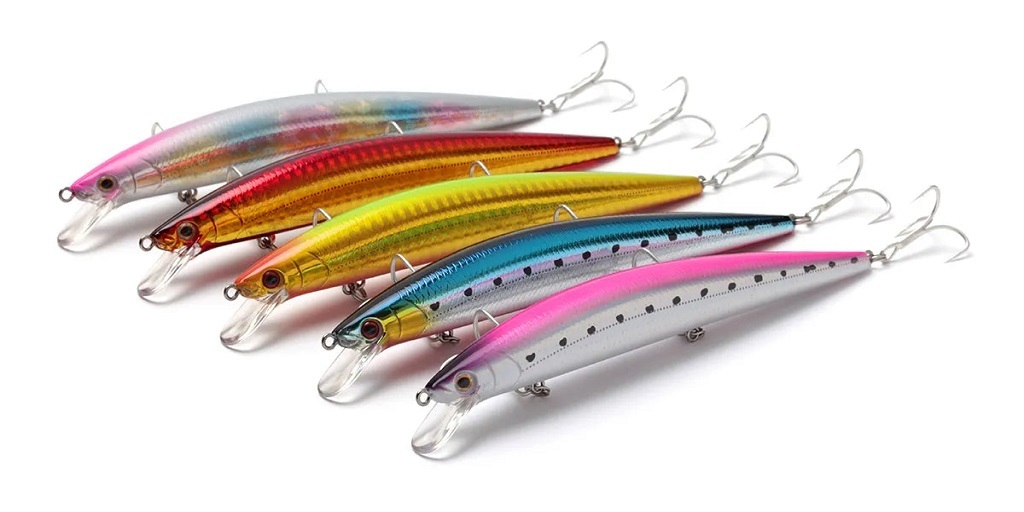
Japanese fishing lures, also sometimes called JDM lures, are nothing new. For years now, brands like Shimano, Daiwa, and Megabass have dominated the market, even here in America – and they command high prices.
Though not all anglers use them, running in favor of American alternatives like Acme and Bridgeport metals, and Rapala plugs, there is still a strong market for them, and they’re effective enough that every angler should consider having a few in the tackle box.
Here are the best arguments in favor of that very thing.
Fishing Culture in Japan Is Serious
First and foremost, the fishing culture in Japan is front and center, whether the target species in question are wild mountain trout, largemouth bass in Lake Biwa, or even common carp. Japanese anglers take their craft very seriously and Japan is a pioneer not only in lure design, but in fishing disciplines; for instance, Japan helped spearhead the finesse fishing in freshwater bass and vertical jigging for the saltwater revolution that is gaining steam in America.
Japanese Fishing Lures Exhibit Unbelievable Quality and Realism
Not to suggest that other fishing lures don’t portray lifelike detail, but Japanese fishing lures are renowned anywhere people fish for their unbelievable attention to quality and downright realism. Holographic scale patterns, lifelike eyes, and other 3-dimensional details customize Japanese fishing lures. JDM lure colors are often few to several more color paint layers which increases defect rate and production so exceptional painting skill is required.
They’re Manufactured to a High Standard of Quality
On top of the realism, many Japanese fishing lures are made to a very high standard of quality, with through-wire construction and premium hooks and hardware, and will last for many years, but more importantly, will continue to catch season after season.
There Are Plenty of Novel and Unique Patterns
Japanese fishing lures are not all your standard stickbaits. There are some very novel patterns in the mix, some of which replicate the details of actual baitfish, others which are characterized by eye-catching details, or creature baits – and all of them have a point and purpose.
There Are Japanese Lures for Every Discipline, Species and Application
There are Japanese fishing lures for casting, jigging, and surf fishing, along with everything in between. Whether your target species is trout or striped bass, there are JDM lures that have been precision crafted – and extensively tested – to target those species effectively.
They Catch Fish
Lastly, and by far most importantly, Japanese fishing lures do what they’re supposed to do: they catch fish. This is the point and purpose of the whole endeavor, and despite the fact that most lures catch more fishermen than fish, this is not necessarily the case with JDM lures.
The point is this: even if nothing else in this article were true, the purpose of a lure is to draw a strike so you can land a fish, and Japanese fishing lures are revered as some of the best in the world for that very thing.
Shop Jackson USA for Japanese Fishing Lures
Want to explore a unique collection of Japanese fishing lures that you won’t be able to find in most sporting goods stores? Visit Jackson USA – they carry a wide range of lures along with plenty of other finesse fishing tackle.
For More Information Abuot Surf Casting Rod and Trout Fishing Pole Please Visit: Jackson USA, Inc.
