
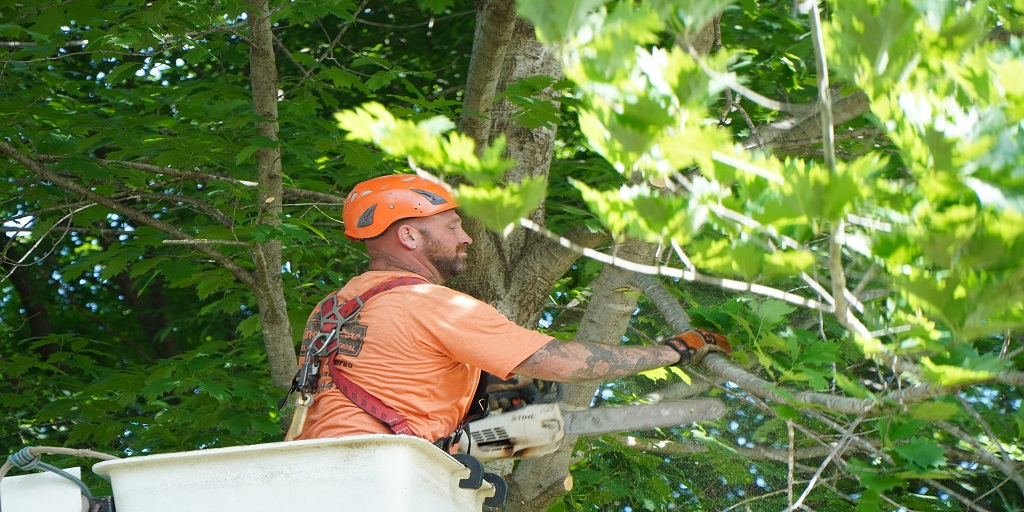
While trees are highly desired for most properties to enhance the aesthetics and property value, sometimes at times, trees can also become a liability especially when they suffer some kind of injury and if they happen to threaten the property causing any damage. The right way of inspecting trees and rectifying the potential problems can help pave way to healthy trees besides preventing any damage to property. Here are the hazards to look for in trees and how to rectify them.
Common problems with branches
Branches that are broken and are dangling and the broken branches that are lodged in the canopy are a potential hazard you must identify and rectify. Leaves absent during growing season will help find out dead branches. Fungus growing on branches and missing bark can tell you the wood is dead. Also look for cracks where the branches attach to the trunk. If there are any narrow crotch angles where the branches attach to the trunk, you must attend to it.
During any time of the year, it is good to remove dead wood. You need to monitor the branches that you doubt as being dead. In tough cases, tree removal Leawood KS services can help you large and difficult to remove branches.
What can go wrong with the trunk
Some of the most common problems you may find in trunks include cracks or cavities, cankers, oozing or bleeding, and fungal growth. If there are multiple trunk stems that are upright appearing with V shape at their juncture, you need to consult with arborist to find out if the tree is healthy. Such symptoms can impact the stability of the tree. In some cases, though the exterior may appear fine except for some cracks, fungus or cavity, the interior might have rotted, empty or even soft. Expert arborists have the necessary tools to inspect the interiors of a trunk.
Attending to the problems with roots
The two types of roots are anchoring roots and absorbing roots. The former are big and woody and provide support to the tree, while the latter are usually invisible and are meant to absorb the water and nutrients from the soil for the tree.
Some anchoring roots may be visible above the ground while some are not. If the anchoring roots are damaged, even a tree that is appearing can be toppled during heavy winds or rains.
In anchoring roots, look for fungus or mushroom growth. Fungal growth is an indicator of decay. If there are any hollows and cavities in anchoring roots, you must do the needful. If there are any disturbances on the ground like construction, the soil near the tree might be seen cracked or raised indicating disturbances to anchoring roots. Find this out and take remedies. If you find it difficult, call experts to do in the right way.
Take away
Inspecting your trees at least annually is best recommended. Also, after some heavy winds and rains, it is good to look if anything has wrong with the trees. Proper and timely inspection and remedial measures can help your trees to stay healthy and fulfill their purpose.
