Drilling holes can be a challenge. Long twist drills used to drive deep holes tend to be flexible and wobble as they spin at high speeds. This makes the process of centering your holes accurately very difficult as the bit tip tends to walk off target. That’s why you must start your holes by creating a small notch on the surface of your part before plunging your drill. Starting your holes before drilling is the only way to make sure your part is as close as possible to the blueprint.
However, there are two tools machinists often use for this job. Carbide spot drills and carbide center drills. Both tools do an incredible job at starting holes. However, there are substantial differences between them. Let’s go over the most glaring ones.
Center Drills: Their name still confuses a lot of enthusiasts as they want to create perfectly centered holes. The price makes them attractive as well, as you can find these almost a dime a dozen at your local hardware store. However, their intended use is to create holes that secure a part in a lathe.
The tool shape should give its function away. The pilot is not robust enough, so it tends to break often when your operation requires a lot of spotting. Plus, the countersink angle is too narrow, so your dimples will cause your jobber to hit one side and deflect, which is the perfect way to end up with misaligned holes or busted tips.
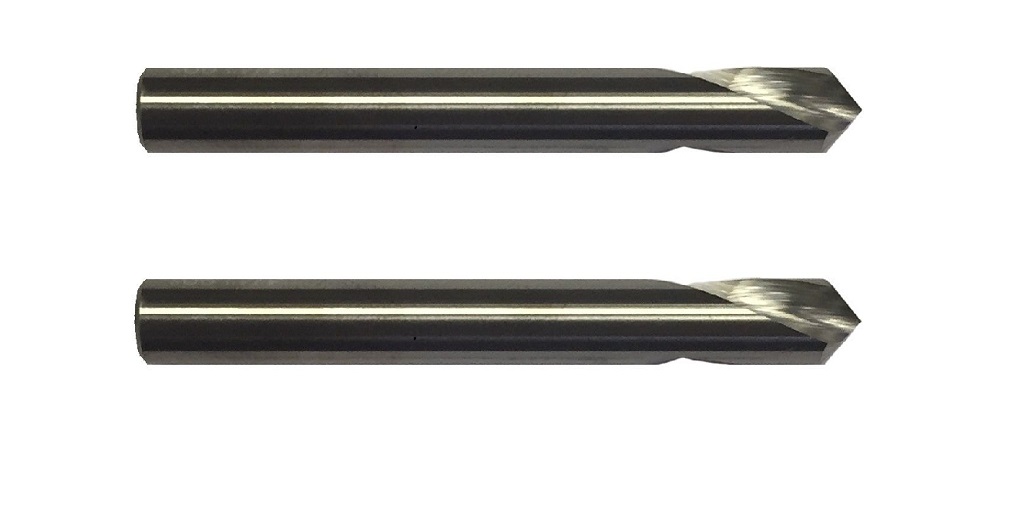
Spot Drills: These are robust tools with a chunky shank that provides stability and accuracy. Carbide spot drills and carbide cutting tools give your twist drills the perfect anchorage when plunging into your part. Spot drills typically come with wide-angled points that help your jobbers easily find purchase and engage the material more effectively.
When you need to drill a lot of holes into your part, carbide spot drills will provide the accuracy and efficiency you need for your shop to achieve top performance. You can increase revolutions and temperatures without compromising tool lifespan. They drastically reduce tool change downtime, allowing you to finish your shift with a larger stash of finished parts.
However, carbide spot drills and carbide cutting tools are not a staple in big box stores. Moreover, the process of creating carbide tools must go through very strict quality standards and environmental protocols if you want consistent results. Some big brands know this and put a steep price tag on their tools, which makes it impossible for shops to reap any real benefits for going high-performance.
The best way to guarantee your shop has top-quality carbide spot drills and carbide cutting tools is to get directly in touch with a US company that follows strict quality protocols and environmentally friendly manufacturing standards. Keep your costs down with manufacturer direct prices and free shipping on orders over $250. Visit onlinecarbide.com and learn more about their premium carbide cutting tools specifically designed for shops that embrace the high-performance machining philosophy.