
Few things are more exciting to the amateur dressmaker than purchasing their very first sewing machine. With it, the possibilities are endless – you can start crafting cute little accessories and making your own clothes! However, there’s more to sewing than just the machine. To get started on the right foot, you need to have the right tools at your disposal. Here are some must-have sewing essentials:
1. Sewing Machine Cabinets: Your Sewing Sanctuary
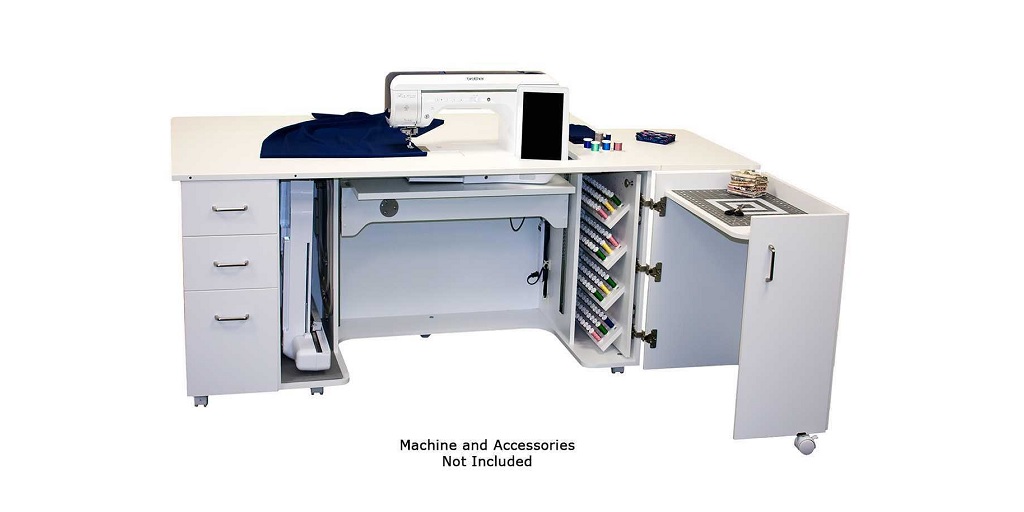
Sewing machine cabinets aren’t just pieces of furniture. A good one can serve as your sewing sanctuary. Having a dedicated space for your machine and supplies doesn’t just make you more efficient; it can also make your sewing sessions more enjoyable overall. The sewing machine cabinets available on Premier Stitching come with ample storage for your tools, fabrics, and patterns, keeping everything within easy reach and organized.
When choosing a sewing machine cabinet, it’s always a good idea to prioritize certain features like adjustable height, fold-out extensions for larger projects, and built-in storage compartments. Some cabinets even come with a lift mechanism that allows you to easily hide your machine when not in use. This can be especially useful if you need to convert your sewing area back into a living space.
2. The Basics: Needles and Thread
Your sewing machine may come with a few needles, but it’s a good idea to have a variety on hand. Different fabrics and projects require different types of needles. For instance, lightweight fabrics like silk need a finer needle, while heavier fabrics like denim require a sturdier one. Universal needles are a great starting point, but as you get more advanced, you’ll appreciate having a collection of specialty needles.
Choosing the right thread is also crucial. All-purpose polyester threads are a great choice for those just starting out, because they’re durable and work well with most fabrics. If you plan on working with natural fabrics like cotton or linen, then you should also buy cotton thread, which is great for them. All in all, it’s always a good idea to have an assortment of different types of threads for different fabrics.
3. Cutting Tools: Scissors, Rotary Cutters, and Mats
You’ll soon find, as you work through different projects, that a good pair of fabric scissors is your best and most trusted friend in sewing. Invest in a good pair and use it only for cutting fabric, as nothing is more frustrating than trying to cut fabric with dull or nicked blades. Buying a smaller pair of scissors for snipping threads and making precise cuts is also a wise decision that you won’t regret.
For straight lines and clean edges, a rotary cutter is a game-changer. Pair it with a self-healing cutting mat, and you’ll wonder how you ever lived without them. These tools are especially handy when working with patterns or cutting multiple layers of fabric.
4. Measuring Tools: Rulers, Tape Measures, and Gauges
A good, flexible measuring tape is yet another indispensable sewing tool. It’s what you’ll use to take body measurements, measure fabric, and more. Look for one that’s durable and easy to read and thank yourself later!
For marking and cutting straight lines, you might also want to put some money towards a clear, gridded ruler. Meanwhile, to ensure even hems and seam allowances, you may want to consider buying seam gauges – small rulers with a sliding marker.
With your sewing machine and these essential tools, you’re all set to dive into the world of dressmaking. Remember, practice makes perfect, and don’t be afraid to make mistakes—they’re just learning opportunities in disguise. Start with simple projects and gradually take on more complex ones as your confidence grows. Happy sewing!
