
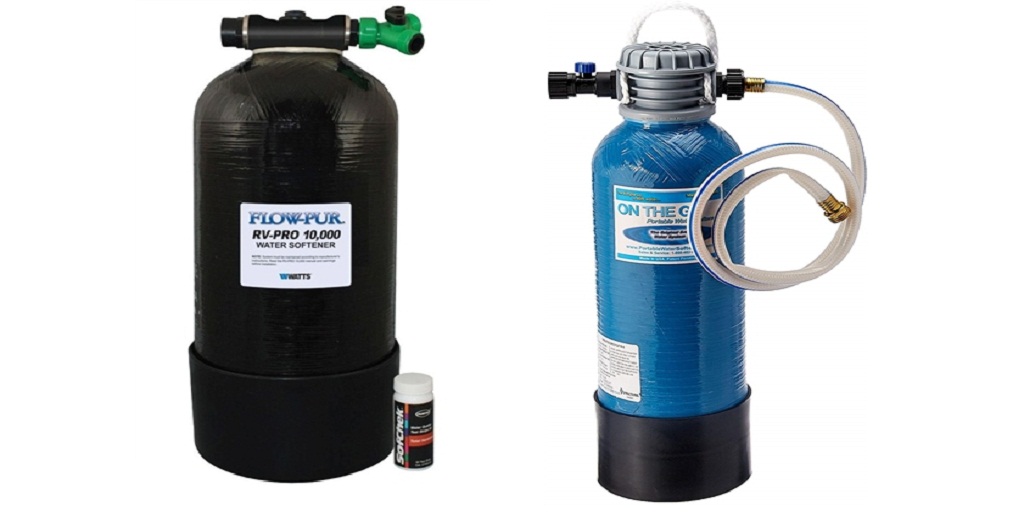
Wondering how an on-the-go water softener can impact your RV? Read on to learn of the wonders that a water softener can do for your RV and its water supply.
What Is Hard Water?
Hard water is defined as water with a high concentration of dissolved mineral ions, particularly calcium and magnesium. There are other dissolved minerals in it, but when specialists test for hard water, they are most concerned with only calcium and magnesium.
Hard water affects everyone who uses water for domestic purposes. It can pose major problems in recreational vehicles with no access to soft water or an RV water softener.
You can avoid scales and stains, which are aggregated calcium deposits left behind by hard water if you have soft water or a portable water softener in your RV.
However, scales and stains are just a part of the problem. The real problem is that the scale deposits can cause damage to your RV appliances and water pipes. Hard water can shrink the inside diameter of pipes, effectively reducing water flow, among other things.
The pressure in the pipes, especially when there’s a high-pressure water supply, will also increase which will then increase the pressure on everything the pipes feed. This can cause damage to your plumbing as well as pressure-related deformation to your RV appliances.
The unsightly stains from hard water, on the other hand, can also reduce the value of your RV. Fortunately, you can solve all these problems if you have a water softener.
What Is Soft Water?
In contrast with hard water, soft water has lower levels of calcium and magnesium. Instead, it has a higher concentration of sodium or salt.
Compared to hard water, soft water is preferred for cleaning since it prevents soap scum and mineral stains.
Soft water is, in fact, an effective cleaning agent. This is why you can save money on water by not having to re-wash clothes or dishes, take longer showers, and others. Everything will feel properly cleaned when you use soft water.
How Does Water Softener Work?
Water softeners work by removing high concentrations of calcium and magnesium that cause hard water.
The actual process is a more complicated multi-step chemical ion exchange that happens at the molecular level, but it does remove metal molecules in the water so it becomes softer. The fewer molecules of metal in the water, the softer it will be.
Benefits of RV Water Softener
There are many benefits of having an RV water softener.
Water softeners can help reduce the mineral deposits that are known to accumulate and clog pipes. They also help preserve your pipes and any appliance through which water flows. Plus the soft water they produce makes it easy for soap and detergents to dissolve.
With water softeners, you can also have softer skin, silkier clothes, cleaner silverware, and more.
Buy On the Go Water Softener Now!
You can buy a portable water softener for your trailer at RVupgrades.com. They have a huge selection of water softeners at different price points.
RVupgrades.com supplies RV parts and accessories at affordable prices. Contact them if you need assistance or if you have any questions.
