Traditional thread cutting involved a laborious enterprise using taps and dies. It takes a good deal of skill and time to use a traditional tap and die set to cut threads into a metal medium, and the process is fraught with inefficiencies.
It takes a long time to cut threads the traditional way. A different sized tap is required for each hole that needs to be threaded, resulting in heavy, bulky tool magazines. Once a hole has been tapped, the size and position of the thread are set in stone. Additionally, if one of these tools breaks off inside the hole, well, good luck getting it out. All problematic tool-wordplay aside, you know the drill.
Today, thread milling using CNC machinery has somewhat eclipsed traditional tap and die thread cutting.
The fact that milling threads using modern equipment is faster is only one of the primary advantages over tap and die-cutting.
Thread milling also gives the operator the ability to control the fit. The milling cutters are helixed into a previously-milled hole at a very high RPM. Thes gives the operator the flexibility to adjust the thread size
A single tool can also be potentially used to make a number of different hole sizes, saving time changing mills and reducing overall tool inventory. In addition, thread mills can be used to cut both external and internal threads and right and left-hand threads. Milling can also be used to cut threads on pipes quickly and efficiently.
Full-Form vs. Single Pitch Thread Mills
There are two main types of thread mills: full-form and single-pitch thread mills.
Of the two of them, full-form thread mills allow for the fastest thread cutting. Also known as multiple-form thread mills, these mills have rows of teeth running along the cutting surface. They can the full depth of a thread in a single rotation.
Full form mills cut around the surface; during rotation, the tool height is adjusted which creates a continuously threaded surface. Full-form thread mills can be used to cut threads in a variety of diameters as long as the pitch (the distance between the “peaks” of the threads) remains constant. This makes these highly versatile tools.
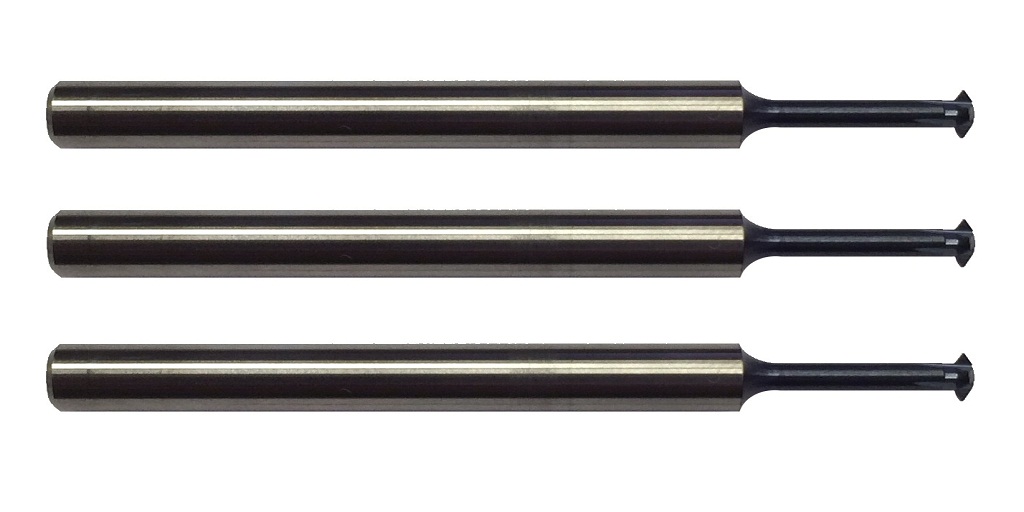
The other main type is known as a single-pitch thread mill. By contrast to the rows of teeth on a full-form thread mill, a single form or single pitch thread mills only contain a single tooth on the cutting surface. While it means that the tool must travel the entire length of the threaded surface (which may take more time) it makes them more versatile.
A single-pitch thread mill can cut varied pitches and asymmetrical threads, making them suitable for cutting a variety of threads of a variety of sizes and pitches. Single pitch mills also produce less friction on the material being milled.
Where Can I Get High-Quality Carbide Thread Mills?
If the purpose of this query was to locate high-quality full-form and single-pitch mills, visit Online Carbide at OnlineCarbide.com. They carry a variety of single-pitch thread mills as well as UN, NPT, NPTF, and metric full-form thread mills with TiAlN coatings for durability and longevity, along with a wide range of other carbide cutting tools.
If you have any questions about their carbide thread mills, get in touch with them directly at 630-238-1424 or by email at [email protected].