You may know the old maxim, that more flexible golf shafts are better for players with slower swing speeds and tempos, whereas stronger players with more aggressive swing mechanics should go with stiffer shafts.
But, as is so often the case in golf (and other sports) one size does not often fit all. So where does that leave you with a driver like a Callaway Paradym?
Which is best? Can a large clubhead like this really still perform with lighter, more flexible shafts? Or does it require a stronger, stiffer shaft?
The answer may surprise you.
Light and Advanced Enough for More Flexible Shafts
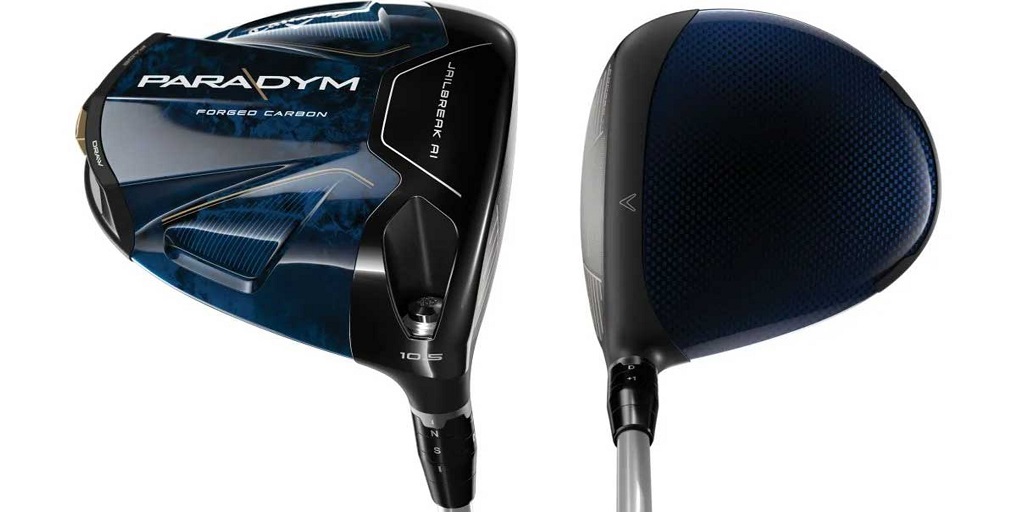
The keynote of the Callaway Paradym is its construction, largely of carbon fiber. In fact, this carbon fiber chassis incorporates a Triaxial Carbon crown and Forged Carbon sole, both of which substantially lighten the clubhead.
This design is so significant that Callaway Paradym drivers are 44% lighter than comparable drivers made of titanium, and titanium is light, to begin with.
This leaves you with a much lighter driver head, and on top of that the Paradym is also optimized for aerodynamic efficiency. It lightens swing weight and puts less of a strain on the shaft.
So, while lighter, more flexible shafts have historically not paired well with heavy driver heads, the Paradym can actually accommodate them.
This is apparent from Callaway’s suggestion that the Paradym pairs well with the Fujikura Ventus Blue. The Ventus Blue may not be the highest-launching in the Ventus line, or the most flexible, but it is middle of the road.
Not only is the Callaway Paradym light enough to pair with lighter, more flexible shafts but it’s also optimized for forgiveness, thanks to its AI-designed face and sliding weight, both of which can be used to customize shot shape and improve forgiveness.
But Still Optimized for Players with Aggressive Swing Speeds
While the Callaway Paradym can be paired with certain lighter, more flexible shafts without compromising performance, it’s also optimized for players with stronger, faster swing speeds.
Thanks to its Jailbreak AI design which improves horizontal and torsional stability as well as its forged titanium face cup, the Paradym is both stable while surprisingly optimized for smash factor.
Consequently, the performance the Paradym offers magnifies itself when you swing it fast – if you can – and pair it with a stiff, low-launching shaft with low-spin characteristics, like a Mitsubishi Kai’li or a Project X HZRDUS Silver.
Given the tight manufacturing tolerances of these golf clubs and the fact that they are designed to deliver exceptional smash factor and forgiveness while controlling shot dispersion, they’re still suitable for players with strong swing speeds looking for a low-launch, low-spin, stiff shaft.
Want to Learn More about Callaway Paradym Driver/Shaft Pairings?
Visit Dallas Golf Company online via the previous link or visit them in their retail shop in Dallas, Texas, so you can work with one of their professional golf club fitters. They’ll help you choose the optimal shaft pairing for your Callaway Paradym.