
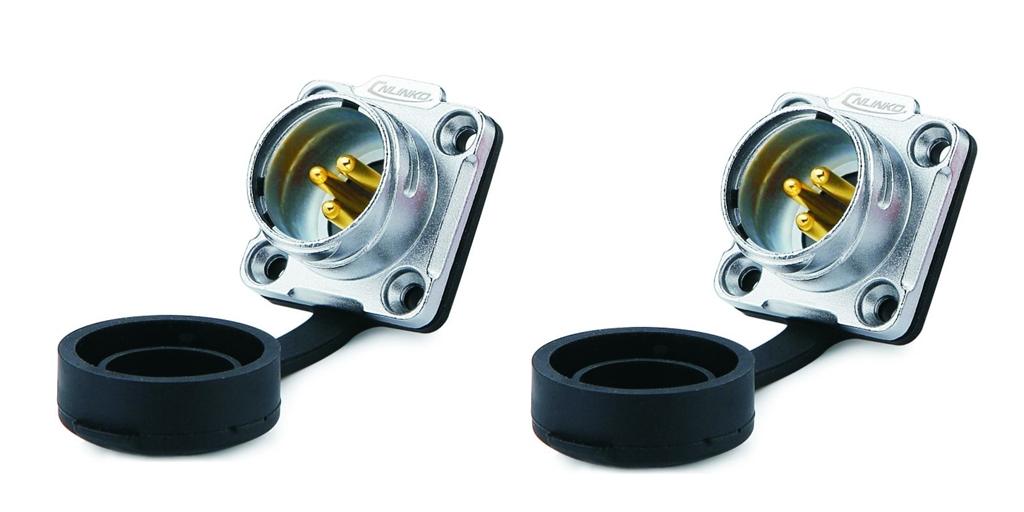
Need to upgrade or replace a set of industrial connectors but you’re not sure what you need to replace? This short primer will help clear up some of the basics associated with these electrical connectors.
What Are Industrial Connectors?
Industrial connectors are used to provide an electrical connection between industrial system components, or between power mains and equipment, often in the presence of a variety of challenges in industrial environments.
Industrial connectors have a female end called a jack and a male end called a plug and are available in a wide range of configurations and ratings that will impact their suitability given the environmental conditions in a given location.
Pin Configuration
Many industrial electrical connectors have pins, and come in configurations ranging from 3-pin to 24-pin connectors. These pins provide a secure electrical connector for power, signal, or data transmission.
The reason for these different configurations is that each contact may have a different use or property and the complexity of the circuit may require that each contact has its own pin.
Electrical connectors are often (but not always) made of conductive metals such as copper alloy and are sometimes gold-plated to ensure a quality electrical connection as well as to resist corrosion.
Amp and Voltage Rating
The amp rating, or ampacity, of a cable, is the maximum current the connector can safely carry under continuous use without the risk of exceeding its temperature rating and overheating.
Voltage rating is similar but not quite identical. It refers to the maximum voltage load the connector can tolerate. Exceeding the voltage rating can cause the premature failure of electrical equipment and can cause cables and connectors to overheat, increasing the risk of fire.
Voltage is the product of current and resistance, so while these two factors are interrelated they are not identical; nonetheless, it is necessary to use only electrical connectors and cables rated according to the voltage and ampacity of the function.
What Traits Are Important in Industrial Connectors?
Many industrial connectors are expressly manufactured to tolerate a wide range of environmental conditions.
For instance, if an occupational hazard of your industry is exposure to oil, salt water, or other liquids, then corrosion-resistance and waterproof connections are critical.
Exposure to high heat and pressure is also common in industrial settings, and consequently, many industrial electrical connector housings are resistant to these as well.
Moreover, some electrical connectors are rated to deliver a high degree of protection against EMI, or electromagnetic interference, which can scramble signal transmissions or entirely incapacitate a circuit.
Who Sells Quality Industrial Connectors at Reasonable Prices?
If you’re looking for high-quality industrial connectors that are rated to withstand the abuses of your industry’s operating conditions, visit Products for Automation online at ProductsforAutomation.com.
They carry a wide variety of electrical connectors from CNLINKO and Hirschmann, along with a range of other electrical enclosures, cable entry and conduit systems, and more.
If you still have questions about industrial electrical connectors, get in touch with Products for Automation by phone at 800-966-2345

