
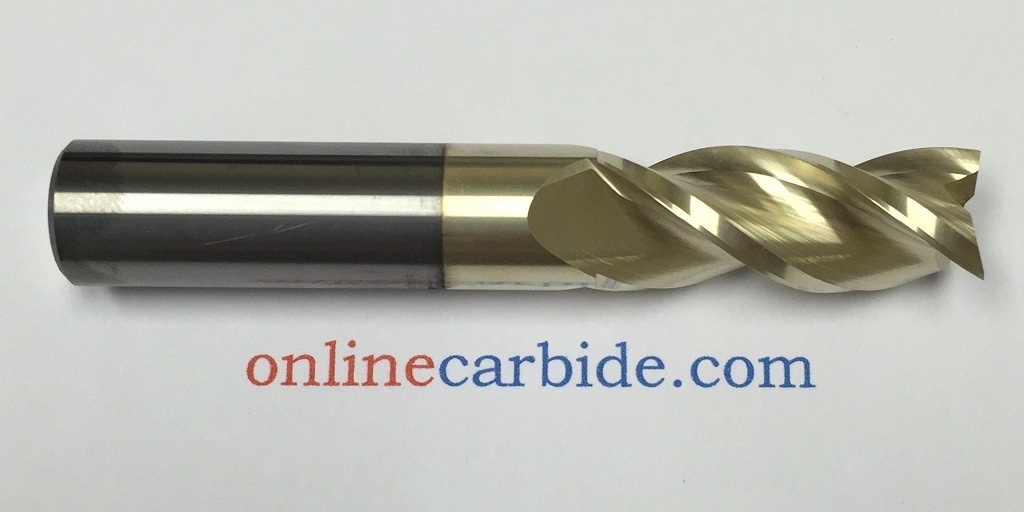
If you are running a machining operation, whether it is a small CNC in the back of your garage, or an important manufacturing business, you have probably acquired a few end mill sets to cover your needs.
As you probably know, drill bits can only cut in the axial direction, while end mills give you broader capabilities by allowing you to profile, trace and face. It means you have to do frequent tool changes as you go through pieces that require plunging, countersinking, profiling, grooving, or chamfering. What if we told you there are ways to reduce downtime and keep your spindle running?
End mills are specially designed for milling applications but can take on different roles. Depending on their flute count and geometry, end mills can be used for roughing, slotting, finishing, or high-efficiency machining. Many end mill sets come with center-cutting heads that allow you to perform plunging cuts while leaving a nicely chamfered countersink for flush screws.
Choosing the right end mill set requires you to determine the nature of the projects you will be working on. This helps you narrow down your tool selection so you only purchase mills that will see real use in the near future. Let’s go over the most common considerations.
Materials
It is imperative to know what materials you will be working on before choosing your tools. For example, plastic behaves a lot differently than steel, so they require different machining strategies. It is best to consider tool geometry, sharpness, and mechanical properties before selecting your tools. This will not only help you increase accuracy and efficiency, but also save you time and money in the long run by prolonging your tool lifespan.
Flute Count
Flutes determine how many contact points your tool will have with the material and its overall chip evacuation efficiency. For softer materials, a low flute count is preferred as it provides a better chip clearance rate and heat control. However, finishing operations usually benefit from a higher flute count. An end mill with 5-14 flutes will yield better results and a more polished surface.
Coating
When machining hardened steels, non-ferrous alloys, and hardwoods, you need tools with high-temperature refractory properties. Carbide end mill sets can withstand extreme temperatures and rotation speeds without losing sharpness or structural rigidity. This is not only a plus when going through a lot of material as it keeps heat under control without sacrificing accuracy. Carbide coating is also great for machining hardwoods as it is easier on the grain when it engages the material.
If you have a hard time choosing the right tools for your particular needs, call Online Carbide technical support. They will help you put together the perfect carbide end mill set for you. Give them a call at 630.238.1424 or by email at sales@onlinecarbide.com. They offer the best value by offering high-quality cutting tools at manufacture direct pricing.
