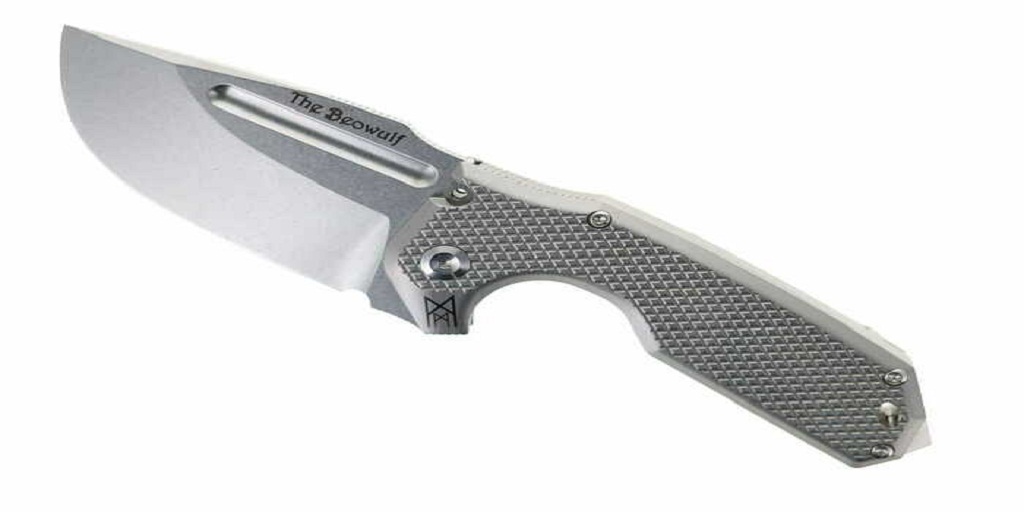
There is a misconception among knife and sword enthusiasts that “stainless steel” inherently means low quality. This could not be further from the truth.
Despite that, if you look up information on what makes a “quality” sword, you’ll find three things: it must be made from “carbon steel,” have a full tang, and be tempered.
Well, on the latter two, you’ll get no arguments from us. A knife should have a full tang and be tempered (heat-treated), too. Although, if we’re talking about a pocket knife, it likely won’t have a tang at all – that’s another story.
It’s the carbon steel claim we need to get at. Those that learn a little bit about steel chemistry take their first sips and then suddenly think they’re experts.
In their minds, this carbon steel edict extends to knives – not just to fixed blades but also to pocket knives. To them, stainless steel is an “evil” alloy that must be avoided.
This entire preconception is so bungled and confusing that it’s tough to see through, but we’re here to set the record straight – it’s just tough to pick a starting point.
So let’s try this – it is neither the case that “stainless steel” alloys are all bad, nor that “carbon steel” is inherently good. Much more goes into making the “best” quality pocket knife than that, so let’s clear up some confusion.
First, it is true that “stainless steel” has been used as a marketing gimmick for decades, as though it is a selling point. Oftentimes, knife sellers would sell less-than-scrupulous cutlery, slapping it with a “stainless steel” blade label, giving them license to avoid actually disclosing what the steel chemistry actually is. That right there is a red flag, and it’s probably where the aversion to “stainless” came from.
However, the same can be said of “carbon” steel. Need we point out overtly that literally all steel has carbon? Therefore, all steel is technically carbon steel. In the past 20 years or so, the use of “high-carbon steel” as a marketing gimmick has become just as offensive as “stainless.” There are no standards for either, anyway. No one can tell you with authority at what level steel can be officially “recognized” as a “high-carbon” alloy – because there is no standard.
Now, some details. A steel can be considered stainless if it is somewhat resistant to corrosion. In the presence of sufficient catalysts, all steels will rust. Steel producers predominantly add chromium or, less frequently, nitrogen, to the alloy, as these elements are less prone to oxidation than iron is.
Therefore, a steel alloy can be both high-carbon and stainless at the same time. Consider a steel like D2 or S35VN. Both contain more than 1% carbon and more than 10% chromium. Considering the fact that 1095, everyman’s “high-carbon steel” is only .95% carbon, we’d say that S35VN and D2 make the cutoff. Given their high chromium contents, they’re pretty resistant to corrosion as well.
They’re also both well-respected tool steels – S35VN is even considered a “super” steel – yet both are what some might call stainless. Go figure that out.
In short, the takeaway here is that knife steel should not be accepted solely on the basis of a “high-carbon” moniker, nor dismissed because it contains chromium. Most alloys do, anyway. Rather, steel chemistry should be considered on a case-by-case basis. You should be just as wary of being duped by “high-carbon” stickers as you are of “stainless steel” promises.
Armed with this eye-opening information, if you’re ready to sally back into the forays of knife purchasing, visit White Mountain Knives at WhiteMountainKnives.com. Whatever you believe to be measurable in the “best” quality pocket knife, they carry it.
Their catalog represents Cold Steel, Benchmade, Spyderco, Victorinox, Buck, Gerber, OKC, ESEE, Rough Ryder, Case, ZT, and countless other knife makers – and is inclusive of both “stainless” and “high-carbon” steel knives, with corrosion-resistant blades and excellent edge-retention, a variety of blade shaps and blade lengths and profiles useful for a wide range of cutting tasks.
Take a look through their catalog and get in touch with them at WhiteMountainKnives@gmail.com if you have any questions or would like them to try to procure a specific model for you.