
Compressed air is not just used to keep tires full. Dried, compressed air can also be used as a power source for machinery and pneumatic tools, such as grinders, sanders, drills, impact wrenches, ratchets, shears, and even rivet cutters. Compressed air can even be used to produce electricity.
Compressed air that is used as a power source for machinery or tools, which comes into contact with such machinery, is called active air.
Much in the same way that an internal combustion engine runs most efficiently on clean fuel of the purest quality, active air should be clean, dry, and free of other contaminants.
There is more than one way to clean, dry, and purify compressed air. For facilities that use desiccant air dryers to dry their compressed air, compressed air dryer desiccant is vital to efficient, functional operation.
What Is a Compressed Air Dryer?
When atmospheric air is compressed, it contains a lot of moisture and particulate matter. Before compressed air can be used as a power source for a compressed air system – especially as active air – it must be “dried” in a system known as a compressed air dryer.
Under certain conditions, the moisture contained in compressed air can condense into a liquid, which can contaminate or damage equipment, cause corrosion, and worse. Water suspended in condensed air can wash away pneumatic equipment and tool lubricant as well, resulting in premature wear and failure.
A compressed air dryer removes this moisture from compressed air by one of several methods, lowering the moisture content of the air and thereby the pressure of the dew point.
There are many types of compressed air dryers used encountered in industrial applications, including refrigerant and desiccant air dryers. Desiccant air dryers, such as deliquescent air dryers, use a material known as compressed air dryer desiccant to help remove moisture from compressed air.
What Is the Purpose of Compressed Air Dryer Desiccant?
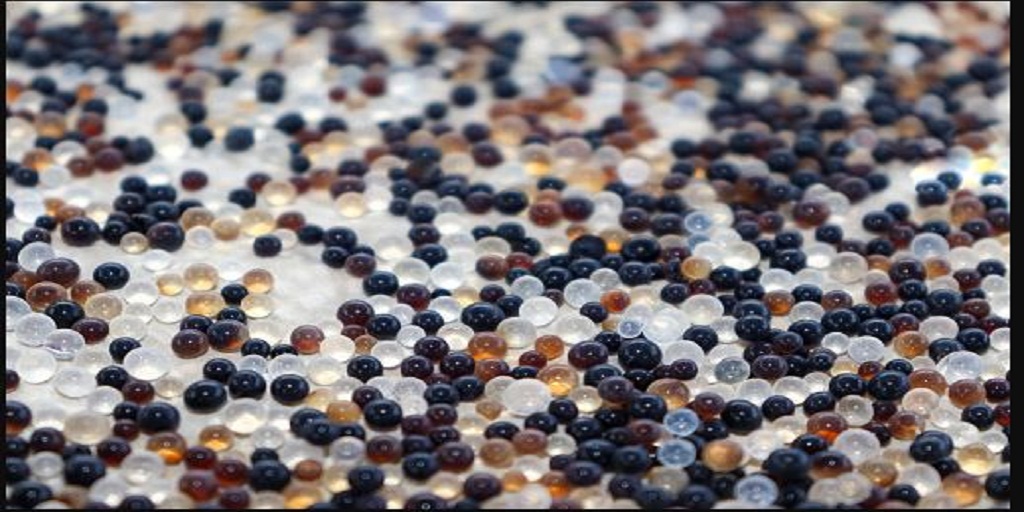
Compressed air dryer desiccant is a material that attracts water, helping to remove it from the air in the compressed air dryer. There are many different types of desiccants, such as activated alumina, silica gel, sodium aluminosilicate molecular sieve desiccants, and multiple other chemical drying agents.
These materials are extremely hygroscopic (meaning they attract water.) Some of them are extremely porous or have high surface-area-to-mass ratios. In the case of silica gel, it can be used not only to remove water but other contaminants from compressed air, such as hydrocarbons (such as oils), carbon dioxide, and many other compounds. These compressed air dryer desiccants adsorb water from compressed air so that it can then be used as a power source.
However, after a while, compressed air dryer desiccant becomes saturated with liquids that it has absorbed from the air, and must be “regenerated” (dried back out) so that it can continue to be used as a desiccant.
In order to do so, some compressed air dryers, known as regenerative desiccant dryers, have two towers that are filled with desiccant. When one tower’s desiccant becomes saturated, the dryer uses the second tower to dry air, allowing the saturated desiccant in the other one to be regenerated. This process regenerates the desiccant, enabling energy-efficient operation without disrupting workflows.
Learn More: Air and Vacuum Process, Inc.
Desiccant air dryers rely on high-quality compressed air dryer desiccant for effective and efficient operation. Utilizing only the highest quality desiccants will ensure the quality of your compressed air and protect your investment in your compressed air equipment or tools.
Visit Air and Vacuum Process, Inc., a purveyor of both compressed air dryer systems and high-quality compressed air dryer desiccant, in addition to air compressors, natural gas air dryers, and more.
They sell Van Air deliquescent and absorbent desiccant, which has been the preeminent desiccant manufacturer for the better part of the last century. Whether your facility uses absorption or adsorption dryers, switch to high-quality desiccants from Van Air, available at AirVacuumProcess.com.
If you have any questions regarding the products available at Air and Vacuum Process, Inc., please contact them at 866-660-0208 or by email at Sales@AirVacuumProcess.com.
