Some gun owners buy their first rifle or handgun without ever disassembling a platform and understanding the fine details of the inner mechanics – just like most car owners.
“Take down pin,” “sear spring,” and “buffer tube” are terms just as foreign to some gun owners as terms like “catalytic converter,” “fuel injector” and “control arm” are to most car owners.
Then again, most car owners don’t build them from scratch. All things considered, there are probably more tinkerers that know how to build a functioning firearm than car owners that know how to build a car.
If you’re just doing this for the first time, and are looking for information on buffer tubes and weights, don’t get discouraged by the sheer profusion of information. Let’s break it down.
What Is a Buffer Tube?
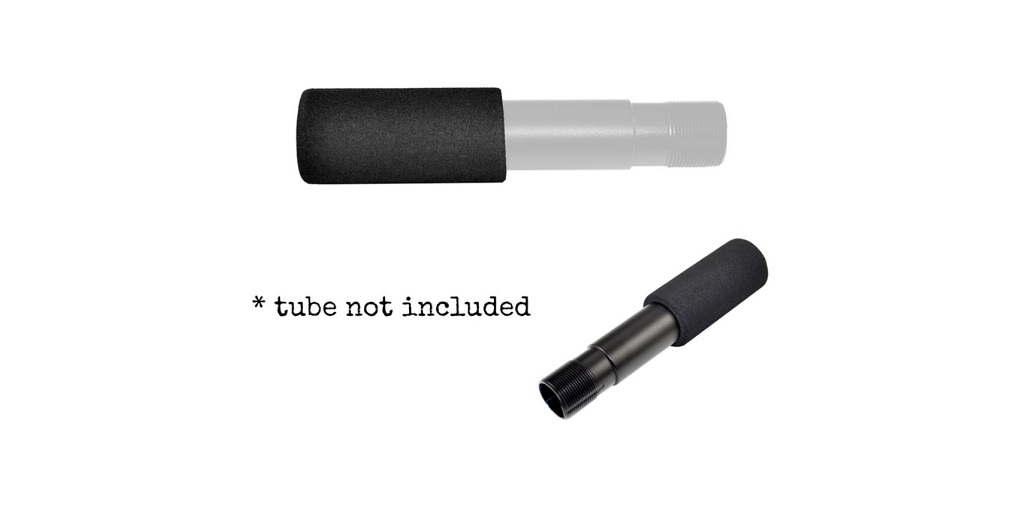
The buffer tube is an aluminum tube that mounts to a point on the rifle’s lower receiver. The buffer tube contains the buffer weight as well as the recoil spring that resets the bolt carrier group.
The buffer tube also serves as the attachment point for either the buttstock or pistol brace, depending on how you construct your build.
What Is a Buffer Weight?
The buffer weight is actually typically a series of several weights inside the buffer tube. These weights increase the reciprocating mass of the entire rifle, helping to absorb recoil and providing additional mass to aid feeding during cycling.
What Does a Heavier Buffer Weight Do?
Increasing the buffer weight in your rifle can potentially have numerous benefits. It can minimize felt recoil, control muzzle rise, and deliver smoother cycling and feeding.
It is one of the easiest and most cost-effective ways to improve feeding, cycling, and shooting, and does not require you to make any adjustments to the gas system (which some shooters automatically assume is the only way to adjust cycling, though this is not the case).
What Is the Best Buffer Weight?
There is no single best buffer weight for any gun (including the AR-15). Rather, you should experiment with the three common buffer weights commercially available and see which offers the best performance for your platform.
The standard carbine buffer weighs 3 ounces. The H1 or “heavy” buffer weight weighs 3.8 ounces, and the next step up is an H2 buffer weight, which typically weighs 4.6 ounces.
Again, increasing buffer weight can improve the firearm’s handling and cycling and mitigate the effects of felt recoil, all without the need to adjust the gas system.
How Can You Tell If Your Buffer Weight Is Too Heavy or Too Light?
If your buffer weight is too light, the BCG will move too fast during cycling; this can cause damage to your buffer system over time. You might notice this as excessive recoil, but the effects will not be dramatic.
If the buffer weight is too heavy, the BCG might not be able to fight the weight and fully compress the recoil spring. This can result in failure to extract or pick up a new round.
Remember, though, these problems can be caused by over and under-gassing as well as recoil springs that are too light or too heavy, so don’t automatically assume the problem lies with the buffer weight. All these parts work together.
Where Can I Get a New Buffer Tube, Weight, or Other Buffer System Parts for My Build?
Looking for sporting rifle parts like buffer tubes, weights, and springs? Get in touch with MCS Gearup at MCSGearup.com. They carry a wide range of firearms parts and shooting accessories – including buffer system parts, trigger assemblies, bolt carrier groups, and much more.
Check out their website today or get in touch with them at Sales@MCSGearup.com.