
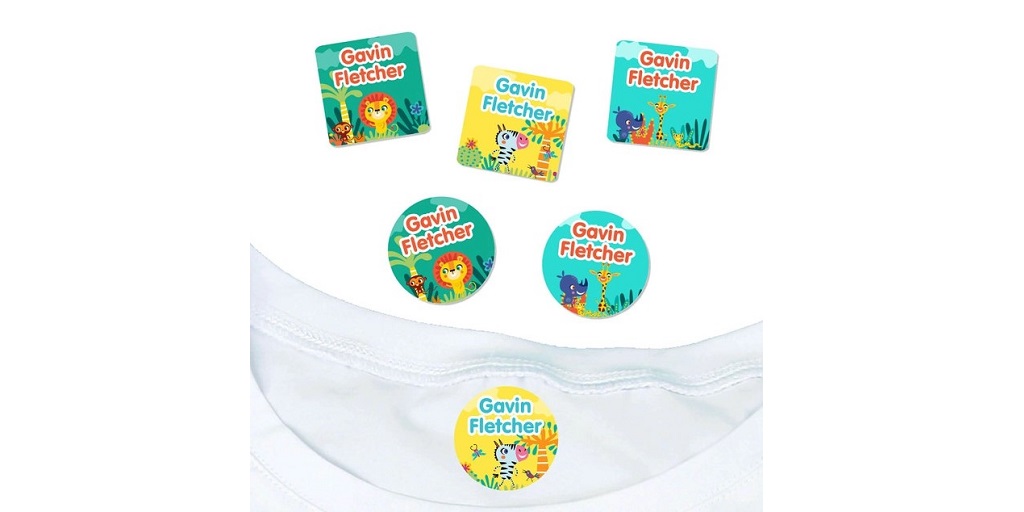
There are many advantages to applying labels to your clothing. For parents with little kids, for example, labels can be quite convenient. Kids losing their things is a completely normal and natural part of growing up. Adding name labels to backpacks, clothing, plushies, lunchboxes helps lessen the instances that your kids’ things will go missing.
Back in the day most, if not all, labels were sewed onto kids’ clothes and possessions. And for parents that didn’t own sewing machines, hand sewing these labels would entail a huge chunk of time and a lot of effort. Thankfully, these days there are other alternatives, like stick-on labels and iron on name labels.
If you’re still unfamiliar with what the advantages of iron-on name labels are over other types of clothing labels, we’ve put together a short list of things that may help you consider using iron on labels.
1. They Require Less Effort to Attach to Clothing
Unless you have a sewing machine on-hand, sew-on labels generally take more effort to attach. Stick-on labels, on the other hand, are affordable and easy.
One of the main advantages of iron-on labels is the fact that they take less time and effort to attach to a piece of clothing. They’re not as easily applicable as stick-ons, but they’re not as cumbersome as sew-ons either. For iron on labels, all you need is an iron and a heat safe flat surface or ironing board.
2. They’re Easier to Attach to Oddly-Shaped Pieces
Besides iron on labels being easy enough to attach to clothes, consider some odd pieces of clothing or fabric.
Applying a sew-on label to hats or backpacks, for example, can be tedious, especially if there are a lot of contours. Additionally, it’s also difficult to attach a label to a backpack using a sewing machine. Which means that you might end up having to hand-sew the label instead.
You also want to be able to sew the labels just right on these bags and hats so that the fabric doesn’t wrinkle. And for the not-so-experienced in sewing, this may prove to be frustrating.
One other thing you also have to take into account when it comes to sew-on labels is the stitching. Having stitches exposed on your tie can potentially ruin it. And the best way to avoid that is by using iron on name labels.
3. They’re Durable
Heat is used to apply iron-on labels onto clothing. Through the application of heat, the labels bond permanently to the fabric, ensuring that they will stay on for the lifetime of the garment.
When it comes to embroidered patches and some sew-on labels, on the other hand, repeated washing may make stitches come loose, particularly if they were not sewn-on very well. And stitches coming loose means that there will be more time spent sewing the labels back onto the clothing.
Overall, each clothing label type has its pros and cons. But if you’re convinced that iron on name labels are the perfect type for you, there are many stores you can check out that offer these labels. Sticky Monkey Labels, for example, is a great choice if you’re looking for labels to add to your kids’ clothing, uniforms, backpacks, or other iron safe items. They have several cool and cute designs that both parents and kids will absolutely adore.
