Mustad once ran a print campaign with a picture of a guy holding a fish, with the caption something along the lines of “anyone that thinks a hook is just a hook is probably the one holding the camera.”
It was a great campaign, and it underscored the importance of discretion in hook selection. You might have the best rod, reel, line, and rig, but if the hook fatigues, snaps, or straightens out, you’re out a fish.
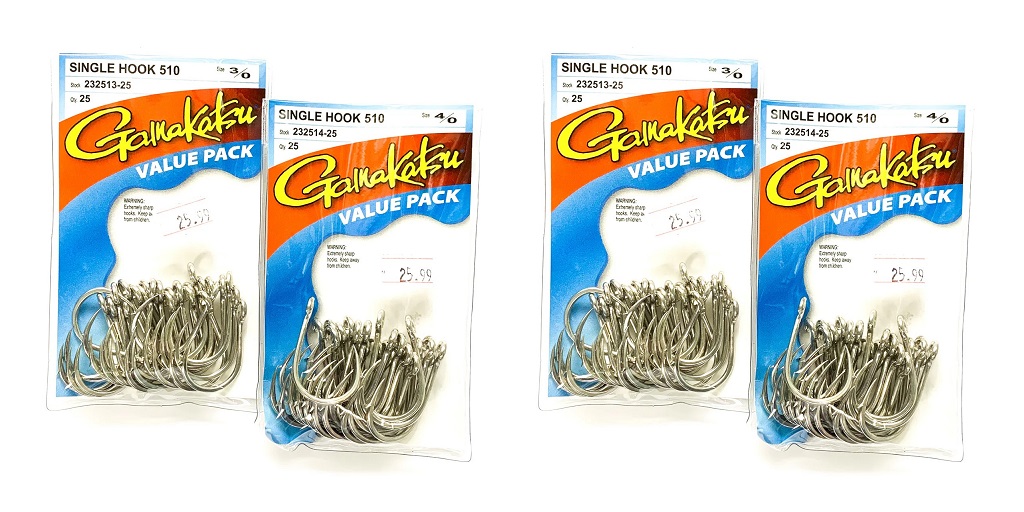
One of the brands that has consistently offered some of the highest quality hooks in the market is Gamakatsu, and as it turns out, the quality of Gamakatsu hooks is no accident. There are several items that set them apart.
Gamakatsu hooks have been made continuously since 1955, giving them a fairly storied history with plenty of runway, but when they started, the industry wasn’t glorious. It was originally a small operation and all of their hooks were made by hand.
In 1963, the facility was upgraded with an automated heating machine, and the entire facility was upgraded once more in 1974, with a fully-automated hook-making machine that streamlined the process and significantly ramped up production.
By that time, Gamakatsu had established itself as one of the leading fish hook manufacturers in Japan, if not the clear leader.
It all centered around the quality of the steel material used to make their hooks; they use a steel alloy that is not only higher in carbon, but lower in impurities, than competitors.
The high carbon in the matrix increases strength, reduces the likelihood of fatigue, and reduces wear as well. As for the lower concentration of impurities, that reduces the risk of hook breakage that would arise as a result of a concentrated area of slag in a hook.
The tempering process used to produce Gamakatsu hooks is also one of the most well-respected the world over, and yields fish hooks that are not just strong, they can endure repeated stress cycles without bending or snapping.
Gamakatsu hooks are also defined by a superior, conically sharpened needle point that is not only sharper, but which stays sharper, for longer. That, plus the strength and fatigue-resistance of their hooks, defines quality.
Today, Gamakatsu hooks are not only renowned for sharpness and strength, but for general durability as well as color and style variation. As a result, they range among the most premium hooks in the industry, and are well-respected by anglers the world over.
In a nutshell, strength, durability, and consistency are among the reasons that so many anglers around the world tie on a Gamakatsu – or a “gami” as they are affectionately called by fishermen – whether they are pursuing species in high mountain streams or out on the ocean.
Stock Up on Gamakatsu Hooks
Need some replacement hooks for your tackle bag? Check out Johnny Jigs via the previous link. In addition to jigging outfits and jigs, they also carry a variety of terminal tackle, including replacement and assist hooks. Visit their website for more information and get in touch with them if you have any questions.