
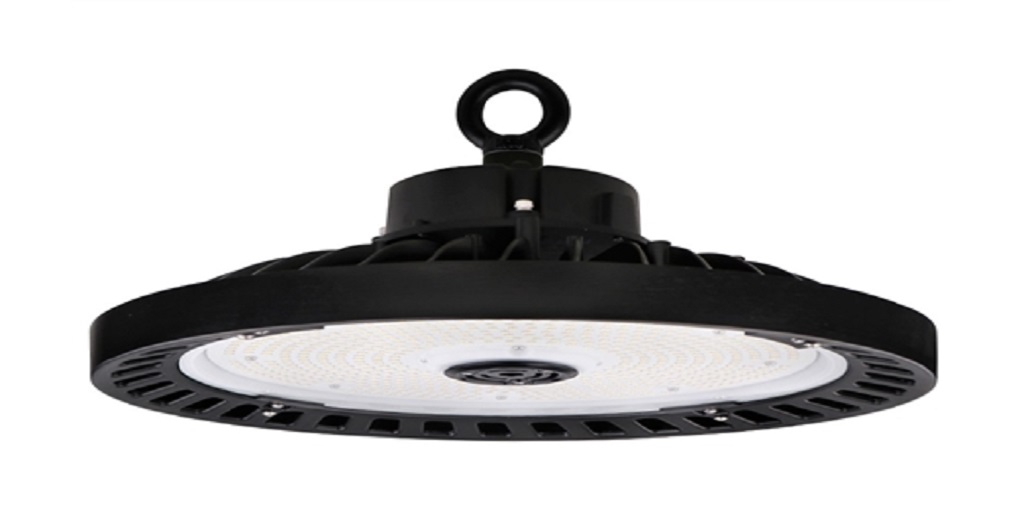
Don’t let industry buzzwords like low and high bay lighting fixtures throw you for a loop. This may be related to electrical infrastructure, but it isn’t rocket science.
Here are what some of these terms mean.
What Is Bay Lighting?
Bay lighting is a term used to apply to lighting that has high-power wattage requirements and is used for wide area illumination. Typically, bay lighting is used to illuminate large indoor surface areas, or “bays,” such as in warehouses and production facilities, and also in other large commercial spaces like retail stores.
Bay lighting is often subcategorized into both low and high bay lighting (see below), both of which often use HID, or high-intensity discharge lamps, for lighting. Commonly used HID lamps include metal halide (MH) lamps, mercury vapor, and high and low-pressure sodium lamps.
What’s the Difference Between High and Low Bay Lighting?
Low bay lighting typically refers to indoor lighting that is suspended between 12 and 20 feet from the ground. Often, low bay lights cast a wider beam angle, such as 120°, because the beam has a shorter vertical distance for light distribution before reaching the ground.
By contrast, most types of high bay lighting fixtures are typically situated on high ceilings, 20 feet or more above the floor. In addition to their higher mounting heights, they also typically cast a narrower beam, in the area of 90° or less.
High bay lighting is also typically a higher wattage than low bay lighting, with low bay lights typically in the area of 60W to 100W, and high bay lights in the area of 100W to 150W, or even higher.
Low and high bay lights may also be potentially distinguished according to the methods by which they are suspended. Low bay lighting is often suspended via chains or hooks, whereas high bay lighting fixtures can be suspended in the same manner or directly fixed to the ceiling.
Are There Advantages to Retrofitting Your Low or High Bay Lighting Fixtures with LEDs?
While many low and high bay lighting fixtures are intended to accept HID lamps, LEDs have been growing in popularity for a wide range of reasons.
Though LEDs sometimes require a ballast bypass before they can be used with existing fixtures, LED replacement or retrofit bulbs offer the following advantages:
● Significantly higher energy efficiency which corresponds to energy savings.
● Less energy is wasted in the form of heat (keeping cooling costs down).
● Substantially longer lifespan (50,000+ hours for LEDs compared to 5,000 to 25,000 for most HIDs)
● LEDs contain no toxic components or chemicals.
● LEDs take less time to warm up and reach peak brightness almost immediately.
● LEDs are available in a wide range of lumen output ratings and color temperatures.
Where Can You Find High Bay Lighting Fixtures and LED Replacements?
Whether you’re looking for high LED high bay lights or high bay light fixtures, visit ProductsforAutomation.com. They carry a range of lights and fixtures, including UFO high bay lights, dimmable LEDs, and many other lighting fixtures, bulbs, and retrofits. Visit their website or contact them via 800-966-2345 today.
