
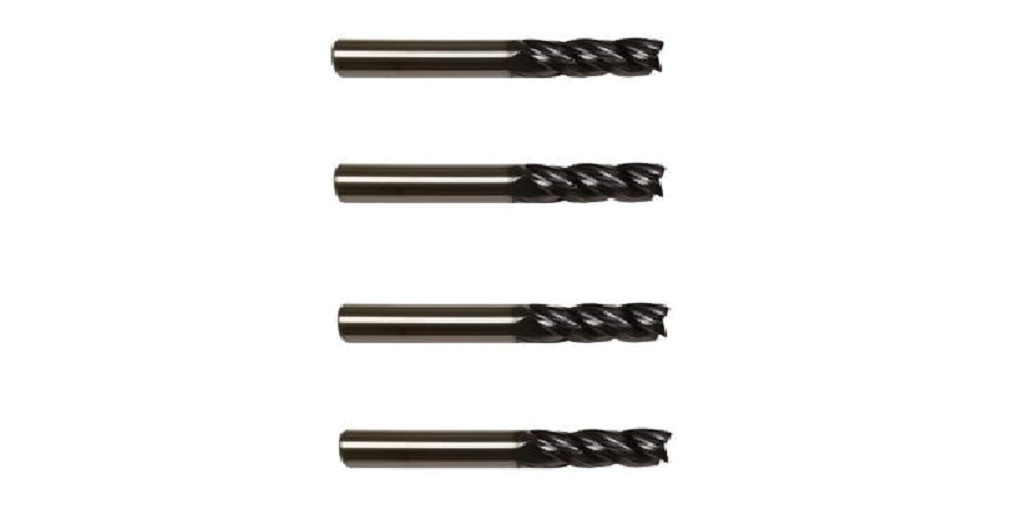
Milling machines are amazing pieces of machinery for several reasons. Using specialized cutting tools, a computer guided milling machine can perform extremely complex jobs in a fraction of the time that it would take using other machines. One of the downsides to operating at high speeds is the fact that it can often lead to extremely loud tool chatter. The best way to cut down on chatter without slowing down production is to switch to variable end mills.
Tool chatter is a noise caused by the vibrations of your cutting tools. The effects of chatter can vary dramatically depending on the materials being cut, the end mill being used, and the speed and feed rates being used. All tools vibrate at high speeds because even very solid feeling materials like metals are actually flexible. To imagine the issue at hand, picture what would happen if you spin a length of rope between your hands. The rope with flex and bow outward and the exact same thing happens with your cutting tools, albeit to a lesser degree.
The tool paths being used by your machine cannot perfectly account for this effect. This means that your tools are swinging into and impacting the workpiece constantly, occasionally putting a large amount of strain on both the tool and the edge of the workpiece. Because these tiny impacts are occurring a fraction of a second apart, the sound that they make combines into a high pitch screeching sound.
Operating at lower speeds can help to reduce tool chatter, but it will also cost you time. If you want to maintain a fast paced production without having to deal with the ear splitting noise, then using a variable end mill might be the perfect solution. The idea of these tools is that they are designed to be slightly asymmetrical. This leads to the impact forces between cuts being slightly different.
So what is the advantage of asymmetry in your end mills? It’s easiest to explain by imagining the process of dribbling a basketball. When you dribble a ball, you apply the same force every time the ball reaches your hand, which leads to a stable rhythm. That is the same thing that happens to your tools. When the impact force is uniform and the timing is evening spaced, the tool builds an internal oscillation that amplifies the vibrations. Variable end mills apply uneven forces, which makes it harder for the tool to reach a consistent rhythm. By breaking up those regular internal forces, you can reduce chatter and harmonics.
If you are tired of dealing with tool chatter, then adding some variable end mills to your arsenal is the perfect way to keep the volume down without slowing down production. You can find high performance variable helix end mills when you visit www.onlinecarbide.com. All of Online Carbide’s tools are manufactured in the US from high quality solid carbide stock and are available at manufacturer direct prices. Pay them a visit if you are looking to save big on the tools that your shop needs.
