
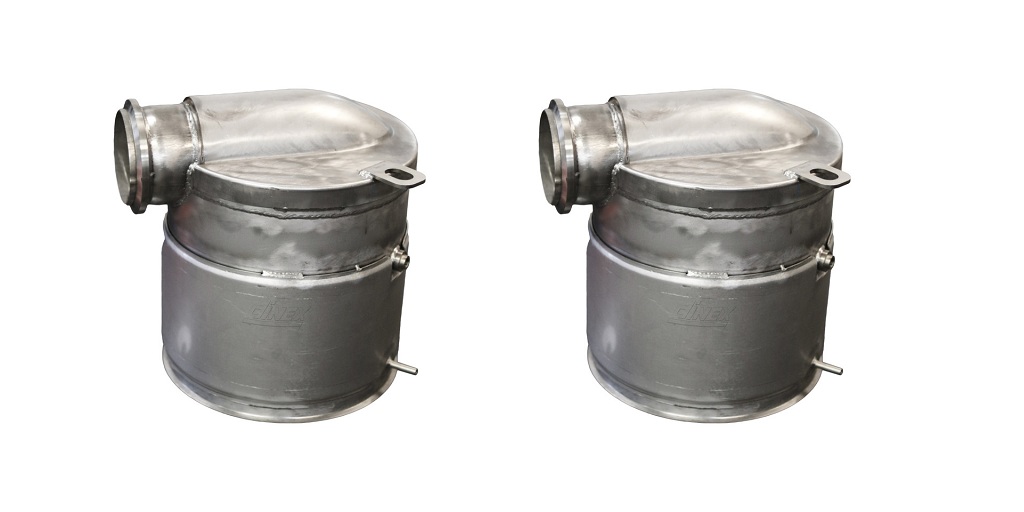
Compression ignition engines, such as diesel engines, are fine-tuned machines that are optimized for power, performance, and, equally importantly, efficiency.
Consider the exhaust after-treatment systems of diesel engines. These systems have been engineered not only to remove harmful particulate contaminants from the exhaust but to regenerate some residual energy remaining in the partially-combusted reactants.
These emission systems are highly effective. Untreated diesel exhaust contains noxious, toxic, carcinogenic compounds; but modern systems are so efficient that they can effectively reduce the constituency of diesel exhaust to water vapor, oxygen, and a nominal concentration of additional harmless compounds.
There are three main components to the diesel after-treatment system, being (in sequence) the DOC, DPF, and SCR. Each one plays an important role in “cleansing” diesel exhaust.
The diesel oxidation catalyst, or DOC filter is the first component in the system. It contains compounds that begin the oxidation process of carbon monoxide, hydrocarbons, and any remaining unburned diesel fuel and oil.
After passing through the DOC filter, the exhaust continues to the diesel particulate filter (DPF), which is a (usually ceramic honeycomb) wall-flow filter that traps remaining in the exhaust, and which the DOC filter couldn’t directly oxidize.
The DPF filter sequesters this particulate matter (soot and ash) until it can be regenerated through one of two processes – active or passive regeneration. Both processes further reduce the particulate emissions and “recover” additional energy from the soot in the exhaust.
Passive regeneration occurs under normal engine operating conditions – such as when a truck with a diesel engine is driving along a highway at speed. The heat from the engine helps to oxidize the particulate matter trapped in the DPF filter, breaking down the soot and releasing additional energy that improves the performance and economy of the diesel engine.
Active regeneration is more complex. It occurs when sensors determine a threshold at which there is an excessive accumulation of soot in the DPF. At a certain point, the system will inject raw fuel into the exhaust system to catalyze the oxidation of soot trapped in the DPF. Active regeneration, though it requires another step, also breaks down the exhaust particulates and retrieves additional energy.
(However, neither active nor passive regeneration can remove the accumulation of ash in the filter, which is what remains behind after complete oxidation occurs. As ash builds up, it will begin to obstruct the DPF filter, and the filter will need to be cleaned periodically to remove these ash deposits.)
The final component of the diesel after-treatment system is the SCR, or selective catalytic reduction, filter. The SCR uses diesel emissions fluid (DEF) to break down the remaining nitrogen oxides in the exhaust, reducing them to near zero before releasing the exhaust stream. It converts the nitrogen oxygens into free nitrogen and water vapor, which are harmless.
Together, these three components of the diesel exhaust system help to improve engine efficiency, and fuel economy, and reduce harmful emissions, while also keeping vehicles compliant with standing environmental regulations.
Need a New DPF or DOC Filter?
Routine maintenance will extend the service lifespan of your DPF and DOC filter, but when the time comes that cleaning will no longer suffice and you need to replace them, visit Filter Service and Supply online at FilterServiceandSupply.com. They carry a wide range of essentials for diesel exhaust systems, including but not limited to DPF and DOC filters, gaskets, clamps, exhaust sensors, and more.
Check out their collection and get in touch with them directly at 780-455-0263 if you have any questions.