
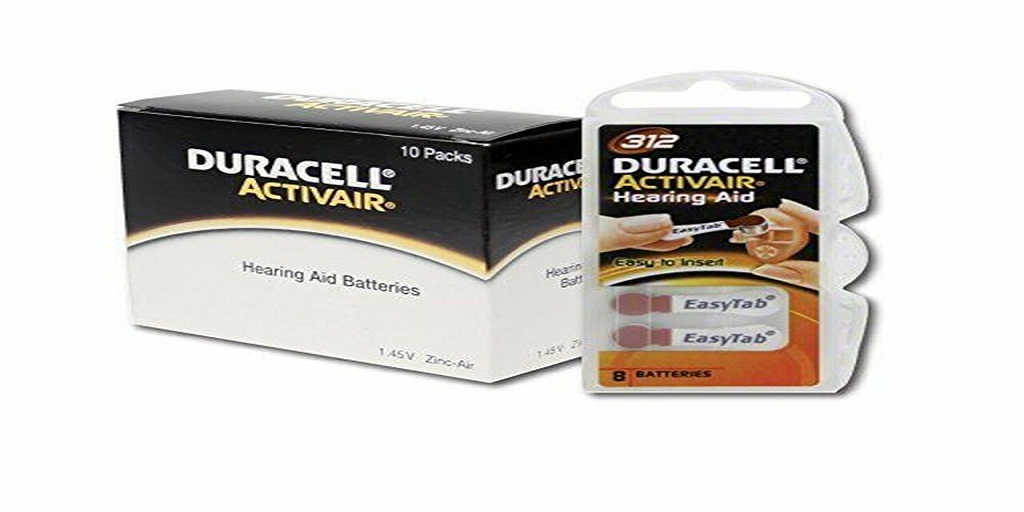
It’s hard to tell hearing aids apart. That much is certain. So when you break open your hearing aid to replace the batteries because they’re not working properly, you might be caught up a creek without a paddle if you don’t know what to look for. The truth is, despite the minor variance in sizes, most naked hearing aids are pretty near identical. So how can you tell if you need to replace them with Duracell size 312 hearing aid batteries – or any size 312 hearing aid batteries?
This article will cover some of the differences between the four main types of hearing aid batteries so that you can be sure you’re getting the right thing. Most hearing aids, today, use one of four sizes, either size 10, 312, 13 or 675 hearing aid batteries.
For example, Duracell size 312 hearing aid batteries, like all size 312 hearing aid batteries, some with a little brown tab over one of the terminals. This achieves a few objectives. For one, it protects the battery against air, which will cause it to slowly drain over time, and for another, it makes the batteries easier to handle. Another aspect of value is in the color, and Duracell hearing aid batteries, like nearly all other batteries, are color-coded, making it easier to identify them.
Smaller than size 312s are size 10 hearing aid batteries, which come with a little yellow tab. This also protects the batteries from the air, makes them easier to handle – they are very small – and makes it easier to identify them.
Then you have size 13 and size 675 batteries, which are a little larger than these previous two and therefore a bit easier to identify. These hearing aid batteries are color-coded as well. Size 13 batteries come with an orange tab and size 675 batteries, the largest of them all, come with blue tabs.
Now, these tabs help the batteries last extra long, for several years in storage, but if you can’t find the size of your current batteries because they are missing the tabs, you might be able to do so with a quick measurement. Take note of the following:
Size 10 batteries are the smallest, coming in at 5.8 by 3.6mm. Next up the ladder are size 312 batteries at 7.9 by 3.6mm. Then you have size 13 batteries at 7.9 by 5.4mm, and size 675s, which are the largest at 11.6 by 5.4mm. You may be able to identify your batteries simply by taking a quick measurement of the batteries themselves since they will be missing the tabs once you remove them from your hearing aids.
One thing to note is that these are all sizes of disposable hearing aid batteries and that not all hearing aids take disposable batteries. Some of them take rechargeable hearing aid batteries, and those that do are often difficult to service. In the event you discover that your hearing aids take rechargeable batteries, you may need to send them to a specialist to have the batteries replaced.
Otherwise, you can just go online to LocalBattery.com for all your needs in hearing aid batteries. For years, Local Battery has had some of the lowest prices available on high-quality hearing aid batteries, including those from trusted brands like Duracell and PowerOne.
If you still can’t determine what kind of hearing aid batteries you need, please feel free to contact the specialists at Local Battery via email at LocalBattery.com. They’ll help make everything easy to find and ensure that you end up with what you need.
