
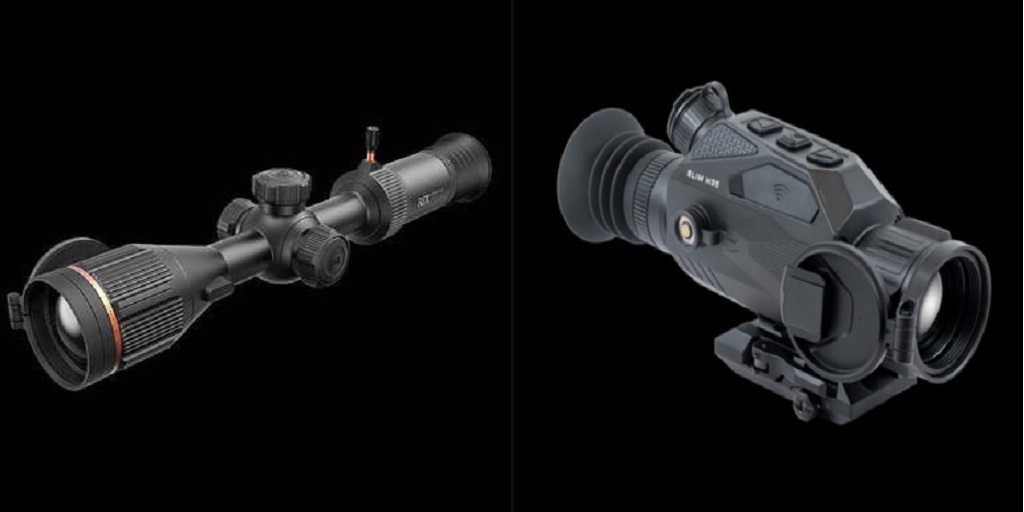
You might know that you should choose a thermal scope with a high-resolution thermal sensor with a small pixel pitch and a low NETD rating and a fast frame rate. It’s true enough that these things will result in a crisper, clearer, more lag-free sight picture through the display.
But did you know that the real-world conditions you find yourself in will impact the performance of a thermal scope, or any other thermal optic, for that matter?
Just as bright sun or low-light conditions will impact the clarity of the sight picture through a conventional optical scope, so too can climatic conditions impact the performance of a thermal scope.
Here are a few considerations.
Rain and Fog
Rain is worse for conventional optics than it is for thermal scopes. This is because raindrops scatter visible light, making it harder to see through a glass optic.
For a thermal scope, however, the rain does not interfere much with the thermal radiation to which the scope is sensitive. It does, however, slightly diminish the quality of the image because it introduces visual noise, just not as bad as with a glass scope.
Fog is a different story. The suspended, microscopic droplets of water not only scatter but absorb thermal radiation, which can have a massive impact on detection range. Light fog may not have much of an impact, but as fog density increases, expect your scope’s detection range to drop. Look for thermal scopes with a lower Net D rating for better image clarity in adverse weather conditions.
High Humidity
High humidity will adversely impact the performance of a thermal scope whereas its impact on conventional optics is almost not noticeable as long as the conditions are visually clear.
This is because high humidity in the air will increase its capacity to absorb infrared radiation. The higher the humidity, the shorter the scope’s detection range will be, and the less clear the sight picture will be. Look for thermal scopes with a lower Net D rating for better image clarity in adverse weather conditions.
Snow or Ice
Whereas high humidity, fog and rain will all diminish the performance of a thermal scope, snow and ice can have the potentially opposite effect.
Generally cold conditions can boost the performance of a thermal scope simply by increasing the contrast between the cold background and a warm target. Conditions are best when there is snow or ice on the ground that introduces sharper thermal differentials.
If it is actually snowing, however, that condition can adversely impact the performance of a thermal scope by introducing visual noise that can decrease the clarity of the target.
The Importance of Choosing a Good First Thermal Scope
Being aware of how the environmental conditions can impact the performance of a thermal scope is important because it underscores the importance of getting a good scope with your first purchase, one that offers high resolution, a sensor with a fast frame rate, and, importantly, one that has a low NETD rating and is therefore sensitive to small thermal differentials.
Shop Thermal Scopes and Other Optics at Dark Night Outdoors
Know you need a thermal scope but at a loss for where to start? Visit Dark Night Outdoors or get in touch with them directly at 309-781-8421. They’ll make a personalized recommendation for what you should get based on where and what you’ll be hunting, making the process much easier for you.
