
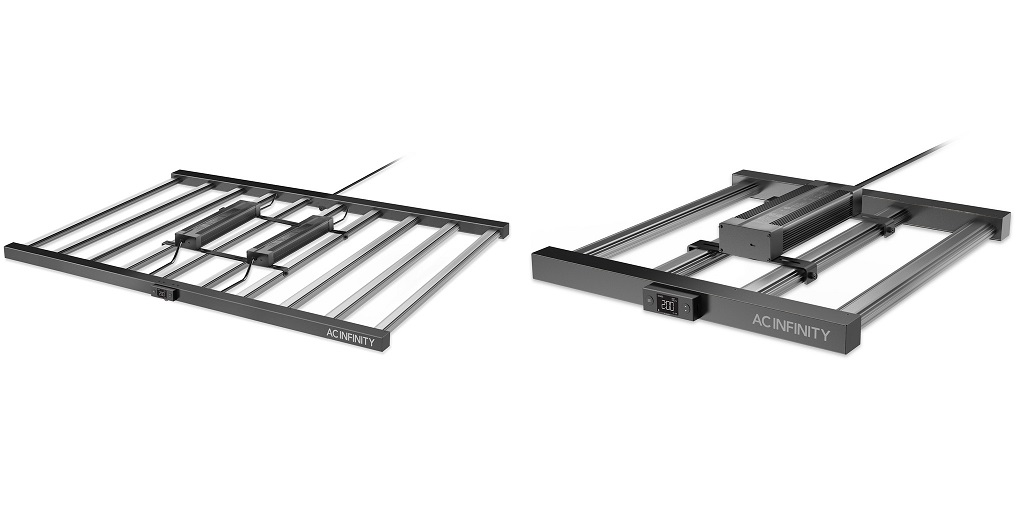
Indoor horticulture is a very involved process. This makes it very hands-on and rewarding, but unfortunately, it also means that you can’t just “water once per day” or “set up a 1000 watt LED grow light” and assume that’s enough.
Lighting, just like watering, fertilization and temperature and humidity control, must be carefully attended. Here’s a quick breakdown of how to ensure your plants are getting adequate light.
Based on What You’re Growing
The primary determinant of how much ambient light you need to offer your plants is what you’re growing in the first place.
Vegetables and most flowers and herbs will need full direct light for half the day or more, if they are grown inside.
There are some house plants that don’t need a lot of (or any) bright direct light, but chances are if you are growing a crop or flowers, they will need about half a day of direct light, and perhaps even more if you rely entirely on indoor grow lights.
Take no chances on that, though, and assess by species and cultivar. Make no assumptions.
Based on Stage
You can also dictate the amount of light you offer based on the current growth stage of the plant.
Depending on what you’re growing, your plants are in one of three stages. These are the seedling stage, the vegetative stage, and the fruiting or flowering stage.
The seedling stage is one of the most critical and most plants in their seedling stage will need 18-20 hours of light per day. Some growers will actually leave the lights on all the time during the first few days of the seedling stage.
Adequate light exposure during the seedling stage is critical, as plants will etiolate or damp off and die if not furnished with enough light.
During the vegetative stage, your plants will still need a lot of bright direct light, but not quite as much as when they were seedlings. Again, this depends on what you’re growing, but as a general rule, if you give your plants between 16 and 18 hours of direct light during this stage, and 5 to 8 hours of darkness, it should suffice.
During the fruiting or flowering stage, when plants have devoted most of their resources to forming buds, flowers, fruits or vegetables, they will need even less light. During this stage, many plants will require 12 to 16 hours of direct light, and the rest of darkness.
Based on Area
You can also consider how much light your plants will need based on how much growing area you are occupying. The greater the growing area, the more light power you will need.
One way to assess the viability of the light source is by power, through wattage. A good rule of thumb is that you need about 40 watts of power per square foot of plants while plants are in the seedling or vegetative stage.
You can decrease this slightly once plants have produced blossoms and fruit.
In addition, you can also pay attention to what your plants are telling you; often, they will be the first to let you know if they need more light.
Your Plants Need More Light If…
- They are getting “leggy”. This is the number one way to tell if your plants need more light. Plants that are not given adequate light will grow thin and stretch toward the light source.
- New growth is sluggish. Slowed new vegetation (during the vegetative stage) may be a sign that the plants need more light.
- Failure to produce blossoms or fruit. Keep in mind that this can also be caused by inadequate nutrition or poor temperature control, and is not always a product of inadequate light.
- Any new growth is light green, wispy, and does not darken to a rich, full green.
These are just a few signs, but some of the better ones to look out for with respect to whether or not your plants are getting enough light.
Here for 1000 Watt LED Grow Lights?
Want to revamp your indoor growing infrastructure with some full-spectrum 1000 watt LED grow lights?
Check out AC Infinity. They carry a wide range of indoor growing accessories and essentials, including lights as well as fertilizer, pots, grow tents, growing media, and a whole bunch of other tools. Visit their website or get in touch with them directly today.