
Teaching life science at home can feel like a big responsibility, but it’s also one of the most rewarding subjects you’ll ever guide your child through. Life science is where curiosity blooms: it’s about plants pushing through soil, cells doing microscopic magic, and ecosystems quietly keeping the planet running.
When you build a homeschool life science curriculum with intention, you’re not just teaching your child facts; you’re helping them understand how life itself works.
Here’s everything you need to know about how to build a life science curriculum at home:
Life Science in a Homeschool Setting: Why Does It Matter?
Life science gives kids a front-row seat to the living world. In a homeschool setting, you have the freedom to slow down, ask deeper questions, and follow your child’s interests. Unlike rigid classroom pacing, homeschooling allows you to linger on topics like animals, the human body, or the environment until they truly make sense to your child. This flexibility helps children connect science to their everyday lives, thus boosting understanding and retention.
Understand Your Child’s Learning Stage
Before choosing your teaching materials, it’s important to consider where your child is developmentally. Matching the content to your child’s readiness will keep frustration low and curiosity high.
A strong homeschool life science curriculum is one that grows with your child. Younger learners thrive on observation and storytelling, while older students are ready for deeper explanations and simple experiments. Early lessons might focus on identifying plants or animals, while later years explore biology concepts such as cells, genetics, and ecosystems.
Choose the Right Life Science Topics
Life science covers a wide range of topics, so it helps to create a loose structure. Many parents start with familiar subjects such as plants, animals, and the human body before moving on to complex ideas like food chains or life cycles.
Remember, the goal isn’t to rush through everything. It’s to build understanding, step by step. When children are able to see how certain topics connect, science will begin to feel like a story they can follow along to rather than a checklist.
Create Hands-On Learning Experiences
Life science truly comes alive when kids can touch, observe, and explore. Homeschooling makes this easier than you might think!
Gardening, nature walks, observing insects, or even watching seeds sprout on a windowsill all count as meaningful lessons in science. Simple experiments and real-world observations help children see that science isn’t locked inside a textbook: it’s happening all around them, every single day.
Balance Structure and Flexibility
A good homeschool life science curriculum has a plan, but it leaves plenty of room for curiosity. You might schedule regular science days while staying open to spontaneous moments of learning.
If your child suddenly becomes fascinated by frogs or the solar system’s effect on life, it’s okay to pause and explore. This balance keeps learning enjoyable and prevents burnout for both parent and child.
Home Science Tools Makes It Easy to Teach Life Science at Home
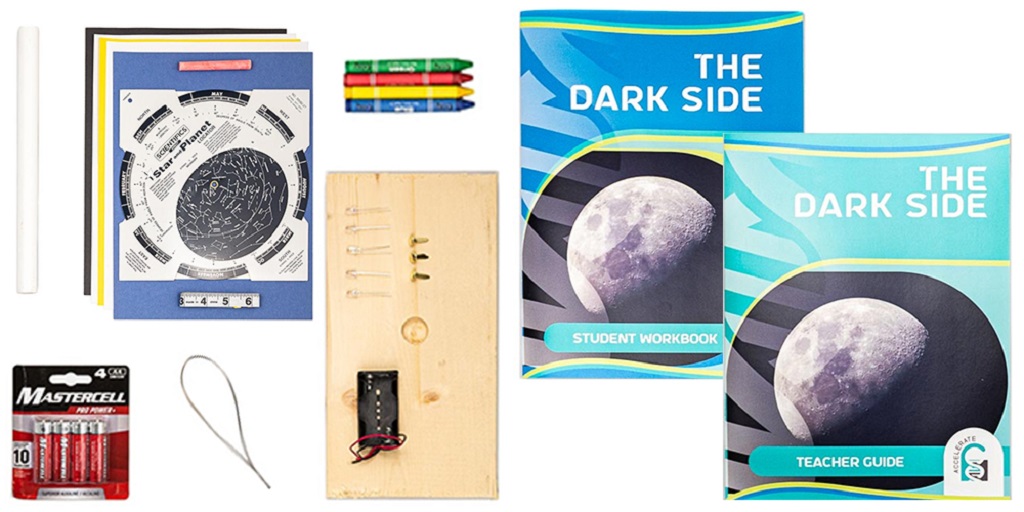
Home Science Tools offers a complete life science curriculum that you can teach at home with their Accelerate level of Science Unlocked. It’s designed for students in grades 3 through 7 (ages 8 to 12). The bundles include everything you need to teach science for an entire year! For more information, visit the Home Science Tools website.
For More Information About Crystal Growing Kit and Science Kits Please Visit: Home Science Tools.
