
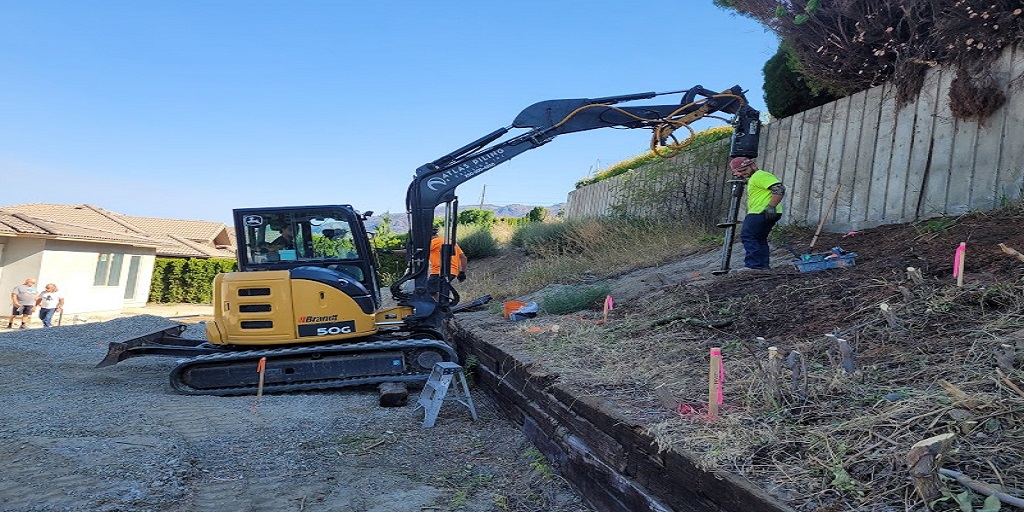
Helical pile load testing is a process used to assess the load-bearing capacity of helical screw piles installed at a construction site. The main objective of this testing is to verify that the piles will be able to withstand the design loads they are intended to carry. This ensures that the foundation will remain stable under different conditions, providing safety and longevity to the structure.
Load testing is critical in many types of construction projects, ranging from residential homes to commercial buildings and infrastructure. It provides reassurance that the foundation—consisting of helical screw piles—will perform as expected, even in challenging soil conditions.
Types of Helical Pile Load Testing
There are several types of load testing methods that are commonly used to evaluate the capacity of helical screw piles.
1. Static Load Testing
This is the most commonly used method for assessing the load capacity of helical piles. Static Load Testing involves applying a constant load to the pile over a specified duration to measure the pile’s response to the load. The results indicate the ultimate load capacity and help determine whether the pile is adequate for the intended project.
The process includes attaching a reaction frame and loading equipment to the helical screw pile, followed by a gradual application of force. The pile’s performance is then measured and recorded, offering crucial data on its ability to support vertical or lateral loads. Static load testing is a highly reliable method that gives a comprehensive understanding of the pile’s capacity.
2. Dynamic Load Testing
This is another approach used to determine the capacity of helical screw piles, particularly when time or budget constraints are present. The Dynamic Load Testing method involves applying an impact force—often through a hammer—to the pile, and then monitoring the response. Sensors are used to measure force and displacement, which are then analyzed to calculate the pile’s capacity.
Dynamic load testing is often faster and more cost-effective than static load testing. However, it may not provide as much detailed information, making it more suitable for preliminary evaluations rather than final acceptance testing.
3. Tension Testing
This is especially relevant for applications where helical screw piles are subject to uplift forces. In this test, the pile is pulled upward to measure its resistance against being lifted out of the ground. Tension testing is an essential consideration for projects where wind or other lateral forces are anticipated, such as in areas with expansive soil or on structures like utility towers.
Tension testing ensures that helical screw piles can withstand forces that may act against their installation, making it crucial for certain project types. It’s a necessary step for determining the overall stability of the foundation, particularly for structures expected to endure high uplift loads.
Best Practices for Helical Pile Load Testing
To ensure successful load testing of helical screw piles, there are several best practices that should be followed:
- Proper Planning: Load testing should be planned early in the project timeline. This allows for adjustments to be made if the test results indicate lower-than-expected load capacities.
- Qualified Personnel: Always use experienced and certified personnel to perform the load testing. Expertise is essential to properly set up the equipment and interpret the results.
- Accurate Equipment: Ensure that all testing equipment is properly calibrated and maintained. The accuracy of the load test depends heavily on the reliability of the equipment used.
Load testing is an indispensable part of ensuring that helical screw piles will provide a stable and durable foundation—helping you build with confidence, regardless of the type of project.