
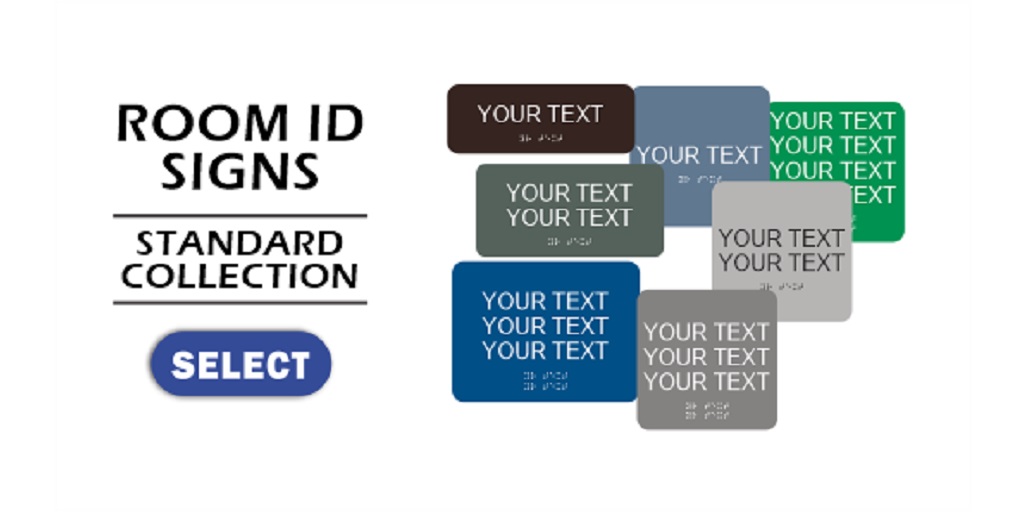
ADA compliance, rooted in the Americans with Disabilities Act, aims to create an inclusive environment by ensuring equal access to public spaces for individuals with disabilities. Making public spaces accessible, especially for the visually impaired, is pivotal for fostering inclusivity and breaking down barriers. Here’s an overview of ADA compliance and why accessibility for the blind is crucial, including Braille room signs.
What is ADA Compliance?
The Americans with Disabilities Act (ADA): Enacted in 1990, ADA prohibits discrimination against individuals with disabilities, mandating equal access to employment, public accommodations, transportation, and services.
Accessibility Standards: ADA guidelines establish standards for accessibility, encompassing various aspects like physical structures, communication, technology, and accommodations for individuals with disabilities.
How to Know Braille Room Signs are ADA Compliant
Ensuring Braille signage complies with ADA standards is critical to providing accessible information for individuals with visual impairments. Knowing whether a Braille sign meets ADA compliance involves understanding specific criteria. Here’s a guide on how to identify if a Braille sign adheres to ADA regulations.
Key Elements of ADA-Compliant Braille Signs
Braille Specifications: ADA-compliant Braille signs must feature Grade 2 Braille, a standard tactile system using specific dot configurations for readability.
Tactile Characters: Tactile lettering alongside Braille is required, with raised characters to aid those with low vision or blindness in reading text through touch.
Contrast and Finish: Signs should have a non-glare finish and high contrast between characters and background to aid readability for individuals with visual impairments.
Evaluating ADA Compliance in Braille Signs
Character Height and Size: ADA standards specify the height and size of characters and Braille dots to ensure readability and consistency across signs.
Spacing and Placement: Proper spacing between characters and Braille dots, along with precise placement on the sign, is crucial for accurate interpretation.
Correct Punctuation and Abbreviations: ADA compliance includes using proper punctuation and consistent abbreviations to ensure clarity and understanding.
Testing ADA Compliance of Braille Signs
Tactile Inspection: Run fingers over the Braille dots and characters to confirm that they are raised and distinguishable from the background.
Character Consistency: Check for consistent character height, spacing, and tactile readability across the entire sign surface.
Braille Legibility: Verify that Braille dots are correctly aligned, properly spaced, and represent Grade 2 Braille for accurate interpretation.
Seeking Expert Guidance
Consultation with Accessibility Professionals: Engage experts or accessibility consultants familiar with ADA guidelines to review and confirm compliance of Braille signs.
Utilize ADA Guidelines: Refer directly to the ADA Accessibility Guidelines (ADAAG) or the ADA Standards for Accessible Design for specific requirements.
ADA compliance for Braille signs involves adherence to specific standards regarding Braille representation, tactile characters, contrast, and placement. By assessing Braille signs against these criteria, individuals can verify their compliance and ensure they meet the needs of individuals with visual impairments. Ensure your signs are ADA compliant by purchasing from Braille Signs Pro. Check out their extensive collection.
