
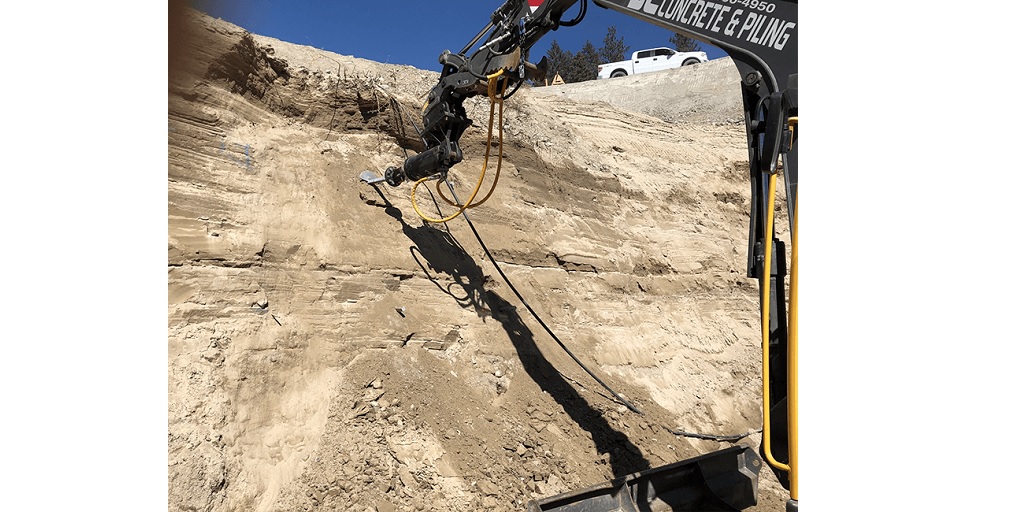
When it comes to constructing a sturdy and stable foundation for buildings, bridges, or any structure that stands tall, pile foundations play a crucial role. Piles are essentially vertical columns driven into the ground to support the structure above. These piles come in various types, each designed for specific scenarios and ground conditions. Here, we’ll delve into five primary types of pile foundations.
1. Bored Piling: Delving into Precision
One common method is bored piling, which involves creating holes in the ground by auguring. These holes are then filled with concrete, forming the foundation piles. Bored piling is a versatile choice suitable for city environments and areas around existing structures. Its key advantage is that it minimizes vibrations during installation, making it ideal for crowded urban settings.
There are variations in this method, such as open bored piles for cohesive ground with low water tables and continuous flight auger (CFA) or sectional flight auger (SFA) piles when concrete is poured before extracting the augers.
2. Driven Piling: Building with Impact
Driven piling is another prevalent technique that involves driving or hammering piles into the ground with the use of vibration. This method is excellent for non-cohesive soils, areas with high water tables, and soils contaminated with various substances. The piles can either be cast in place using steel casing or pre-cast off-site, offering flexibility in design and construction.
3. Screw Piling: Twisting into Sustainability
Screw piles take inspiration from screws and are constructed with circular, hollow, galvanized steel pile shafts featuring steel helices. They are fastened into the ground much like a screw is driven into wood. One significant advantage of screw piling is the minimal spoil generated during installation, making it a sustainable and cost-effective alternative for various construction projects.
4. Sheet Piling: Interlocking Strength
Sheet piling involves the use of interlocking steel sheets to create permanent or temporary retaining walls in construction projects requiring substantial excavations. What makes sheet piling particularly appealing is its reusability. After the groundworks are complete, the sheets can be removed and repurposed on other sites, offering a cost-effective solution for temporary soil retention needs.
5. Mini Piling: Maximizing Opportunities
Mini piles, also known as micro piles, are characterized by their smaller diameter, typically ranging from 100 mm to 400 mm. However, what truly sets mini piles apart is their ability to be installed in locations with restricted access. In such scenarios, where traditional piling rigs may not be feasible, mini piles come to the rescue. This versatility opens up numerous options for commercial and domestic development, especially in densely populated urban areas.
Incorporating these various pile foundation types into your construction project can significantly impact its stability and success. Depending on the specific needs of your project, one of these methods may prove more suitable than the others. If you’re unsure about which type of pile foundation to choose or need expert guidance in this area, consider consulting a professional.
How Atlas Piling Can Help You
Atlas Piling, a leader in commercial piling services, specializes in offering expert advice and solutions for your foundation needs. Their team of skilled professionals is well-equipped to assist you in selecting the right pile foundation type and provide services to ensure a stable and secure foundation for your construction project. With their expertise and experience, you can trust Atlas Piling to lay the groundwork for a successful and enduring structure.

