
Traditionally, to run wire through a facility or to cover great distances, electrical engineers laid down aluminum, steel or polymer pipes called conduit.
These hollow pipes serves as a raceway for cables, which then needed to be drawn through them. Conduit provides a high level of protection, but is not without its drawbacks.
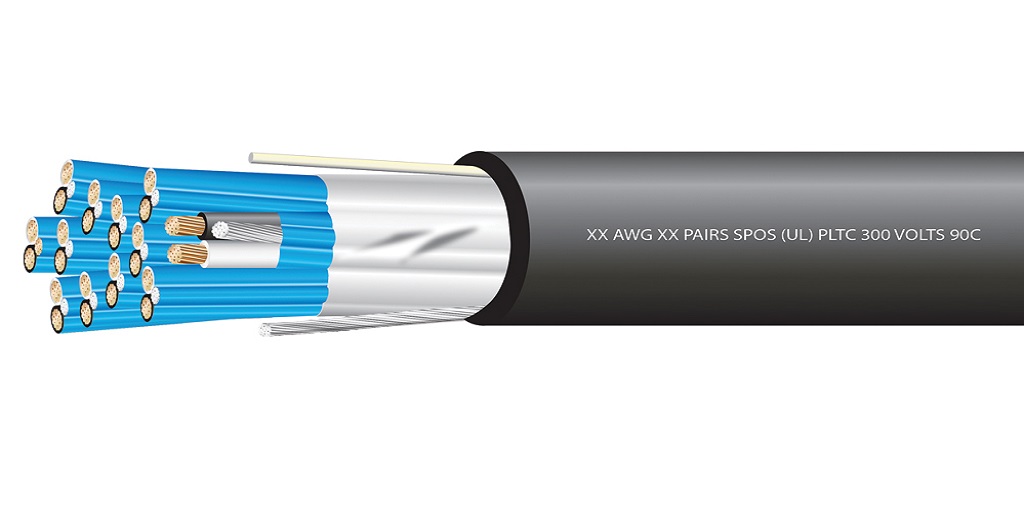
Today, a popular alternative to cable conduits is cable trays, which require the use of so-called tray cable.
So what are the advantages of cable trays as opposed to conduit?
The Advantages of Tray Cable and Trays
● Lower installation cost and easier installation
Cable trays are available in multiple configurations, including ladder, trough, channel, wire mesh, and solid bottom. All of them are more efficient and cost-effective to lay than conduit. Moreover, cables must be drawn through conduit, whereas they are simply laid in trays, making it much less time- and resource-consuming to install trays and cable.
● Tray configurations provide better access to the cables
Once drawn through conduit, if you need to access cable for any reason, you need to draw it back out. This is difficult, sensitive, and time consuming. Cable trays are easier to inspect and allow access to the cables they contain at nearly any point. If a specific cable needs to be inspected or even replaced, the process is very easy, compared to how it would be with conduit.
● Tray provides better release of thermal energy
One significant disadvantage of conduit is that it does not release energy well. One consequence of carrying a current is a buildup of thermal energy – heat. Conduit traps heat, and cable trays release it easily. Releasing heat helps diminish fire risk and ensure smooth operation of all electrical conductors and systems.
● Tray configurations provide superior design flexibility
In facilities that may need to periodically update their electrical infrastructure, or add, remove, or reconfigure the arrangement of existing conductors, tray cables provide unparalleled flexibility.
● Easier to update for standardization/compliance initiatives
As national and international norms and regulations change, and as new technologies get adopted, facilities may want to keep up with them in order to maintain a comparative competitive advantage. Making changes to existing electrical infrastructure when a facility uses tray cable instead of conduit is much easier.
It’s Not All Good News: The Benefits of Conduit
Despite these glaring advantages of tray cable and cable trays, conduit is still the cornerstone of electrical power distribution and is still very widely used across the world.
This is no coincidence. Tray cable has its advantages but conduit refuses to lapse into the annals of history simply because it has its own, as well, and in some areas, cable trays simply cannot compete.
Among the top advantages of conduit are:
● EMI reduction: Some cable conduits are capable of blocking up to 95% of EMI, or electromagnetic interference, making them superior for use in areas where sensitive electrical signals might be adversely affected by competing electromagnetic fields.
● Better physical protection: Steel and even polymer conduit provide far superior protection to electrical cables than cable tray does. Conduit can shield cables from sunlight, moisture, extreme temperatures, chemical attack, and more.
● Properly rated conduit is suitable for direct burial: With properly rated conduit and cables, conduit can be buried in the ground, or installed in other hazardous locations.
● High strength: Conduit is exceptionally strong and durable, and provides excellent physical support and protection to the wire and cable it contains.
● Compatibility with construction materials: Some conduits are suitable for use in concrete and other media because the coefficients of thermal expansion can be closely matched to materials in or alongside which the conduit is installed.
High-Quality Tray Cables Online
Looking for high-quality electrical wire and cable, including tray cables? Visit EWCSWire.com. They carry a wide range of different types of tray cable as well as other specialized electrical conductors with a wide range of jacket materials that are sunlight resistant, chemical resistant, suitable for high-heat and industrial applications, and approved for wet and dry locations as well.
Visit their website via the previous link or get in touch with them at 1-800-262-1598 for more information.
