
Sectors as diverse as production, pharmaceuticals, and agriculture all rely on compressed air. It’s used for power generation and in the manufacturing of several common goods.
Large quantities of oil and water are needed in compressed air production systems that use lubrication to remove particles from the air. Oil and water are always going to get mixed up. Since this process leaves behind a condensate mixture, it is harmful to both people and the environment if it is consumed or released into the atmosphere.
Besides the grease and oil that households and businesses flush down the toilet, petroleum and other potentially harmful oils can also be found in wastewater. These have the potential to harm plant life, animal life, and even human beings by wreaking havoc on ecological systems.
If you want to keep your compressed air system in good working order and avoid breaking any laws in the process of disposing of compressed air condensate, you’ll need to invest in an external oil/water separator.
Oil/Water Separators: What Are They?
An oil-water separator, which is also called a condensate separator, is a machine that takes liquid water out of oil and lubricant solutions in water. There is a wide range of sizes to choose from, so they may be used with virtually any compressor setup.
Condensate from the air compressor, tanks, filters, and dryers is collected by the oil/water separator, where the oil is separated out and the water is discharged. It also gets rid of the trouble of having to move the oily condensate to a different place.
How Does an Oil/Water Separator Work?
Gravity is used in conventional oil and water separators. In order to remove debris, the wastewater condensate travels through a series of filtering chambers where a filter bag is used.
Droplets of oil separate from the water and float to the top of the collection chamber, creating a spontaneous, gravity-based filtration step. When wastewater flows through the chamber, oil particles are rolled over the surface, which helps them stick together and form bigger, lighter globules.
As a result, more oil is able to separate from the water and float to the surface.
How to Care for Your Oil-Water Separator
Oil-water separators, like any compressed air equipment, require regular upkeep to function at peak efficiency and avoid pollution. These units are relatively self-sufficient and have longer service intervals than other devices.
Temperature and humidity levels can significantly affect an oil-water separator’s efficiency. To get the cleanest output, it’s important that all of your models are set to the local humidity rates that your system expects.
Condensate Management With Aircel DS Oil/Water Separators
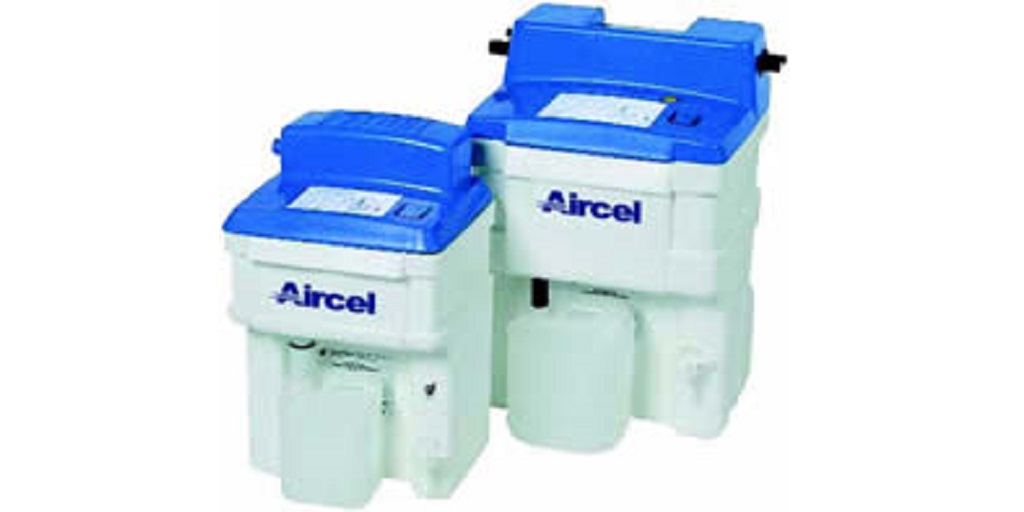
The Aircel DS Oil/Water Separators use gravity to separate oil and water mixtures and clean the condensate so that it has a level of residual oil of 20 ppm or less to meet, and ideally exceed, the required discharge levels with as little waste of resources as possible.
The DS Series is simple in every way: setup, use, and upkeep. Unless a heater is added, they run on their own power and don’t need to be touched between scheduled maintenance checks.
You can find the Aircel DS series from Air & Vacuum Process Inc., and it will be a great addition to your compressed air setup. It’s not just better than conventional methods of dealing with wastewater; it also does a better job of cleaning up compressed air condensate.
Does your company require assistance in selecting an appropriate condensate management system? Dial 866.660.0208 to reach Air & Vacuum Process Inc. right away.
