
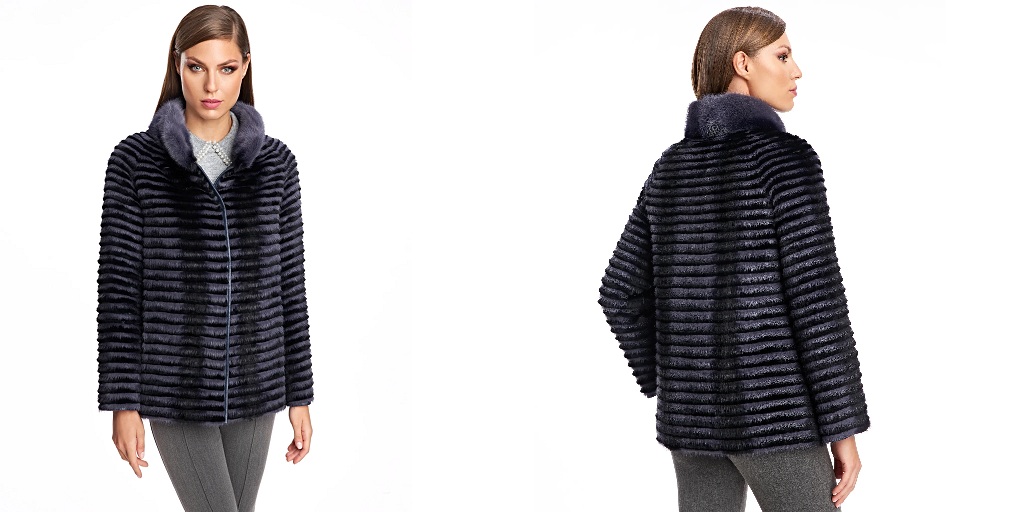
Genuine furs have come under scrutiny in recent years, but if anything, they’re experiencing somewhat of a resurgence. Genuine furs have come under scrutiny in recent years, but if anything, they’re experiencing somewhat of a resurgence.
There will always be those that refuse to wear fur on supposed moral grounds; but say what you will, people have worn furs and skins for thousands of years, and much to their benefit.
So, with no further ado, let’s take a look at some of the things that make reversible mink coats such extraordinary investments in fashion, form, and function.
1. Reversible mink coats have protection for the coat built right in.
You probably don’t need us to tell you that natural furs and skins can be badly damaged by exposure to the elements – notably moisture, which can cause the liner and pelt to degrade, resulting in malting (loss of fur).
Many reversible mink coats are made with synthetic liners that are water-resistant or repellent; if the weather ever takes a nosedive, you won’t need to make such a mad dash for cover. Just flip the coat around and go your way.
2. Reversible mink fur jackets give you literally two outfits for the price of one.
Now let’s talk about value. What other sort of garment gives you the ability to enjoy two completely unique looks for the price of one purchase?
With a reversible mink fur coat (or any reversible coat, really) you can flip the coat inside out for a total revamp of your current look.
Now that’s versatility paired with poise.
3. Mink coats are available in a wide range of colors and patterns; much more than most other natural furs.
Mink is amongst the most variable of all furs. For the most part, furs like beaver and chinchilla all look more or less the same – this is not the case with mink.
In fact, mink makes furs like fox fur – which itself is fairly variable – look unimpressive. Mink fur ranges from silver to white, all the way through a neutral gradient to black, and through a wide range of warm earth tones, like tan and rust.
Few other furs offer that sort of variability – if any, even when used only as fur trim.
4. Fur is a natural, renewable, sustainable resource.
Rarely is fur considered a sustainable, renewable resource – but it is.
The fact is that furs are intensively farmed and managed, just the same way that meat and crops are. In truth, some animals that are raised for their furs are also raised for meat – such as lamb and rabbits.
That makes these materials much more responsible to use and consume than synthetics, which must be manufactured, and which often do not easily return to the earth.
5. Fur can be upcycled easily (should you ever want to).
There are a million and one ways to upcycle fur, the first of which involves visiting a tailor and asking for suggestions for recycling an old, worn coat.
Of course, with proper fur storage and care, that should never be on your radar (it is an option, though).
6. Natural furs are far superior insulators to synthetics, period.
Finally, furs offer better protection against the elements. There can be no “ifs, ands, or buts” about this.
Synthetics fall flat. Granted, there are some good ones in the bunch, but natural furs offer better protection against wind and, specifically, water, than synthetics. In the case of wool, for example, you can expect thermal retention of up to 80% – even when wet. That is, wool is almost nearly as warm when wet as when dry.
No synthetic can say the same – it’s not even close.
Where Can You Get a Reversible Mink Coat?
Looking for a distinguished reversible mink coat that can confer these (and other) benefits upon you?
Visit Maximilian.com – their pictures say a thousand words (each), and much more eloquently than we could.